How Can We Create Public Facilities For Everyone?
Gusti Ayu Tita P
18 September 2026
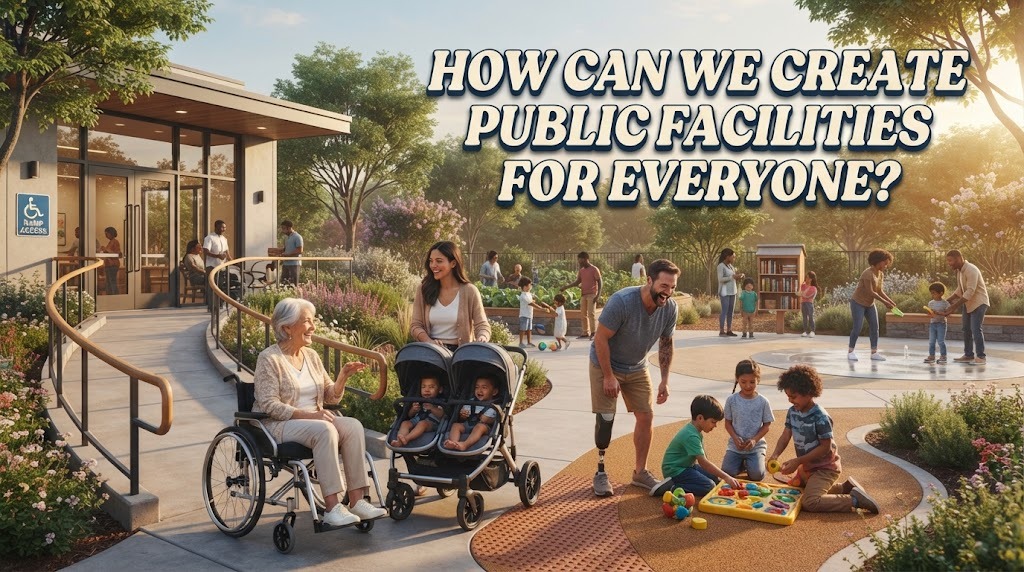
Public facilities are important because they are used by people with different ages, abilities, and needs. Public facilities for everyone should be safe, comfortable, easy to reach, and simple to use. Roads, parks, schools, public transportation, hospitals, toilets, and community spaces are examples of facilities that serve the public. Good planning can help ensure that these facilities are useful for as many people as possible. Creating inclusive facilities also supports a more equal and comfortable community.
UNDERSTAND THE NEEDS OF DIFFERENT PEOPLE
The first step in creating public facilities for everyone is understanding the needs of the community. Children, older adults, people with disabilities, workers, families, and other residents may use the same facility in different ways. For example, some people may need ramps, wider paths, clear signs, or seating areas. Understanding these differences can help planners avoid creating facilities that are difficult for certain groups to use.
Community feedback can provide useful information during the planning process. Residents can explain problems they experience when using existing facilities. Public consultation and community participation can help identify needs that may not be obvious from plans or technical designs alone. This information can then be considered when designing or improving public spaces.
PROVIDE EASY AND SAFE ACCESS
Public facilities should be easy to reach and safe to use. Accessible sidewalks, ramps, pedestrian crossings, elevators, and clear entrances can help people move around more easily. Pathways should also be designed to reduce unnecessary obstacles. Good access is especially important for people who use wheelchairs, walking aids, or strollers.
Safety should be considered from the beginning of the design process. Adequate lighting, visible signs, safe walking routes, and properly maintained surfaces can reduce potential risks. Safe and accessible facilities allow more people to use public spaces with greater confidence and independence.
USE INCLUSIVE DESIGN
Inclusive design means creating facilities that can be used by people with different abilities and circumstances. A public building, for example, may need accessible toilets, ramps, handrails, elevators, and suitable doorways. Public transportation can also provide features such as priority seating and information that is easier to understand. These features can make facilities more practical for a wider range of users.
Inclusive design should not be treated as an additional feature that is considered only at the end. It should become part of the original planning process. When accessibility is included from the beginning, facilities can be designed more efficiently and may require fewer changes later. Universal design principles can help planners create spaces that are useful for many people.
MAKE INFORMATION EASY TO UNDERSTAND
Public facilities should provide clear information so that people know how to use them. Readable signs, maps, directions, symbols, and digital information can help visitors understand where they need to go. Information should be placed where people can easily see it. Simple language can also help people understand important instructions quickly.
Different communication needs should also be considered. Some facilities may benefit from visual symbols, audio announcements, or accessible digital services. Clear information can reduce confusion and make public spaces easier to navigate. Good public information is therefore an important part of accessibility.
KEEP FACILITIES CLEAN AND WELL MAINTAINED
Even a well-designed facility may become difficult to use if it is poorly maintained. Regular cleaning, repairs, inspections, and maintenance help keep public facilities safe and functional. Broken sidewalks, damaged ramps, blocked entrances, or dirty public toilets can create problems for many users. Maintenance should therefore be planned as an ongoing responsibility rather than a one-time activity.
Maintenance also helps extend the useful life of public infrastructure. Problems that are identified early can often be repaired before they become more serious. Communities can also help by using facilities responsibly and reporting damage when they find it. Clean and well-maintained facilities are more comfortable and reliable for everyone.
CONSIDER AFFORDABILITY AND LOCATION
Public facilities should be available in locations that are practical for the communities they serve. People should not have to travel unreasonable distances to access essential services. Good location planning can improve access to schools, healthcare, transportation, parks, and other important facilities. Public transportation can also help connect people to facilities that are farther away.
Affordability is another important consideration. Some public services may involve fees, so planners should consider whether costs could become a barrier for certain groups. Providing reasonably accessible services can help more residents benefit from public infrastructure. Fair access means considering both physical accessibility and the practical ability to use a service.
INVOLVE THE COMMUNITY IN PLANNING
Community involvement can make public facility planning more responsive to real needs. Residents can participate through surveys, meetings, consultations, and feedback systems. Their experiences can help identify problems with existing facilities and suggest improvements. This process can also increase public understanding of how facilities are planned and managed.
Community participation should continue after a facility is built. People can provide feedback about cleanliness, accessibility, safety, and other issues. Authorities and facility managers can use this information to make improvements. Continuous feedback and evaluation can help public facilities remain useful as community needs change.
CONCLUSION
Creating public facilities for everyone requires more than simply building new infrastructure. Accessibility, safety, inclusive design, clear information, cleanliness, good locations, affordability, and community participation all need to be considered. Facilities should respond to the different needs of the people who use them. Regular maintenance and evaluation are also necessary to keep them useful over time. With thoughtful planning, public facilities can become safer, more inclusive, and more comfortable for everyone.
About the Author
Gusti Ayu Tita P
Author — STEKOM University
An active author focused on academic issues, educational technology, and human resource development in the campus environment.