
How Can Workers Choose the Right PPE for Their Jobs?How Can Workers Choose the Right PPE for Their Jobs?
Gusti Ayu Tita P
29 September 2026
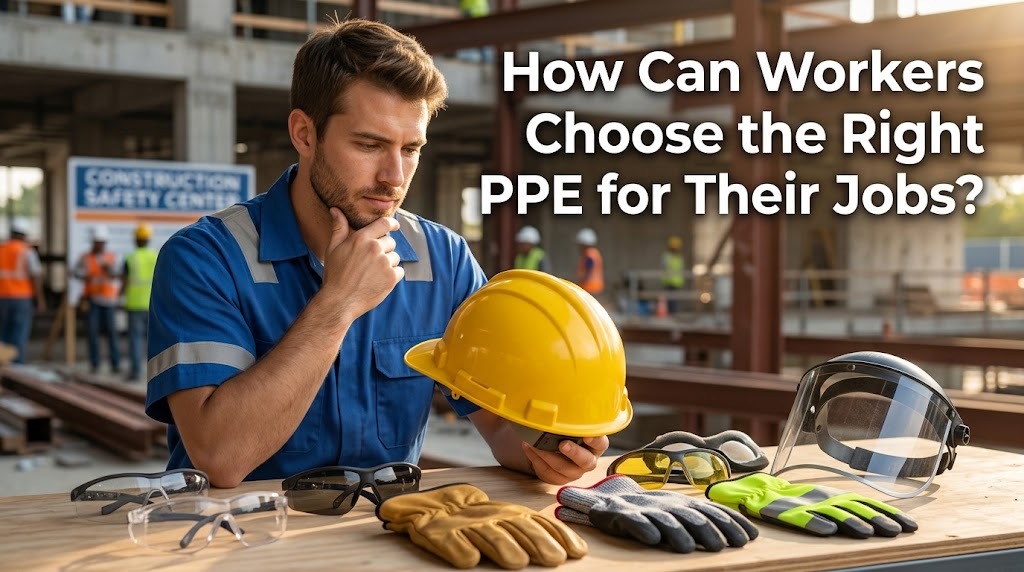
Personal Protective Equipment or PPE is an important part of workplace safety. Workers may face different hazards depending on their jobs, work areas, and daily tasks. Choosing the right PPE helps reduce exposure to physical, chemical, biological, and mechanical hazards. However, PPE should not be selected randomly because each type is designed to provide specific protection. Workers need to understand the risks of their jobs before choosing equipment that fits their safety needs.
UNDERSTANDING WORKPLACE HAZARDS
The first step in choosing PPE is identifying the hazards in the workplace. Workers should understand whether they may be exposed to dust, chemicals, excessive noise, falling objects, sharp materials, heat, or other risks. Different hazards require different types of protection, so one type of PPE may not be suitable for every situation. A worker handling chemicals, for example, may need protective gloves and eye protection, while a construction worker may need a helmet and safety footwear.
Workplace conditions can also change during different tasks. Workers should therefore consider the specific activity, equipment being used, and surrounding environment before selecting PPE. Employers can help by conducting a workplace risk assessment and providing clear safety procedures. Understanding these risks makes it easier for workers to choose PPE that provides appropriate protection.
SELECTING PPE BASED ON JOB REQUIREMENTS
After identifying workplace hazards, workers should select PPE that matches the requirements of their jobs. Head protection may be necessary when there is a risk of falling objects, while hearing protection can be useful in areas with high noise levels. Safety glasses or face shields can protect the eyes and face from particles, splashes, or other hazards. Gloves should also be selected carefully because different materials provide protection against different risks.
Workers should also consider whether they need to use more than one type of PPE at the same time. For example, a worker may need eye protection, gloves, protective clothing, and safety footwear when working with hazardous substances. PPE should work together without creating additional risks or making movement unnecessarily difficult. Following workplace safety instructions can help workers select equipment that is suitable for their particular tasks.
CHECKING PPE QUALITY AND PROPER FIT
Good PPE should provide adequate protection while also being comfortable and properly fitted. Equipment that is too loose may move during work, while equipment that is too tight may cause discomfort and make it difficult to work safely. Workers should check the size, condition, and design of PPE before using it. Damaged, worn, or unsuitable equipment should not be used because it may fail to provide the expected protection.
Workers should also pay attention to approved safety standards when selecting PPE. Depending on the workplace and country, PPE may need to meet specific safety requirements or certification standards. Employers should provide equipment that is appropriate for identified workplace risks and explain how it should be used. Proper fitting and regular inspection can help ensure that PPE performs its intended protective function.
CONSIDERING COMFORT AND WORKER MOBILITY
Comfort is another important factor when choosing PPE. Workers may need to wear protective equipment for several hours, so uncomfortable equipment can make it harder to concentrate on their tasks. PPE should allow workers to move, communicate, and perform their duties as safely as possible. However, comfort should never replace the level of protection required for a particular hazard.
Workers should also consider factors such as weight, ventilation, visibility, and ease of movement. If several pieces of PPE are required, they should be compatible with each other. For example, protective eyewear should not interfere with other necessary equipment. Choosing PPE that combines suitable protection with practical comfort can encourage consistent and correct use.
FOLLOWING TRAINING AND WORKPLACE PROCEDURES
Choosing the right PPE is not enough if workers do not know how to use it correctly. Workers should receive PPE training that explains how to put on, remove, adjust, inspect, clean, and store their equipment. Training can also help workers understand the limitations of each type of PPE. This knowledge is important because PPE is only one part of a broader workplace safety system.
Workers should follow the safety procedures provided by their employer and report problems with PPE as soon as possible. If equipment becomes damaged or no longer fits properly, it may need to be repaired or replaced according to workplace procedures. Employers should also review PPE requirements when tasks, equipment, or workplace conditions change. Consistent training and communication help workers make safer decisions when selecting and using PPE.
CONCLUSION
Choosing the right PPE requires workers to understand workplace hazards, job requirements, equipment quality, proper fit, and comfort. PPE should be selected according to the risks associated with each task rather than simply choosing the most convenient equipment. Workers also need proper training so they can use, inspect, and maintain PPE correctly. When workers and employers work together to select suitable protective equipment, PPE can provide an important layer of protection against workplace hazards.
About the Author
Gusti Ayu Tita P
Author — STEKOM University
An active author focused on academic issues, educational technology, and human resource development in the campus environment.



