How Can You Avoid Giveaway Scams on Social Media?
Gusti Ayu Tita P
17 September 2026
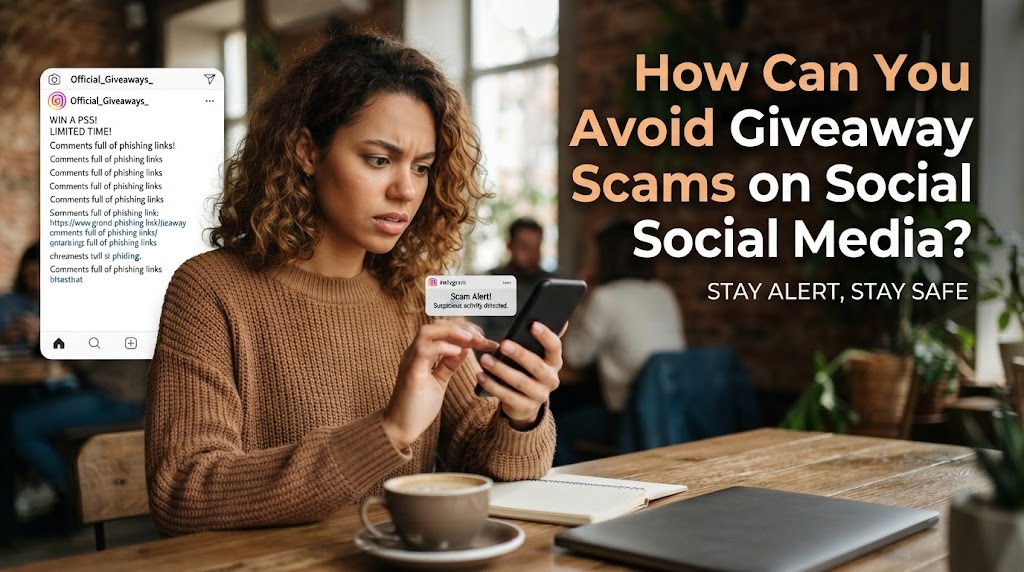
Giveaways on social media can be an exciting way to receive prizes from brands, creators, or communities. However, their popularity has also attracted scammers who use fake giveaways to target unsuspecting users. These scams may involve fake accounts, false prize announcements, suspicious links, or requests for money and personal information. For this reason, participants should check the authenticity of a giveaway before taking part. By staying careful and recognizing common warning signs, users can reduce the risk of becoming victims of online scams.
CHECK THE ORGANIZER'S IDENTITY
The first step to avoiding giveaway scams is checking the identity of the organizer. Look at the account name, username, followers, previous posts, and available contact information. Fake accounts may use names, profile pictures, and logos that closely resemble those of legitimate brands. Therefore, users should not assume that an account is official simply because it uses familiar branding. If a giveaway claims to represent a particular company, check whether the campaign is also mentioned through the company's official channels.
Users should also consider how long the account has been active and whether its activity looks normal. A recently created account with very little content may require additional verification. Check whether the giveaway information is consistent across the organizer's official platforms. If the promotion only appears on a suspicious account and cannot be confirmed elsewhere, avoid participating until its authenticity is established. Taking a few minutes to verify the organizer can prevent much bigger problems later.
DO NOT SHARE PERSONAL INFORMATION CARELESSLY
A legitimate giveaway may require certain information to contact winners or deliver prizes. However, participants should still be careful about the type of information they provide. Never share passwords, PINs, one time passwords, or other account security codes with someone through social media messages. Legitimate organizers should not need these sensitive security details to confirm a giveaway prize. A request for such information should therefore be treated as a serious warning sign.
Before completing a giveaway form, check what information is being requested and why it is needed. Avoid providing information that has no clear connection to the giveaway process. If a form asks for excessive personal information, consider whether the promotion is trustworthy. Participants should also be cautious about sending copies of identity documents unless there is a legitimate and clearly explained reason. Protecting personal information is an important part of staying safe online.
BE CAREFUL WITH REQUESTS FOR MONEY
Unexpected payment requests are another important warning sign. Scammers may tell users that they have won a prize and then ask for an administration fee, tax payment, delivery charge, or verification fee. They may create a sense of urgency by claiming that the payment must be made within a short period. Do not send money simply because someone claims that you have won a giveaway. Verify the information through an official and independently confirmed channel first.
If a legitimate giveaway involves any costs, those conditions should be clearly explained in the official rules. Participants can compare the message they received with the original giveaway terms. Avoid making payments to personal accounts or unfamiliar payment services based only on a direct message. Be especially cautious when a valuable prize is used to pressure you into paying quickly. A prize should never be a reason to ignore basic financial and digital security.
BE CAREFUL WITH SUSPICIOUS LINKS AND FORMS
Giveaway links should be checked before they are opened. Scammers may use fake websites to collect login details, payment information, or other personal data. Some fraudulent websites are designed to look almost identical to legitimate websites. Therefore, users should avoid entering passwords or security codes after following an unfamiliar link. When in doubt, visit the official website or open the official application directly instead of using a link received through a suspicious message.
Online forms should also be examined carefully. Check the website address, spelling, organization details, and overall credibility of the page. Do not download applications or files requested by an unverified giveaway account. Users should also avoid granting account permissions to unfamiliar services. Being cautious with links and forms can reduce the risk of phishing, data theft, and unauthorized account access.
DO NOT TRUST UNREALISTIC PRIZES TOO QUICKLY
Giveaways offering extremely valuable prizes with almost no requirements should be examined carefully. Scammers often use attractive rewards to encourage people to act without checking the details. For example, receiving a message claiming that you have won an expensive prize even though you never entered the giveaway is a major reason to question the message. Attractive prizes can make people overlook important warning signs. Participants should therefore verify the promotion before following any instructions.
Reading the complete giveaway rules can also help identify suspicious campaigns. Legitimate promotions generally provide information about the campaign period, eligibility, prizes, participation process, and winner announcement. If important details are missing, inconsistent, or suddenly changed, participants should be more cautious. Do not let the fear of missing an opportunity force you to make a rushed decision. Taking time to verify the campaign is safer than acting immediately.
VERIFY WINNER ANNOUNCEMENTS THROUGH OFFICIAL CHANNELS
If you receive a message saying that you have won a giveaway, do not immediately assume it is genuine. Check whether your name or account appears in the organizer's official winner announcement. Compare the account contacting you with the official account that hosted the giveaway. Scammers can create usernames that differ from legitimate accounts by only a few characters. These small differences can be an important clue that the message may come from an impersonator.
If you are still uncertain, contact the organizer through an official channel that you find independently. Do not rely solely on a phone number, email address, or link provided by the person who contacted you. Ask the organizer to confirm whether the winning notification is genuine. If the claim cannot be verified, do not provide additional information or follow further instructions. Independent verification is one of the simplest ways to reduce the risk of giveaway fraud.
REPORT SUSPICIOUS ACCOUNTS OR GIVEAWAYS
If you find a giveaway that appears fraudulent, avoid sharing or promoting it to other users. Use the reporting tools provided by the social media platform to report suspicious accounts or content. If you have already shared personal information or lost money, keep evidence such as screenshots, messages, website addresses, and transaction records. This evidence may be useful when reporting the incident to the platform or relevant authorities. Do not delete important evidence before making sure you have saved everything necessary.
If you believe your account may have been compromised, take action as soon as possible. Change your password if there is a possibility that your login information has been exposed and enable multi factor authentication when available. Review recent login activity and check which devices or services have access to your account. Quick action can help limit the potential damage after information has been exposed. Staying safe online requires attention before, during, and after participating in giveaways.
CONCLUSION
Avoiding giveaway scams on social media requires careful verification and a willingness to question suspicious requests. Participants should check the organizer's identity, protect personal information, avoid questionable payment requests, and examine links before using them. Winner notifications should also be verified through official channels rather than trusted immediately. If a giveaway appears fraudulent, users should save evidence and report the suspicious account or content. By following these steps, people can enjoy legitimate giveaways while reducing the risk of scams, data theft, and account compromise.
About the Author
Gusti Ayu Tita P
Author — STEKOM University
An active author focused on academic issues, educational technology, and human resource development in the campus environment.