
How Can You Find Out Your Blood Type Accurately?
Gusti Ayu Tita P
14 September 2026
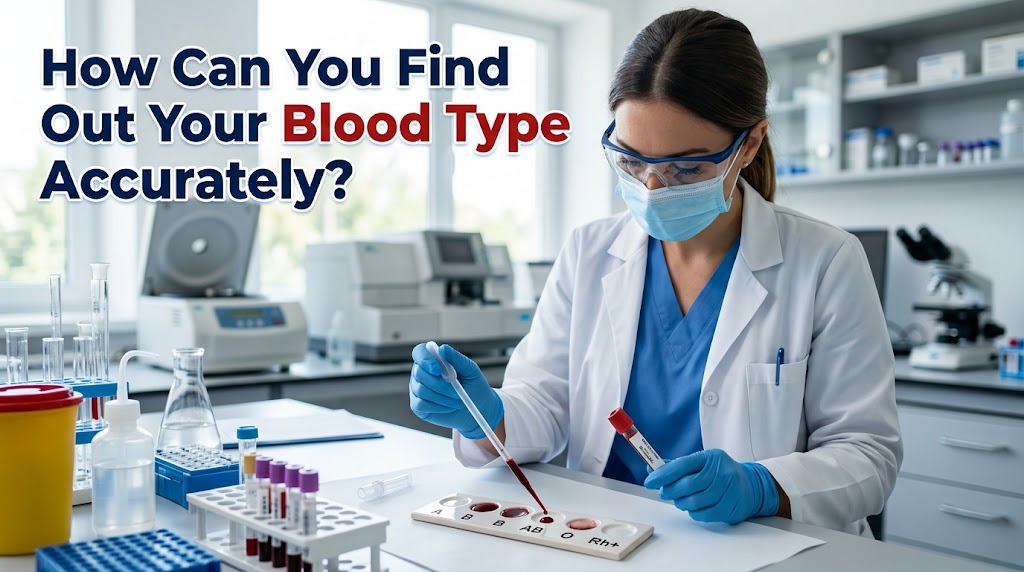
Knowing your blood type can be useful in situations involving blood donation, blood transfusion, pregnancy care, and emergency treatment. However, blood type should not be guessed based on appearance, symptoms, or family assumptions. The most reliable way to identify it is through a blood type test performed using a blood sample. This test can determine the ABO group and usually the Rh factor as well.
There are several ways to find out your blood type, but they do not all provide the same level of reliability. Medical laboratories, hospitals, and blood donation centers use established testing procedures to identify blood groups accurately. Understanding how blood typing works can help people choose a safe and dependable method for checking their own blood type.
WHAT IS A BLOOD TYPE TEST?
A blood type test is a laboratory procedure used to determine which blood group a person has. A small sample of blood is collected and tested for specific A, B, and RhD antigens on the surface of red blood cells. The sample is exposed to different reagents that contain antibodies designed to react with particular antigens. The resulting reactions help laboratory professionals identify the person's blood type.
The test can determine whether someone has type A, B, AB, or O blood, as well as whether the person is Rh-positive or Rh-negative. For example, a reaction with anti-A reagent indicates the presence of A antigens, while a reaction with anti-B indicates B antigens. Additional testing may be performed to confirm the result when necessary. This process makes laboratory blood typing much more dependable than trying to determine blood type through personal observation.
HOW IS BLOOD TYPE TESTING PERFORMED?
Blood type testing usually begins with collecting a small blood sample, often from a vein in the arm. The sample is then taken to a laboratory where red blood cells and plasma can be examined. In basic ABO testing, the red blood cells are mixed with anti-A and anti-B reagents to observe whether they form visible clumps. Another test can examine the plasma to see whether it contains antibodies that correspond with the expected ABO group.
For the Rh factor, the sample is tested with a reagent that detects the RhD antigen. If the antigen is present, the person is generally classified as Rh-positive, and if it is absent, the person is generally classified as Rh-negative. Laboratory professionals review the reaction patterns and record the final result. When the test is being used for transfusion purposes, additional compatibility testing is also performed rather than relying on blood type alone.
CAN YOU FIND OUT YOUR BLOOD TYPE AT A HOSPITAL OR LABORATORY?
Yes, a hospital or medical laboratory can determine your blood type through a properly performed blood test. This is one of the most reliable options because trained professionals use standardized laboratory methods and quality-controlled reagents. Hospitals may test blood type before surgery, pregnancy-related care, transfusion, or other medical procedures when the information is needed. The result is recorded according to the testing performed and the medical requirements involved.
A laboratory result can also help you keep an accurate record of your ABO and Rh status. However, having a previous result does not mean that healthcare professionals will always skip testing in a new medical situation. Before a transfusion, hospitals commonly perform current blood grouping, antibody screening, and crossmatching to improve patient safety. This is important because transfusion decisions require more information than simply knowing whether a person is A, B, AB, or O.
CAN BLOOD DONATION HELP YOU KNOW YOUR BLOOD TYPE?
Yes, blood donation services commonly determine a donor's blood type as part of the donation and testing process. When someone donates blood, the collected sample is screened and typed according to the procedures used by the blood service. The donor may be informed of their ABO and Rh type after the testing process. This can provide a convenient way for eligible donors to learn their blood group while also helping maintain the blood supply.
However, people should use the blood type information provided by an official donation service rather than making assumptions. The exact testing procedures and the timing for receiving results can vary between blood centers. If a person needs blood typing for an urgent medical procedure, they should still rely on the healthcare facility's own testing. Blood donation is therefore a useful source of blood type information, but it should not replace required medical testing.
ARE HOME BLOOD TYPE TEST KITS ACCURATE?
Some home blood type test kits are designed to estimate a person's ABO and Rh blood type using a small drop of blood. These kits generally work by placing blood onto a testing card containing reagents that react with specific antigens. A visible reaction pattern can then be compared with the instructions to identify a possible blood type. When used correctly, such kits may provide useful information for personal knowledge.
However, home testing should not be treated as a substitute for professional blood typing, particularly before a transfusion or medical procedure. Errors can happen because of incorrect technique, damaged testing materials, unclear reactions, or difficulty interpreting the result. If a result seems unusual or does not match previous medical records, confirmation through a laboratory is appropriate. Medical professionals use additional testing when the accuracy of a blood group result is especially important.
CAN YOU KNOW YOUR BLOOD TYPE FROM YOUR PARENTS?
A person's blood type can sometimes be estimated by understanding blood type genetics, but it cannot always be identified with certainty from the parents' blood types alone. A child inherits one ABO gene variant from each parent, and the combination determines the ABO blood group. For example, certain parental combinations can produce children with type A, B, AB, or O blood. This means that knowing the parents' blood types can help explain which blood types are genetically possible.
Even so, family information should not be used as the final confirmation of someone's blood group. Genetic inheritance involves different combinations, and uncommon genetic variations can make some cases more complicated than the basic ABO pattern. The Rh factor is also inherited and must be considered separately. For a definite answer, a laboratory blood type test remains the appropriate method.
WHY SHOULD YOUR BLOOD TYPE BE CONFIRMED BY PROFESSIONAL TESTING?
Professional confirmation is important because blood type accuracy can directly affect medical decisions. An incorrect blood type result could create serious problems if it were used during a blood transfusion or other procedure requiring compatibility information. Healthcare facilities therefore use established testing methods and may perform more than one check before transfusing blood. This careful process helps reduce the risk of an incompatible transfusion reaction.
It is also important to understand that blood type is only one part of transfusion safety. Doctors and laboratory professionals may check for unexpected antibodies, perform crossmatching, and confirm the patient's identity and blood sample. In emergency situations, special protocols may be used to provide suitable blood quickly while testing continues. Because of these safety requirements, a professionally confirmed blood type is the best information to rely on for medical care.
WHEN SHOULD YOU FIND OUT YOUR BLOOD TYPE?
Finding out your blood type can be useful before it is needed in an emergency. You may learn it through a medical test, an official blood donation service, or a previous healthcare record. It can also be helpful to understand your Rh status, especially during pregnancy or when donating blood. Keeping a reliable record can make it easier to provide accurate information to healthcare professionals.
However, knowing your blood type does not mean that you should self-select blood during an emergency. Medical teams will perform the necessary tests and compatibility checks before transfusion whenever circumstances allow. Your blood type information can support communication, but it does not replace professional evaluation. The safest approach is to know your blood type while also understanding that laboratory confirmation and medical supervision remain essential.
CONCLUSION
The most accurate way to find out your blood type is through a professional blood test that identifies the ABO group and Rh factor. Hospitals, laboratories, and blood donation centers commonly use reliable testing methods based on reactions between blood cells and specific reagents. Home blood type kits may provide an estimate, but important medical decisions should rely on professionally confirmed results.
Knowing your blood type can be useful for blood donation, transfusion planning, pregnancy care, and emergency information. However, healthcare professionals still perform current testing and compatibility checks when blood is needed. By obtaining accurate blood type information from a trusted source, you can keep an important piece of medical information while ensuring that future treatment remains safe and properly verified.
About the Author
Gusti Ayu Tita P
Author — STEKOM University
An active author focused on academic issues, educational technology, and human resource development in the campus environment.















