
How Can You Protect Marine Ecosystems While Traveling?
Gusti Ayu Tita P
23 September 2026
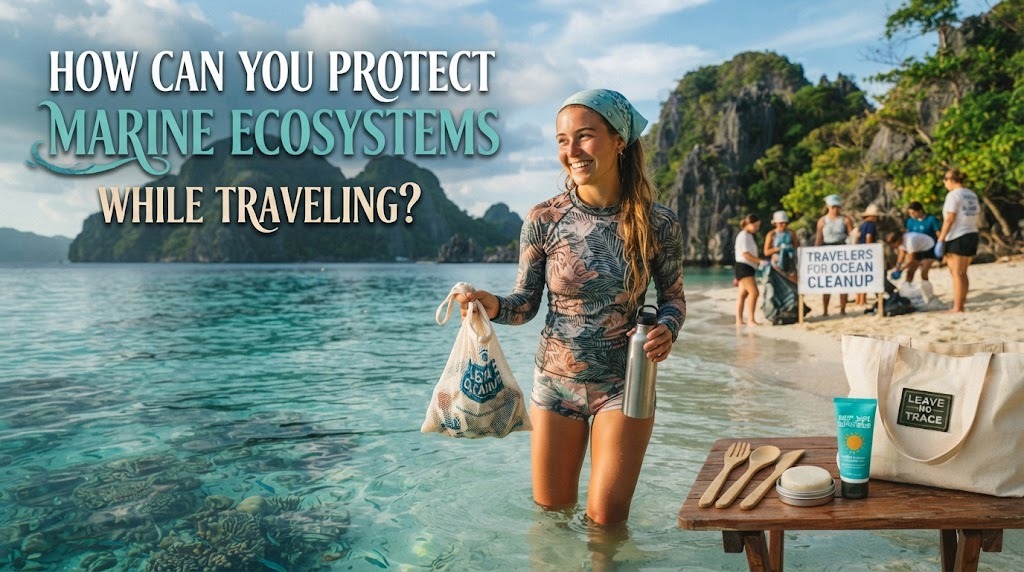
Marine ecosystems are important natural environments that support coral reefs, fish, sea turtles, mangroves, and many other species. Tourism can provide opportunities to enjoy these environments, but careless activities can also create pollution and damage habitats. Travelers can help protect marine ecosystems by making responsible choices before and during their trips. Simple habits can reduce negative impacts while allowing people to enjoy the beauty of the ocean.
REDUCE PLASTIC WASTE
Reducing plastic waste is one of the simplest ways to protect marine ecosystems. Travelers can bring reusable bottles, shopping bags, and food containers instead of relying on disposable plastic products. Plastic waste left on beaches can be carried by wind and water into the ocean. Once in the sea, it can harm marine animals through ingestion or entanglement.
Travelers should also avoid unnecessary packaging whenever possible. If disposable items are used, they should be placed in the correct waste containers and never thrown into the sea. Carrying a small reusable waste bag can be helpful when visiting remote beaches with limited facilities. Preventing waste before it is created is an important part of responsible marine tourism.
DO NOT TOUCH CORAL REEFS
Coral reefs are sensitive ecosystems that provide habitat and food for many marine species. When snorkeling or diving, travelers should avoid touching, standing on, or breaking coral. Even small physical contact can damage fragile coral structures. Divers and snorkelers should maintain good buoyancy and keep their equipment away from the reef.
Travelers should also avoid taking coral, shells, or other natural objects when local regulations prohibit collection. It is better to observe marine environments without removing anything from them. Following instructions from local guides can help visitors understand how to behave safely around reefs. Protecting coral reefs helps maintain healthy and diverse marine ecosystems.
KEEP A SAFE DISTANCE FROM MARINE ANIMALS
Seeing marine animals in their natural habitat can be one of the most exciting parts of marine tourism. However, travelers should avoid chasing, touching, feeding, or surrounding sea turtles, dolphins, fish, and other wildlife. Close contact can cause stress and may interfere with natural behaviors. Observing animals from an appropriate distance is a safer and more respectful approach.
Wild animals should be allowed to move freely without being forced to interact with visitors. Travelers should follow local wildlife guidelines and instructions from responsible tour operators. Photography should also be done without disturbing the animals. Respecting wildlife helps preserve their natural behavior and habitat.
CHOOSE RESPONSIBLE TOUR OPERATORS
The choice of a tour operator can influence the environmental impact of a marine trip. Travelers can look for operators that follow environmental regulations, manage waste properly, and provide conservation guidance. Responsible operators may also limit visitor numbers or avoid sensitive areas when necessary. These practices can reduce pressure on fragile marine environments.
Before booking a tour, travelers can ask how the company handles waste and interacts with marine wildlife. They can also check whether the operator follows local regulations and safety requirements. Avoid activities that encourage harmful behavior, such as touching or feeding wild animals. Supporting responsible businesses can encourage more sustainable practices within the tourism industry.
FOLLOW LOCAL ENVIRONMENTAL RULES
Marine destinations often have regulations designed to protect sensitive ecosystems. These may include restrictions on fishing, anchoring, collecting natural materials, entering protected areas, or interacting with wildlife. Travelers should read signs and follow instructions from local authorities or conservation staff. Rules may differ between destinations, so visitors should not assume that the same activities are allowed everywhere.
Following regulations also shows respect for local communities and conservation programs. If a specific area is closed for environmental reasons, travelers should not enter it simply to take photographs. Visitors should also use designated paths, docks, and activity areas when available. Responsible behavior helps protect marine environments while supporting sustainable tourism.
USE MARINE FRIENDLY PRODUCTS RESPONSIBLY
Travelers can also consider the environmental impact of the products they use during a marine trip. Choosing products with less packaging and using only the amount needed can help reduce waste. Sunscreen and personal care products should be used according to local guidance, particularly when visiting sensitive marine areas. No product should be deliberately released into the sea.
It is important to remember that labels such as eco friendly do not automatically mean a product has no environmental impact. Reducing unnecessary consumption and preventing pollutants from entering waterways are still important. Travelers should never pour oil, chemicals, or other harmful substances into coastal waters. Careful product use can support cleaner marine environments.
PARTICIPATE IN CONSERVATION ACTIVITIES
Travelers can make a positive contribution by participating in appropriate beach cleanups, conservation programs, or environmental education activities. These activities can help visitors understand local ecosystems and the challenges they face. Beach cleanups can remove litter that might otherwise enter the ocean. However, participants should follow instructions and avoid handling sharp or hazardous objects.
Travelers can also support conservation by choosing activities that contribute to local environmental programs. Learning about marine ecosystems can encourage more responsible behavior during future trips. Even simple actions, such as sharing accurate environmental information with travel companions, can have a positive effect. Conservation becomes more meaningful when travelers combine enjoyment with responsibility and awareness.
CONCLUSION
Protecting marine ecosystems while traveling does not require complicated actions. Travelers can reduce plastic waste, avoid touching coral, respect marine animals, choose responsible tour operators, and follow local environmental rules. Using products carefully and participating in suitable conservation activities can also reduce the impact of tourism. By practicing responsible habits, travelers can enjoy the ocean while helping preserve its ecosystems for future generations.
About the Author
Gusti Ayu Tita P
Author — STEKOM University
An active author focused on academic issues, educational technology, and human resource development in the campus environment.



