
How Cultures Around the World Understand the Afterlife?
Gusti Ayu Tita P
9 September 2026
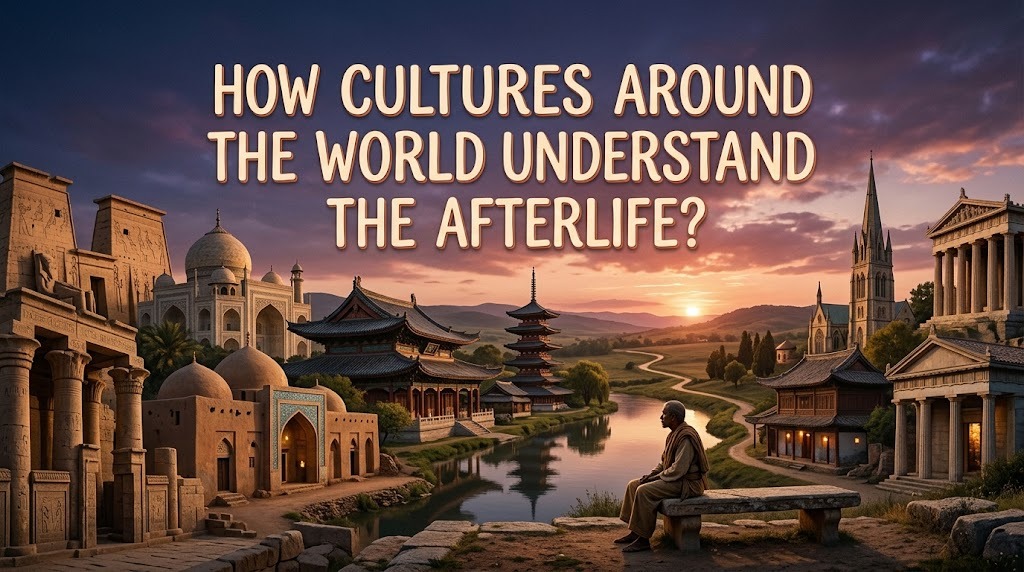
The afterlife is one of the oldest and most universal ideas in human history. Across different societies, people have developed unique beliefs about what may happen after death, often influenced by religion, tradition, philosophy, and cultural experience. Some cultures describe the afterlife as a peaceful spiritual existence, while others believe that people may be reborn into another life.
Although these beliefs are different, they often address similar human questions. People want to understand what happens when physical life ends, whether consciousness continues, and how a person's actions affect their spiritual journey. Exploring these perspectives can help us appreciate the diversity of world cultures and understand why beliefs about life after death remain important today.
THE MEANING OF THE AFTERLIFE ACROSS DIFFERENT CULTURES
Different cultures have developed various explanations about what happens after a person dies. In many religious traditions, death is not viewed as the complete end of existence but as a transition into another form of life or spiritual state. Some traditions describe an eternal destination, while others emphasize a continuing cycle of birth, death, and rebirth. These ideas are often connected to beliefs about the soul, morality, and the purpose of human life.
For example, Christianity generally teaches that human beings face judgment after death and may experience eternal life with God or separation from God. Islam teaches about resurrection, judgment, paradise, and hell as important parts of the life to come. In Hinduism, beliefs about reincarnation and karma explain how actions in one life can influence future existence. Buddhist traditions commonly focus on rebirth and liberation from the cycle of suffering rather than an eternal soul.
HOW RELIGION SHAPES BELIEFS ABOUT LIFE AFTER DEATH
Religion has a major influence on how communities understand life after death. Religious teachings often provide explanations about the soul, spiritual responsibility, judgment, rebirth, or salvation. These teachings can also influence how people understand suffering, morality, family relationships, and the purpose of their lives. As a result, the afterlife is not simply a belief about what happens after death but can also become part of everyday spiritual practice.
Different religious traditions may share certain ideas while interpreting them in different ways. Some emphasize divine judgment, while others focus on karma, spiritual purification, or liberation from worldly attachment. Within each religion, interpretations can also vary between communities and individuals. Therefore, it is important to avoid assuming that every follower of a particular religion has exactly the same understanding of the afterlife.
ANCIENT CULTURES AND THEIR VIEWS OF THE WORLD BEYOND
Beliefs about the afterlife existed long before modern religions developed. Ancient Egyptians, for instance, believed that death was a transition to another existence and placed considerable importance on burial practices and preparation for the next world. Their traditions included beliefs about judgment and the continuation of the deceased in another realm. This helps explain why ancient Egyptian tombs often contained objects believed to be useful for the person's existence after death.
Other ancient societies also created distinctive ideas about the world beyond physical life. Ancient Greeks developed stories about the underworld, including the realm associated with Hades, while various cultures created myths about journeys taken by the dead. These traditions demonstrate how people used stories, rituals, and symbols to make sense of mortality. They also show that concerns about death and existence beyond it have been present throughout much of human history.
HOW TRADITIONS AND RITUALS REFLECT AFTERLIFE BELIEFS
Cultural traditions provide another important way to understand beliefs about the afterlife. Funeral rituals, memorial ceremonies, prayers, and burial customs can express how a community understands death and the relationship between the living and the dead. Some cultures emphasize remembering ancestors, while others focus on prayer, spiritual preparation, or helping the deceased transition to another existence. These practices can provide comfort and strengthen relationships among surviving family members.
In some societies, ancestor traditions remain an important part of cultural identity. People may honor deceased relatives through ceremonies, offerings, remembrance days, or family gatherings. These practices do not always represent exactly the same religious belief, as they can also reflect cultural heritage and respect for previous generations. By studying these traditions, we can see how ideas about death become connected with family, community, history, and identity.
SIMILARITIES AND DIFFERENCES IN GLOBAL AFTERLIFE BELIEFS
Although afterlife beliefs differ significantly around the world, several common themes can be found. Many traditions explore the idea that human existence has a meaning that extends beyond physical life. Questions about morality, justice, spiritual transformation, and the continuation of consciousness appear in many forms across cultures. These shared themes suggest that people in different societies have long searched for ways to understand the mystery of death.
At the same time, the differences are equally important. Some traditions describe a permanent spiritual destination, while others emphasize rebirth or transformation. Some focus on a relationship with a divine being, whereas others emphasize personal spiritual development or liberation from suffering. Understanding these differences encourages respect for cultural diversity and reminds us that there is no single cultural explanation for what happens after death.
WHAT AFTERLIFE BELIEFS MEAN FOR HUMAN LIFE
Beliefs about the afterlife can influence how people approach their lives in the present. The expectation of spiritual consequences may encourage individuals to act according to moral principles, help others, practice compassion, or avoid harmful behavior. For some people, faith in an afterlife provides hope during difficult periods and offers a sense that life has a deeper purpose. These beliefs can also help individuals cope with grief and the loss of loved ones.
However, people do not all interpret the afterlife in the same way. Some understand it through religious faith, while others approach it through philosophy, spirituality, personal experience, or uncertainty. What remains clear is that the question of what comes after death continues to influence human culture, art, literature, traditions, and personal reflection. Studying different perspectives does not require accepting every belief; it can simply help us understand how humanity has responded to one of its most profound questions.
CONCLUSION
Cultures around the world understand the afterlife in remarkably diverse ways. Religious teachings, ancient traditions, cultural practices, and personal beliefs have created many interpretations of what may happen after physical death. Some emphasize heaven or paradise, others describe judgment or spiritual realms, and some focus on reincarnation, rebirth, or liberation.
Despite these differences, the idea of existence beyond death continues to have an important place in human culture. Exploring different beliefs can encourage greater cultural understanding while helping us recognize the universal human desire to find meaning in life and death.
About the Author
Gusti Ayu Tita P
Author — STEKOM University
An active author focused on academic issues, educational technology, and human resource development in the campus environment.















