How Customs Ensures Safe and Efficient Cross Border Trade?
Gusti Ayu Tita P
8 Agustus 2026
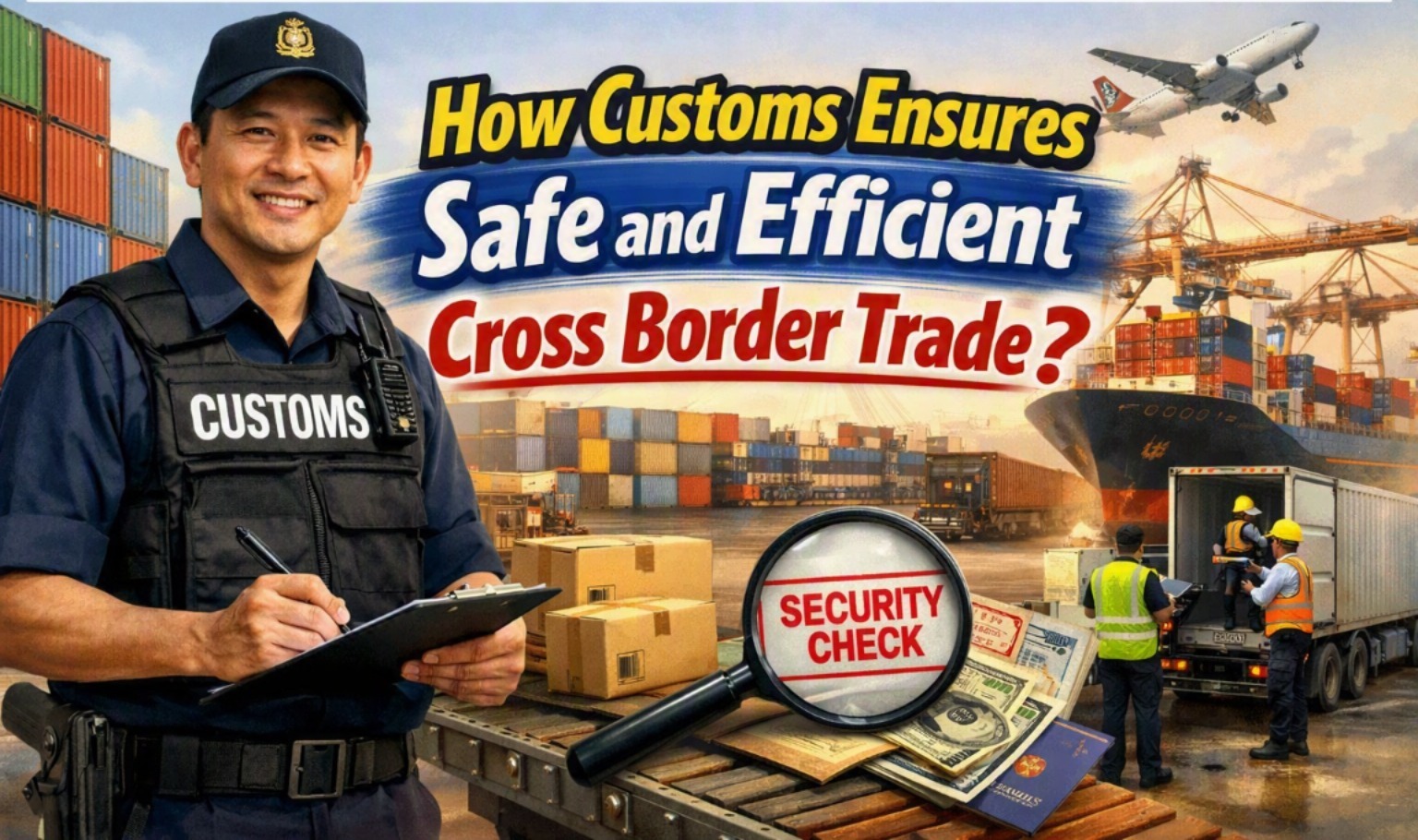
International trade allows goods to move between countries and connects businesses with consumers around the world. However, cross border trade also involves risks such as illegal goods, incorrect declarations, tax violations, and security threats. This is why customs authorities play an important role in controlling the movement of goods while keeping legitimate trade moving efficiently.
Modern customs administration is not only about checking shipments at borders. It also focuses on risk management, digital technology, accurate documentation, cooperation between border agencies, and trade facilitation. The World Customs Organization emphasizes the need to balance effective customs control with the facilitation of legitimate global trade.
THE ROLE OF CUSTOMS IN CROSS BORDER TRADE
Customs authorities are responsible for controlling goods that enter, leave, or pass through a country. They check whether shipments comply with customs laws, import and export regulations, taxation requirements, and other applicable rules. Customs also helps protect government revenue by ensuring that the correct duties and taxes are assessed and collected. At the same time, customs controls can help prevent prohibited or dangerous goods from entering the legal supply chain.
However, customs must also avoid unnecessary delays for legitimate businesses. Modern customs systems therefore aim to create a balance between security and trade facilitation. The WCO describes customs as having a critical role in securing revenue, ensuring legal compliance, protecting society, and supporting faster clearance processes.
USING RISK MANAGEMENT TO IMPROVE SECURITY
Risk management is one of the most important methods customs uses to make border controls more effective. Instead of physically checking every shipment in the same way, customs can assess available information and identify shipments that may present higher risks. Factors can include the type of goods, origin, declared value, transport method, tariff classification, and a trader's compliance history. This allows customs resources to be concentrated where they are most needed.
Risk-based controls can also make international trade more efficient. Low-risk shipments can receive faster processing, while higher-risk consignments may receive additional documentary or physical examination. The WTO Trade Facilitation Agreement specifically encourages customs administrations to focus controls on high-risk consignments while facilitating the release of low-risk goods.
USING DIGITAL TECHNOLOGY AND ELECTRONIC DOCUMENTS
Digital technology has changed the way customs authorities process international shipments. Electronic declarations, online payment systems, automated data processing, and electronic document submission can reduce manual procedures and help customs receive information earlier. Pre-arrival processing allows customs to begin reviewing required information before goods physically arrive at the border. This can reduce unnecessary waiting time when the shipment reaches the port, airport, or border crossing.
Technology can also improve the accuracy and transparency of customs procedures. Electronic systems can connect traders, customs authorities, logistics providers, and other government agencies through shared information channels. The WTO Trade Facilitation Agreement includes measures supporting electronic processing and the submission of information before goods arrive.
CHECKING DOCUMENTS AND SHIPMENTS ACCURATELY
Accurate documentation is essential for safe and efficient cross border trade. Customs may review information such as the commercial invoice, packing information, customs declaration, tariff classification, origin, and value of goods, depending on the country's requirements and the type of shipment. Correct information helps authorities determine applicable duties, taxes, restrictions, and other regulatory requirements. It also reduces the risk of misunderstandings that could delay clearance.
When information does not match the shipment or appears inconsistent, customs may conduct additional checks. Physical inspection can be used when necessary, particularly when risk indicators suggest that further examination is appropriate. Modern customs policy aims to use the minimum necessary control while maintaining compliance, rather than subjecting every shipment to the same level of inspection.
COOPERATING WITH OTHER BORDER AGENCIES
Customs cannot manage every aspect of international trade alone. Many goods are also subject to requirements from agencies responsible for health, food safety, agriculture, environmental protection, product standards, or public security. Cooperation between these agencies can reduce duplicated procedures and make border controls more coordinated. This approach helps authorities protect the public without unnecessarily slowing legitimate shipments.
The WTO Trade Facilitation Agreement encourages border agency cooperation as part of improving the movement and clearance of goods. The WCO also promotes coordinated border management to strengthen supply chain security and improve efficiency. Better cooperation can allow agencies to share relevant information and coordinate inspections when appropriate.
SIMPLIFYING CUSTOMS PROCEDURES FOR LEGITIMATE TRADE
Efficient customs does not mean removing controls. Instead, it means making procedures simpler, more predictable, transparent, and proportionate to the risks involved. Clear regulations and standardized documentation can help traders understand what is required before goods are shipped. This reduces errors and can lower the time and cost associated with customs compliance.
International standards also support simplified procedures for qualified and compliant businesses. Under the WTO Trade Facilitation Agreement, authorized operators may receive measures such as faster release, fewer documentary requirements, or reduced physical inspections, depending on the applicable national system and eligibility criteria. These measures encourage businesses to maintain strong compliance records while allowing customs to focus more attention on higher-risk trade.
USING POST CLEARANCE AUDITS
Customs controls do not necessarily end when goods are released. Post-clearance audits allow customs authorities to review a trader's records and transactions after the goods have entered or left the country. These audits can examine whether declarations, classifications, valuations, and other customs information were accurate. They can also help identify compliance problems that may not have been detected during the initial clearance process.
Post-clearance auditing supports faster border procedures because some controls can be performed after release instead of delaying every shipment at the border. The WTO Trade Facilitation Agreement recognizes risk-based post-clearance audits as an important measure for speeding up the release of goods while maintaining customs compliance.
PROMOTING TRANSPARENCY AND PREDICTABILITY
Businesses need to know the rules before sending goods across borders. Customs authorities can support this by providing clear information about procedures, documentation, duties, fees, and regulatory requirements. Transparent procedures help importers and exporters prepare accurate declarations and reduce avoidable mistakes. Predictable customs processes also make it easier for businesses to plan transportation, inventory, and delivery schedules.
Transparency is therefore an important part of efficient international trade. The WCO identifies transparency and predictability as essential elements of trade facilitation because traders need a stable and understandable environment for moving goods across borders.
BALANCING SECURITY AND TRADE EFFICIENCY
The main challenge for customs is finding the right balance between strong border protection and smooth trade. Excessive controls can increase costs and cause unnecessary delays, while weak controls can create opportunities for fraud, smuggling, and other forms of non-compliance. Risk-based inspections, digital systems, data analysis, and coordinated border management help customs address these two objectives at the same time. This approach allows authorities to focus resources on genuine risks instead of treating every shipment identically.
The goal of modern customs is therefore not simply to inspect more goods. It is to control smarter while facilitating legitimate trade. International frameworks such as the WTO Trade Facilitation Agreement and WCO standards support this balance by promoting simplified procedures, risk management, cooperation, technology, and effective customs control.
CONCLUSION
Customs plays a central role in making cross border trade safe, lawful, and efficient. Its responsibilities include checking declarations, collecting duties and taxes, managing risks, preventing illegal trade, and protecting national interests. At the same time, customs authorities must support legitimate businesses by reducing unnecessary delays and simplifying appropriate procedures.
Modern customs achieves this balance through risk management, digital technology, accurate documentation, agency cooperation, post-clearance audits, and transparent procedures. When these systems work effectively, countries can strengthen border security while allowing legitimate goods to move more smoothly. As international trade continues to develop, efficient customs administration will remain essential for a secure and competitive global trading system.
About the Author
Gusti Ayu Tita P
Author — STEKOM University
An active author focused on academic issues, educational technology, and human resource development in the campus environment.