How Dams Support Modern Hydropower Systems?
Gusti Ayu Tita P
31 Agustus 2026
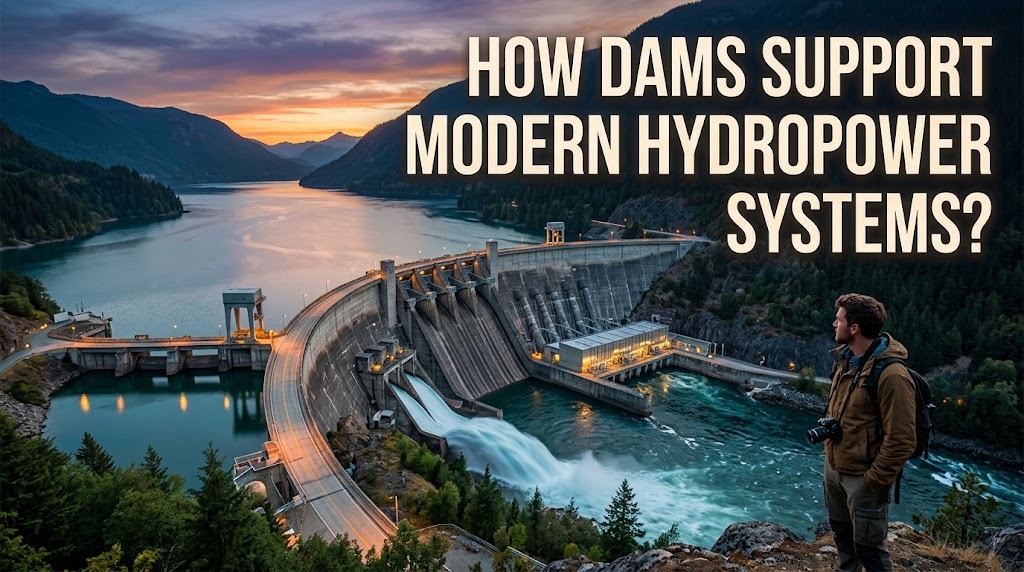
Dams play an important role in many modern hydropower systems by controlling, storing, and directing water for electricity generation. A dam can create a reservoir that stores water at a higher elevation, providing potential energy that can later be converted into electricity. This makes reservoir-based hydropower different from systems that rely mainly on natural river flow.
Modern hydropower is no longer focused only on producing electricity. Dams can also support grid stability, water management, flood control, irrigation, and energy storage, depending on their design and purpose. However, dam development can affect rivers, ecosystems, land use, and communities. Responsible planning is therefore necessary to balance electricity generation with environmental and social needs.
HOW DAMS STORE WATER?
A dam creates a physical barrier across a river or valley, allowing water to accumulate in a reservoir. The stored water is located at a higher elevation than the turbines, creating hydraulic head. When water is released through the hydropower system, gravity causes it to move toward the turbines.
The amount of energy available depends partly on the volume of water and difference in elevation. A larger reservoir can provide greater flexibility in managing water over time, although storage capacity varies significantly between projects. Operators must carefully manage reservoir levels to meet electricity needs and other water requirements. Water storage is one of the main reasons dams can provide flexible hydropower generation.
DAMS CONVERT WATER ENERGY INTO ELECTRICITY
Inside a hydropower plant, controlled water is directed toward turbines. The force of the moving water rotates the turbine, which is connected to a generator. The generator then converts mechanical energy into electrical energy.
After passing through the turbine, the water generally returns to the river downstream. The process does not consume the water itself, allowing the resource to continue through the natural water cycle. The efficiency of electricity production depends on turbine design, hydraulic conditions, generator performance, and plant operation. Modern equipment can improve how effectively stored water is converted into electricity.
RESERVOIRS PROVIDE GENERATION FLEXIBILITY
One major advantage of reservoir-based hydropower is generation flexibility. Operators can often decide when to release stored water according to electricity demand and system conditions. This is different from some renewable sources whose electricity output depends directly on current weather conditions.
During periods of high electricity demand, additional water can be released through turbines when operating conditions allow. During lower-demand periods, water can be retained for later use. This flexibility can help power system operators maintain a better balance between supply and demand. Reservoir management can therefore turn hydropower into a valuable flexible resource.
DAMS CAN SUPPORT GRID STABILITY
Modern electricity grids must constantly balance electricity generation and consumption. Sudden changes in demand or unexpected generation losses can create operational challenges. Hydropower facilities with suitable reservoir and turbine systems can respond to these changes.
The International Energy Agency identifies hydropower as an important source of flexibility for electricity systems, particularly as variable renewable energy expands. Hydropower can adjust generation according to system requirements, while some facilities can provide additional grid services. (iea.org)
DAMS CAN COMPLEMENT SOLAR AND WIND
Solar and wind power are important renewable energy sources, but their output varies according to sunlight and weather. Solar generation falls after sunset, while wind generation changes with wind conditions. A modern electricity system therefore needs resources that can respond when renewable output changes.
Reservoir hydropower can provide some of this flexibility. When solar or wind output declines, hydropower generation can potentially increase if sufficient water is available. When renewable output is high, hydro generation can sometimes be reduced to conserve water. Hydropower and variable renewable energy can therefore complement each other.
PUMPED STORAGE USES TWO RESERVOIRS
Some modern hydropower systems use pumped storage rather than relying only on natural river inflows. These systems generally have an upper and lower reservoir. Electricity is used to pump water from the lower reservoir to the upper reservoir when energy is available.
When electricity demand rises, the stored water flows back down through turbines. This allows pumped storage to function as a large-scale energy storage system. It is particularly useful for balancing variable renewable generation. Unlike conventional hydropower, its main purpose is to store electricity rather than rely solely on new river inflows.
DAMS CAN SUPPORT MULTIPLE WATER NEEDS
Many dams are designed for more than electricity generation. Reservoirs can support irrigation, drinking water supply, flood management, industrial water use, and recreation, depending on the project. These multiple functions make reservoir management more complex.
Electricity production must sometimes be balanced with other water demands. For example, water may need to be released for downstream communities or agricultural areas even when electricity generation would otherwise favor a different operating schedule. Integrated water management is therefore essential for multipurpose dams.
DAMS CAN HELP MANAGE FLOOD RISKS
Reservoirs can provide storage that may help manage certain flood conditions. When there is available storage capacity, operators may be able to retain part of an incoming water volume and release it later under controlled conditions.
However, dams cannot eliminate flood risk. Extreme rainfall can exceed reservoir capacity, and downstream flood risk depends on many factors. Dam safety procedures, forecasting, emergency planning, and coordinated river-basin management remain essential. Flood management should be viewed as one function of a wider water-management system, not a guarantee against flooding.
MODERN DAMS USE ADVANCED CONTROL SYSTEMS
Technology is changing how dams and hydropower plants are operated. Sensors, automated gates, digital controls, and real-time monitoring can provide operators with detailed information about reservoir levels, water flows, equipment performance, and weather conditions.
These systems can improve operational precision and support faster responses to changing conditions. Digital monitoring can also help identify unusual equipment behavior. Better information allows operators to make more informed decisions about water releases and electricity generation. Smart control systems are becoming increasingly important for modern hydropower operations.
WEATHER FORECASTING IMPROVES RESERVOIR MANAGEMENT
Water management depends heavily on knowing how much water may enter a reservoir. Modern forecasting tools can combine rainfall information, river measurements, satellite observations, and hydrological models. These tools can help estimate future inflows.
Better forecasting can improve decisions about electricity generation, water storage, and flood preparedness. Forecasting is particularly valuable during periods of drought or extreme rainfall. Although predictions are never perfect, improved data can reduce uncertainty. Climate information can also support longer-term planning.
DAM SAFETY IS A MAJOR PRIORITY
A dam is a large piece of infrastructure that must be carefully monitored throughout its operating life. Engineers inspect structures such as the dam body, spillways, gates, foundations, and associated systems. Dam safety management helps identify weaknesses before they become serious problems.
Modern monitoring equipment can measure factors such as water pressure, structural movement, seepage, and vibration. Regular inspections and maintenance are essential even when a dam has operated safely for many years. Emergency action plans are also important. Reliable hydropower depends on reliable and safe infrastructure.
SEDIMENTATION CAN REDUCE STORAGE
Rivers naturally carry sediment into reservoirs. Over time, sand, silt, and other materials can accumulate at the bottom. This process, known as sedimentation, can gradually reduce available storage capacity.
Sediment can also affect turbines and other equipment if it passes through the plant. Effective sediment management may involve watershed conservation, monitoring, sediment flushing where feasible, dredging in selected circumstances, or other engineering measures. The best solution depends on reservoir size and river conditions. Long-term planning is important because sediment accumulation can occur gradually.
DAMS CAN AFFECT RIVER ECOSYSTEMS
Although dams provide important services, they can significantly alter natural river systems. They may change river flow, sediment transport, water temperature, and habitat connectivity. Fish and other aquatic species can be affected when movement along a river is restricted.
Environmental measures can help reduce certain impacts. These may include environmental flow requirements, fish passages, habitat restoration, sediment management, and improved turbine technologies. The appropriate measures depend on local ecosystems. Hydropower development must consider the river as an ecosystem, not simply as an energy resource.
COMMUNITIES MUST BE CONSIDERED
Large dam projects can affect communities through changes in land use, water access, transportation, and livelihoods. In some cases, creating a reservoir may require resettlement. These effects can have long-term social and economic consequences.
Responsible development requires meaningful consultation, transparent information, appropriate compensation, and livelihood restoration where displacement occurs. Local communities should have opportunities to understand and participate in decisions that affect them. Social considerations should be incorporated into project planning from the beginning.
MODERNIZATION CAN IMPROVE EXISTING DAMS
Many hydropower dams have operated for decades. Instead of building entirely new infrastructure, operators can sometimes improve existing facilities through modernization and refurbishment. Upgrades may include turbines, generators, control systems, electrical equipment, and monitoring technologies.
Modernization can improve efficiency, reliability, and flexibility. It may also provide opportunities to strengthen environmental management and dam safety. The International Energy Agency considers modernization of existing hydropower facilities an important opportunity as much of the global hydropower fleet ages. (iea.org)
CLIMATE CHANGE CHANGES DAM MANAGEMENT
Climate change can influence rainfall patterns, drought conditions, extreme precipitation, and river flows. These changes can affect reservoir inflows and electricity production. They can also create additional challenges for flood management and infrastructure safety.
Modern dam planning therefore needs to consider climate resilience. Improved forecasting, flexible operating rules, stronger infrastructure, and watershed protection can help address changing conditions. Historical hydrological data alone may not fully represent future risks. Long-term planning should consider a range of possible climate scenarios.
DAMS SUPPORT THE ENERGY TRANSITION
Hydropower can contribute to cleaner electricity systems by generating electricity without directly burning fossil fuels during normal operation. Reservoir hydropower can also provide flexibility that helps integrate other renewable sources. This combination gives dams an important role in some energy transition strategies.
However, hydropower should not be considered automatically sustainable simply because it is renewable. Each project must be evaluated based on its environmental, social, technical, and economic characteristics. Responsible development is essential to ensure that clean electricity does not create unacceptable long-term impacts.
THE FUTURE OF MODERN HYDROPOWER DAMS
Future hydropower dams are likely to become more digital, flexible, efficient, and climate-resilient. Advanced turbines, automated controls, predictive maintenance, improved forecasting, and environmental monitoring can improve overall performance.
Existing dams may also gain new value through modernization and integration with energy storage. Pumped storage can help support grids with increasing solar and wind generation. At the same time, stronger environmental standards and community participation can improve the sustainability of projects. The future of hydropower depends on combining engineering innovation with responsible resource management.
CONCLUSION
Dams support modern hydropower systems by storing water, controlling flows, generating electricity, and providing flexibility to the power grid. Reservoirs can help operators manage electricity production over time, while pumped storage can provide large-scale energy storage. Dams may also support irrigation, water supply, and flood management when designed for multiple purposes.
However, dams also create environmental and social challenges. River ecosystems, sediment movement, fish migration, communities, climate risks, and dam safety must all be considered. With modern technology, careful planning, strong environmental safeguards, and responsible water management, dams can continue to support reliable renewable electricity while reducing unnecessary impacts.
About the Author
Gusti Ayu Tita P
Author — STEKOM University
An active author focused on academic issues, educational technology, and human resource development in the campus environment.