
How Did Ancient Kingdoms Shape Indonesian History?
Gusti Ayu Tita P
5 Agustus 2026
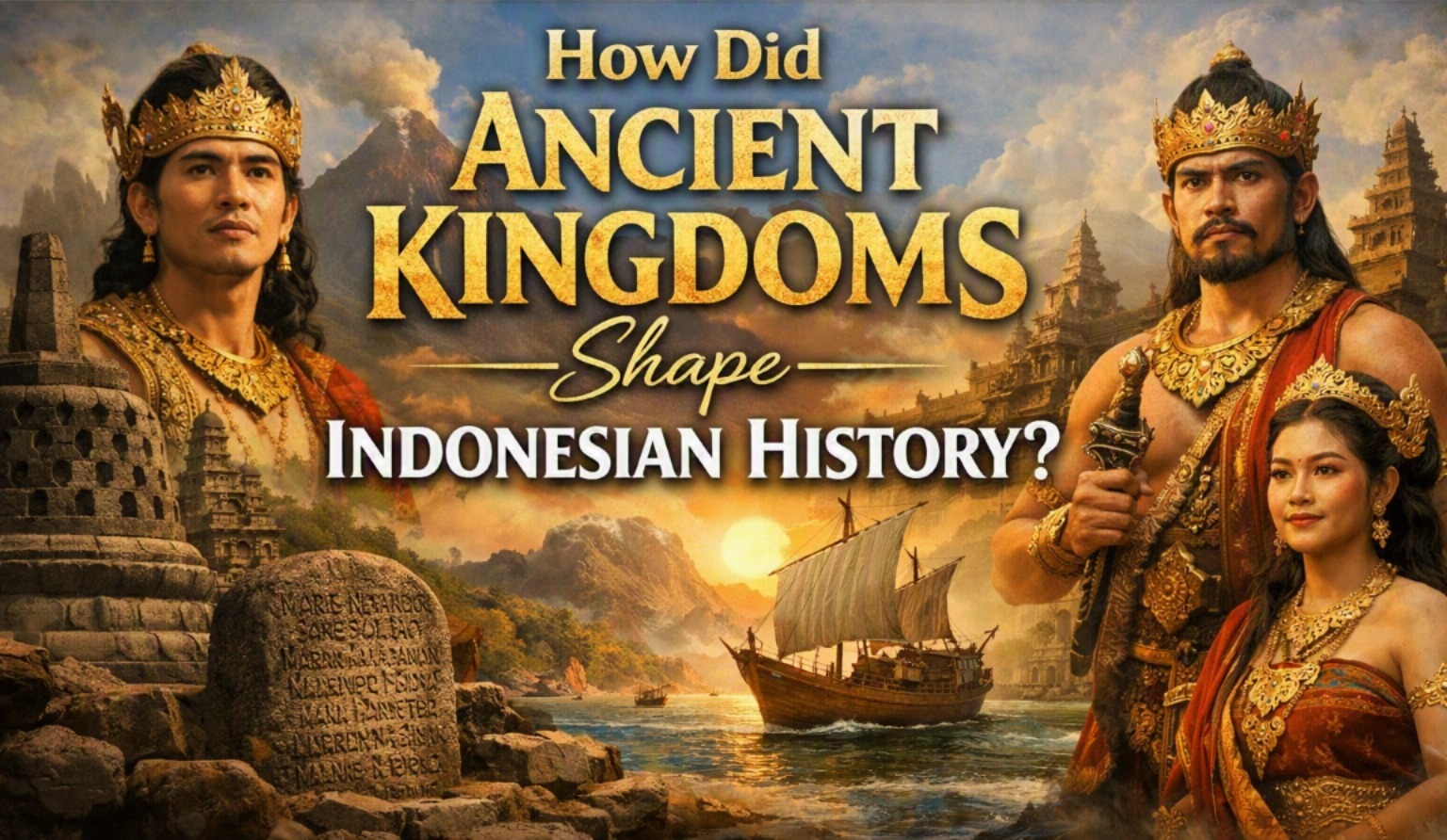
Indonesia has a long and fascinating history that was strongly influenced by its ancient kingdoms. Long before the country became an independent nation, powerful kingdoms developed systems of government, trade, religion, culture, and education that shaped society for centuries. These kingdoms connected the Indonesian archipelago with India, China, the Middle East, and other parts of Asia, making the region an important center of commerce and cultural exchange.
Understanding how ancient kingdoms shaped Indonesian history helps us appreciate the nation's rich heritage. Their achievements can still be seen today through historical monuments, cultural traditions, languages, and values that continue to influence modern Indonesia.
THE RISE OF ANCIENT KINGDOMS IN THE INDONESIAN ARCHIPELAGO
The earliest kingdoms in Indonesia began to appear between the 4th and 5th centuries. These kingdoms emerged because of their strategic locations along important maritime trade routes connecting Asia. Merchants from various countries introduced new ideas, religions, technologies, and trading practices that encouraged the growth of organized states.
Some of the earliest and most influential kingdoms included Kutai, Tarumanagara, Sriwijaya, Mataram, Kediri, Singhasari, and Majapahit. Each kingdom contributed differently to Indonesia's political, economic, and cultural development. Their rulers established systems of administration, collected taxes, promoted trade, and built religious monuments that demonstrated their power and prosperity.
THE ROLE OF TRADE IN BUILDING STRONG KINGDOMS
Trade became one of the main driving forces behind the success of ancient Indonesian kingdoms. Located between the Indian Ocean and the South China Sea, the archipelago served as a major crossroads for international merchants. Valuable products such as spices, gold, sandalwood, rice, and forest products attracted traders from many regions.
The Sriwijaya Kingdom became one of Southeast Asia's greatest maritime powers by controlling important shipping routes through the Strait of Malacca. Meanwhile, the Majapahit Kingdom expanded its influence by strengthening regional trade networks and diplomatic relations. These economic activities increased wealth, encouraged urban development, and strengthened political authority.
RELIGIOUS AND CULTURAL INFLUENCES OF ANCIENT KINGDOMS
Religion played an essential role in shaping the identity of ancient kingdoms. Hinduism and Buddhism entered Indonesia through trade and cultural exchanges with India. These beliefs influenced royal ceremonies, architecture, literature, legal systems, and artistic traditions throughout the archipelago.
Magnificent monuments such as Borobudur Temple and Prambanan Temple remain important symbols of Indonesia's historical and cultural achievements. Ancient kingdoms also produced inscriptions, manuscripts, sculptures, and traditional performances that preserved valuable knowledge for future generations. Many Indonesian cultural traditions today still reflect these historical influences.
POLITICAL LEGACIES THAT CONTINUE TODAY
Ancient kingdoms introduced organized government systems, leadership structures, and diplomatic practices that influenced later states. Kings appointed officials, managed territories, maintained security, and developed regulations that helped govern their populations. These administrative foundations supported political stability and economic growth.
The Majapahit Kingdom, in particular, is often remembered for promoting ideas of unity across many islands. Although modern Indonesia is very different from ancient kingdoms, the historical concept of cooperation among diverse regions continues to inspire national unity. These political traditions contributed to Indonesia's long journey toward becoming a modern nation.
THE IMPORTANCE OF PRESERVING ANCIENT HERITAGE
Historical sites and cultural artifacts from ancient kingdoms provide valuable evidence about Indonesia's past. Temples, inscriptions, royal tombs, museums, and archaeological discoveries help researchers understand the country's historical development. They also support education and cultural tourism that benefits local communities.
Protecting these historical treasures is essential for future generations. Government institutions, historians, educators, and the public all share responsibility for preserving Indonesia's rich cultural heritage. By learning about ancient kingdoms, people gain a deeper appreciation of the nation's identity and historical achievements.
CONCLUSION
Ancient kingdoms played a fundamental role in shaping Indonesian history through trade, government, religion, culture, and international relations. Their influence can still be found in Indonesia's historical monuments, cultural traditions, and national identity. Studying these kingdoms helps people understand how Indonesia developed into one of the world's most diverse nations. Their remarkable legacy continues to inspire pride, education, and cultural preservation for generations to come.
About the Author
Gusti Ayu Tita P
Author — STEKOM University
An active author focused on academic issues, educational technology, and human resource development in the campus environment.















