
How Diplomats Strengthen Economic Cooperation?
Gusti Ayu Tita P
24 Juli 2026
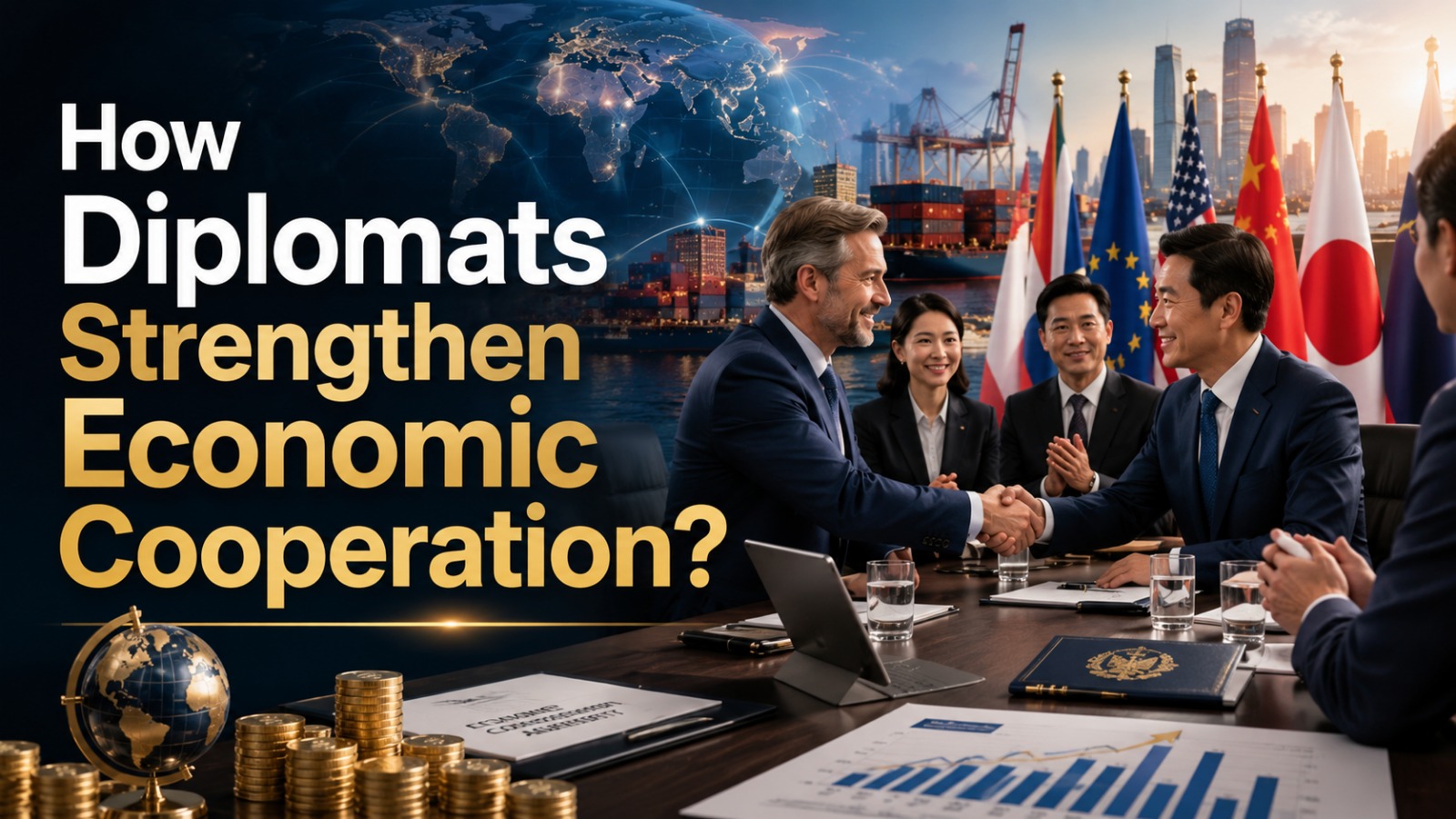
Economic cooperation plays a vital role in creating stable relationships between countries. It allows nations to increase trade, attract investment, share technology, and improve the welfare of their citizens. Behind many successful international economic partnerships are diplomats who work to build trust and encourage collaboration between governments. Their efforts often lead to agreements that benefit businesses, industries, and local communities.
Diplomats do much more than represent their countries in political matters. They negotiate trade agreements, promote foreign investment, resolve economic disputes, and strengthen international partnerships. Their ability to communicate effectively and understand global markets makes them valuable contributors to economic development. As globalization continues to connect countries more closely, the role of diplomats in economic cooperation becomes even more important.
THE ROLE OF DIPLOMATS IN ECONOMIC RELATIONS
Diplomats serve as the official representatives of their governments in international economic discussions. They communicate national economic priorities while seeking opportunities that create mutual benefits for all participating countries. Through regular meetings, negotiations, and international forums, diplomats help establish stronger business relationships between nations. Their work creates a foundation of trust that encourages long-term cooperation.
In addition to negotiations, diplomats gather valuable economic information about foreign markets. They analyze investment opportunities, identify trade barriers, and report important economic developments to their governments. This information helps policymakers and businesses make informed decisions. As a result, diplomats contribute to stronger economic planning and international competitiveness.
HOW DIPLOMATS PROMOTE INTERNATIONAL TRADE
One of the primary responsibilities of diplomats is promoting international trade. They participate in discussions that reduce tariffs, simplify customs procedures, and improve market access for exporters. These efforts make it easier for businesses to sell products and services across international borders. Increased trade creates jobs, stimulates economic growth, and expands consumer choices.
Diplomats also organize trade missions, business forums, and international exhibitions. These events connect entrepreneurs, investors, and government officials from different countries. By encouraging direct communication, diplomats help businesses discover new partnerships and investment opportunities. Their support strengthens commercial relationships that benefit both national economies.
ATTRACTING FOREIGN INVESTMENT
Foreign investment is essential for economic growth because it creates employment, improves infrastructure, and introduces advanced technologies. Diplomats actively promote their countries as attractive investment destinations by highlighting economic stability, skilled workers, and favorable business environments. They also explain investment regulations and provide guidance to international companies.
Furthermore, diplomats work closely with investment promotion agencies and business organizations. They help investors understand local laws and connect them with reliable partners. By reducing uncertainty and improving communication, diplomats increase investor confidence. This encourages more international companies to invest in long-term economic projects.
RESOLVING ECONOMIC DISPUTES
Economic disagreements sometimes occur because of trade restrictions, contract issues, or policy differences. Diplomats play an important role in resolving these disputes through peaceful negotiations. Their goal is to find fair solutions that protect national interests while maintaining positive international relationships. Diplomatic dialogue often prevents conflicts from becoming larger economic problems.
Effective dispute resolution also supports global market stability. Businesses feel more confident when governments solve disagreements through communication instead of confrontation. This stability encourages international trade and investment to continue growing. Diplomats therefore contribute to a more predictable and secure global economy.
SUPPORTING REGIONAL AND GLOBAL COOPERATION
Many economic challenges require cooperation between multiple countries. Diplomats participate in regional organizations and international institutions to develop common economic policies. They discuss topics such as sustainable development, digital trade, environmental protection, and financial cooperation. These discussions encourage countries to work together toward shared economic goals.
Regional cooperation also creates larger markets for businesses and improves economic resilience during global challenges. Diplomats help coordinate responses to financial crises, supply chain disruptions, and other international issues. Their collaborative efforts strengthen partnerships that benefit entire regions. Strong diplomatic relationships often lead to more stable and prosperous economies.
THE IMPORTANCE OF ECONOMIC DIPLOMACY IN THE FUTURE
Modern economic diplomacy continues to evolve alongside technological innovation and changing global markets. Diplomats now address issues related to digital commerce, cybersecurity, renewable energy, and sustainable investment. They must understand both traditional diplomacy and modern economic trends to represent their countries effectively. Continuous learning has become an essential part of their profession.
Future economic cooperation will depend on strong international partnerships built through trust and open communication. Diplomats will remain central to creating agreements that encourage innovation, investment, and sustainable growth. Their ability to balance national interests with global cooperation will continue shaping the international economy. As global challenges become more complex, skilled diplomats will be increasingly valuable.
CONCLUSION
Diplomats play a crucial role in strengthening economic cooperation by promoting trade, attracting investment, resolving disputes, and encouraging international collaboration. Their work helps countries develop stronger economic partnerships that support growth, innovation, and long-term prosperity. Through effective communication and negotiation, diplomats create opportunities that benefit governments, businesses, and citizens alike. As the global economy continues to evolve, diplomacy will remain an essential tool for building peaceful and successful economic relationships between nations.
About the Author
Gusti Ayu Tita P
Author — STEKOM University
An active author focused on academic issues, educational technology, and human resource development in the campus environment.















