
How Do Academic Competitions Improve Student Quality And Achievement?
Gusti Ayu Tita P
20 Agustus 2026
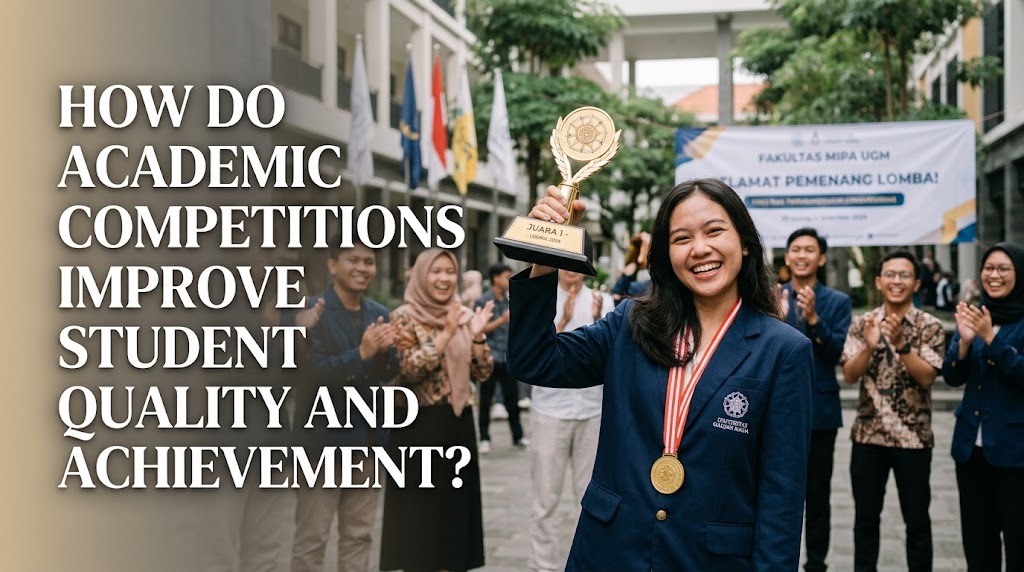
Academic competitions are activities that challenge students to apply their knowledge, skills, and creativity beyond regular classroom assignments. Competitions may include research contests, debates, essay competitions, academic olympiads, business case challenges, and innovation events. Through these activities, students face problems that require preparation, discipline, and critical thinking. The experience can influence both academic achievement and personal development. However, the benefits are strongest when competition is conducted in a healthy, fair, and learning oriented environment.
DEVELOPING CRITICAL THINKING SKILLS
Academic competitions encourage students to analyze information before reaching conclusions. Participants often need to identify problems, compare different ideas, and select appropriate solutions. This process develops critical thinking and analytical skills that are useful for academic study. Students also become more accustomed to questioning information and checking whether an argument is supported by reliable evidence. These habits can improve the quality of their work in and outside the classroom.
Competitions can also introduce students to complex problems that do not have one simple answer. They need to consider different perspectives before deciding which approach is most effective. Problem solving skills become stronger when students repeatedly practice analyzing challenges under specific requirements or time limits. Over time, this can make students more confident when facing difficult assignments. The ability to think logically can also contribute to better academic performance.
INCREASING LEARNING MOTIVATION
A competition can provide students with a clear learning target. Preparing for an academic event may encourage students to read more references, practice regularly, and understand subjects more deeply. This process can increase learning motivation because students have a specific goal to work toward. Instead of studying only for examinations, students may become interested in exploring knowledge for a particular challenge. This can create a more active approach to learning.
Competition can also encourage students to measure their own progress. They may identify subjects or skills that still need improvement after comparing their performance with others. However, students should not view winning as the only measure of success. Personal improvement and learning progress are equally important outcomes. A healthy competitive environment should encourage students to improve without creating unnecessary pressure.
DEVELOPING DISCIPLINE AND TIME MANAGEMENT
Competition preparation often involves strict deadlines and several stages of work. Students need to organize their study schedules while still completing regular university responsibilities. This situation can develop discipline and time management. Students learn to set priorities, create realistic schedules, and complete tasks on time. These habits can also improve their ability to manage academic assignments.
Preparation also teaches students that achievement usually requires consistent effort. Studying only shortly before a competition may not be enough for difficult challenges. Regular practice allows students to identify weaknesses and improve gradually. Consistency is an important part of academic achievement. The discipline developed during competitions can become a useful habit throughout university life.
STRENGTHENING CONFIDENCE AND RESILIENCE
Participating in competitions can place students outside their usual comfort zones. They may need to perform in front of judges, compete with experienced participants, or defend their ideas under pressure. Successfully managing these situations can increase self confidence. Students begin to recognize their abilities and become more willing to accept challenging opportunities. This confidence can influence their participation in other academic activities.
Failure is also an important part of the competitive experience. Students may not always receive awards or achieve the results they expected. Instead of seeing failure as proof of inability, students can use feedback to identify areas for improvement. Resilience helps students recover from disappointment and continue learning. This attitude is important because academic and professional development rarely follows a perfectly successful path.
ENCOURAGING TEAMWORK AND LEADERSHIP
Some academic competitions require students to work in groups. Team members need to divide responsibilities, communicate ideas, manage deadlines, and solve disagreements. These activities can develop teamwork and collaboration skills. Students learn that individual talent is not always enough to achieve a shared objective. Effective cooperation requires trust, communication, and respect for different strengths.
Competitions can also provide opportunities to practice leadership. A student may coordinate tasks, organize meetings, or help the team make important decisions. Leadership involves responsibility, communication, and the ability to support others, not simply giving instructions. These experiences can prepare students for group projects, student organizations, and professional workplaces. Leadership skills can also contribute to broader student quality.
CREATING OPPORTUNITIES FOR FEEDBACK AND NETWORKING
Academic competitions provide opportunities to receive feedback from lecturers, researchers, judges, professionals, and other participants. Constructive feedback can help students understand weaknesses that may not be obvious to them. Feedback supports continuous improvement by showing students what they can do better. Students can then apply these lessons to future assignments or competitions. This makes competition useful even when students do not win.
Competitions can also connect students with people who share similar academic interests. Participants may exchange ideas, discuss research, or discover opportunities for collaboration. These relationships can expand students' academic and professional networks. Networking can be particularly valuable when it leads to future research projects, internships, or educational opportunities. Meaningful connections can therefore become another long term benefit of competition.
SUPPORTING STUDENT ACHIEVEMENT
Academic competitions can contribute to student achievement by encouraging stronger preparation and deeper learning. Students who participate may develop better study habits, stronger subject knowledge, and greater confidence in applying what they know. Awards and competition records can also become evidence of achievement, although they should not be considered the only measure of student quality. Academic achievement includes knowledge, skills, effort, and personal growth. A student can gain significant value from competition even without receiving a prize.
The greatest benefit occurs when competition is integrated with other learning experiences. Classroom learning, research, internships, organizations, and community activities can complement the skills gained through competitions. Students should therefore use competitions as one part of a broader educational journey. This balanced approach can help them develop both academic competence and practical abilities. As a result, competition can contribute to well rounded student development.
CONCLUSION
Academic competitions can improve student quality and achievement by creating opportunities to practice critical thinking, strengthen academic knowledge, develop creativity, and improve communication. They can also build discipline, confidence, resilience, teamwork, leadership, and problem solving skills. However, the value of competition should not be measured only by trophies or rankings. The learning process, personal progress, feedback, and skills gained are equally important. When managed fairly and supported by a healthy learning environment, academic competitions can help students become more capable, confident, adaptable, and prepared for future challenges.
About the Author
Gusti Ayu Tita P
Author — STEKOM University
An active author focused on academic issues, educational technology, and human resource development in the campus environment.















