
How Do Blue Economy Initiatives Create New Opportunities for Coastal Communities?
Gusti Ayu Tita P
30 Juli 2026
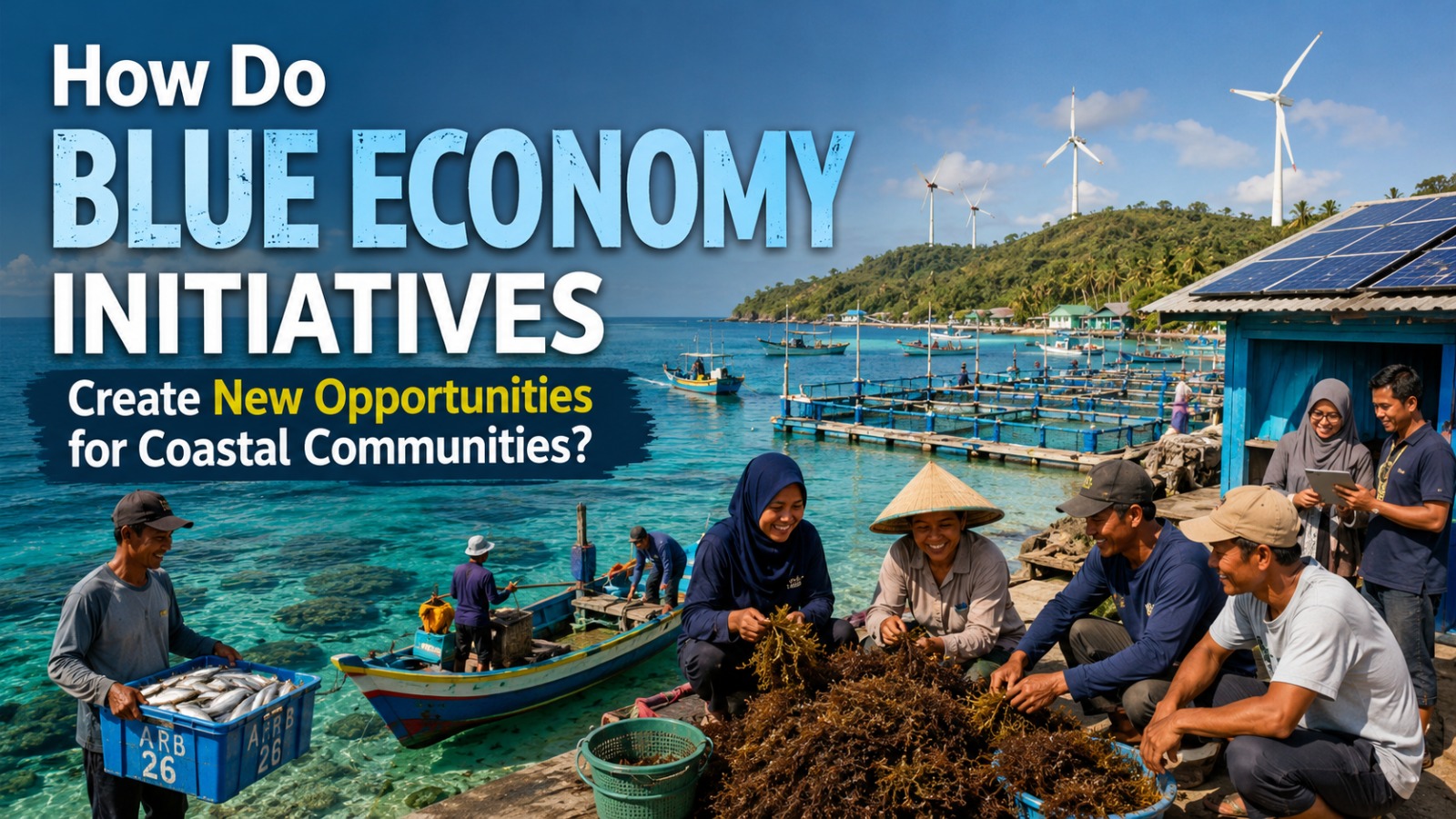
The Blue Economy has become one of the most promising approaches to achieving sustainable economic growth while protecting marine and coastal ecosystems. It focuses on using ocean resources responsibly to generate employment, improve livelihoods, encourage innovation, and preserve biodiversity. Around the world, governments, businesses, and local communities are investing in blue economy initiatives that balance environmental conservation with economic development.
For coastal communities, these initiatives provide opportunities to diversify income, improve fisheries, expand sustainable tourism, develop renewable marine energy, and strengthen resilience against climate change. As marine resources become increasingly valuable, adopting sustainable practices ensures that future generations can continue benefiting from healthy oceans while supporting long-term prosperity.
UNDERSTANDING THE BLUE ECONOMY
The Blue Economy refers to the sustainable use of ocean and coastal resources to promote economic development, improve livelihoods, and maintain healthy marine ecosystems. Unlike traditional economic models that often prioritize short-term profits, the blue economy encourages responsible resource management that benefits both people and nature.
This concept includes sectors such as sustainable fisheries, aquaculture, marine tourism, shipping, renewable ocean energy, marine biotechnology, and coastal conservation. By integrating environmental protection into economic planning, coastal regions can generate long-lasting prosperity while reducing environmental degradation.
HOW BLUE ECONOMY INITIATIVES BENEFIT COASTAL COMMUNITIES
One of the greatest advantages of the blue economy is the creation of new employment opportunities. Sustainable fisheries, eco-tourism, marine transportation, seafood processing, and coastal restoration projects provide diverse jobs that improve household incomes and reduce poverty in coastal areas.
These initiatives also encourage local entrepreneurship by supporting small businesses involved in seafood products, marine services, handicrafts, and tourism activities. Community participation plays a vital role because local knowledge helps ensure that development remains environmentally responsible and economically beneficial.
SUPPORTING SUSTAINABLE FISHERIES
Healthy fish populations are essential for maintaining food supplies and supporting millions of livelihoods worldwide. Blue economy programs promote responsible fishing practices, including science-based catch limits, habitat protection, and monitoring systems that prevent overfishing.
Sustainable fisheries also improve seafood quality and market value while protecting marine biodiversity. By maintaining healthy fish stocks, coastal communities can continue earning stable incomes without exhausting natural resources.
EXPANDING SUSTAINABLE AQUACULTURE
Sustainable aquaculture has become an important component of the blue economy by producing seafood while reducing pressure on wild fish populations. Modern aquaculture uses improved farming techniques that minimise pollution, conserve water, and enhance fish health.
Responsible fish farming creates additional employment opportunities in production, processing, transportation, and marketing. It also strengthens food security by providing a reliable supply of high-quality seafood throughout the year.
DEVELOPING ECO-TOURISM OPPORTUNITIES
Marine and coastal tourism can generate significant income when managed responsibly. Eco-tourism encourages visitors to enjoy coral reefs, mangrove forests, beaches, marine wildlife, and cultural heritage while supporting conservation efforts.
Local communities benefit by offering accommodation, guided tours, local cuisine, handicrafts, and transportation services. Tourism revenue can also finance conservation projects that protect valuable coastal ecosystems for future generations.
ENCOURAGING MARINE INNOVATION AND TECHNOLOGY
Technological innovation is transforming how coastal resources are managed. Digital technologies such as satellite monitoring, drones, artificial intelligence, GPS tracking, and smart sensors help improve fisheries management and monitor marine ecosystems more efficiently.
These innovations increase productivity, reduce illegal fishing, improve safety at sea, and provide valuable data for better decision-making. As technology becomes more accessible, coastal communities can adopt smarter and more sustainable business practices.
IMPROVING COASTAL RESILIENCE
Climate change presents major challenges for coastal populations through rising sea levels, stronger storms, and coastal erosion. Blue economy initiatives invest in nature-based solutions such as mangrove restoration, coral reef conservation, and wetland protection that naturally reduce disaster risks.
Healthy coastal ecosystems also support fisheries, tourism, and biodiversity while protecting communities from extreme weather events. Investing in resilience ensures both environmental sustainability and economic stability.
PROMOTING EDUCATION AND SKILL DEVELOPMENT
Education is essential for maximizing the benefits of the blue economy. Training programs help fishermen, entrepreneurs, tourism operators, and young professionals develop skills in sustainable resource management, business development, and modern marine technologies.
Greater knowledge encourages innovation and responsible environmental stewardship. Capacity building enables coastal communities to adapt to changing economic conditions while improving competitiveness in global markets.
STRENGTHENING PARTNERSHIPS FOR SUSTAINABLE GROWTH
Successful blue economy initiatives depend on strong cooperation among governments, private companies, research institutions, non-governmental organisations, and local communities. These partnerships encourage investment, knowledge sharing, policy development, and sustainable resource management.
Collaborative efforts also improve access to funding, technology, and international markets. When stakeholders work together, coastal communities gain greater opportunities for inclusive and sustainable economic growth.
CONCLUSION
The Blue Economy offers an innovative pathway toward sustainable development by combining economic opportunity with environmental protection. Through sustainable fisheries, responsible aquaculture, eco-tourism, marine innovation, and climate resilience, coastal communities can create diverse sources of income while preserving valuable marine ecosystems.
As global demand for marine resources continues to grow, investing in sustainable ocean management will become increasingly important. By embracing blue economy initiatives, societies can build stronger coastal economies, protect biodiversity, improve food security, and ensure that healthy oceans continue supporting future generations.
About the Author
Gusti Ayu Tita P
Author — STEKOM University
An active author focused on academic issues, educational technology, and human resource development in the campus environment.















