
How Do Ministers Help Implement Government Programs?
Gusti Ayu Tita P
12 Agustus 2026
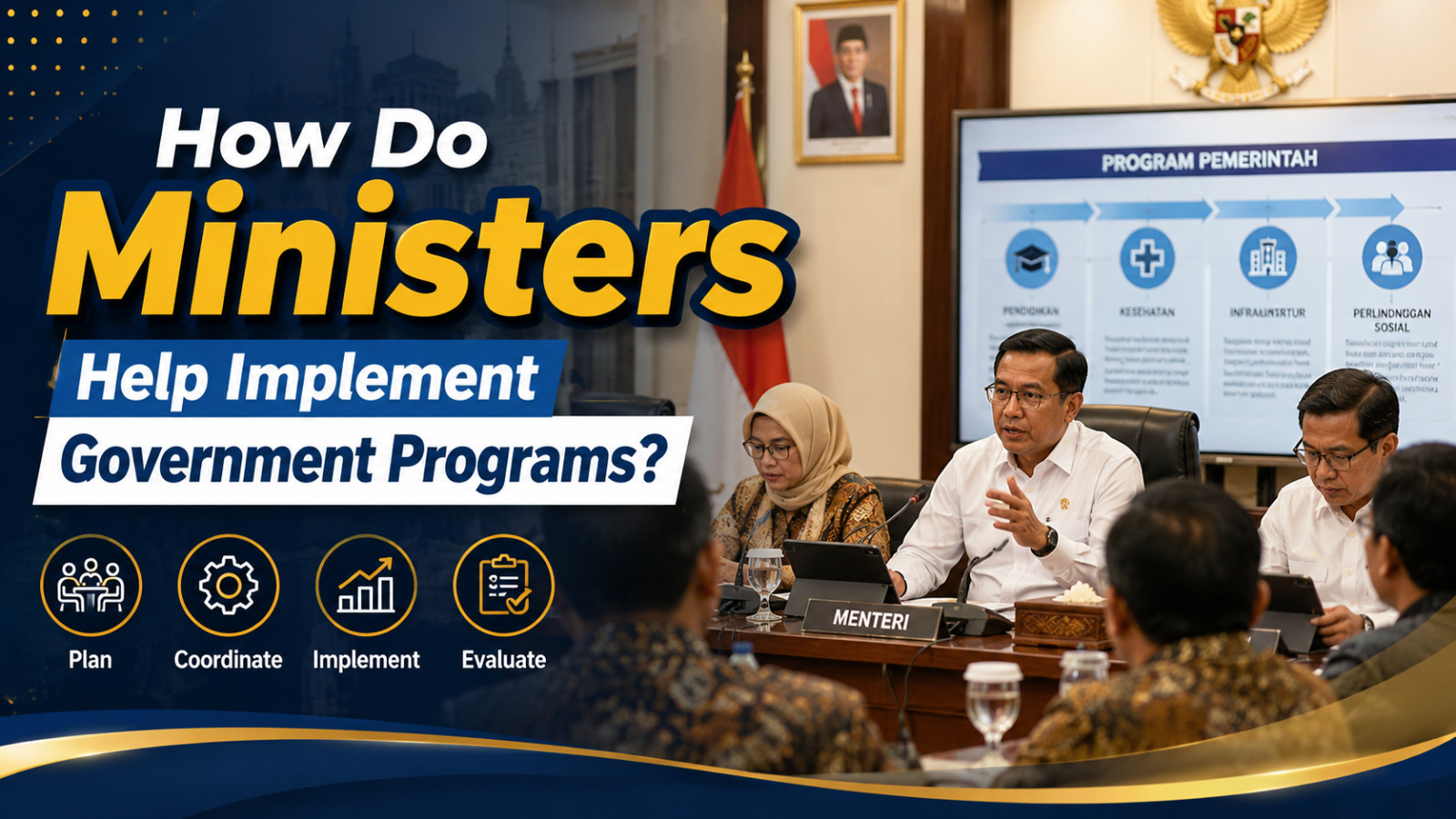
Government programs are designed to address public needs and achieve national development goals. Ministers play an important role in implementing these programs because they lead ministries responsible for specific areas of government. They help turn government policies into practical programs and activities. Ministers also coordinate officials, manage implementation, and monitor results. Through these responsibilities, government programs can be carried out in a more organized and effective way.
PLANNING GOVERNMENT PROGRAMS
Planning is an important first step in implementing government programs. Ministers guide their ministries in identifying priorities, objectives, target groups, and activities. Good planning helps determine the resources, responsibilities, and expected results of a program. Plans should also consider government priorities and relevant information. This allows programs to be prepared according to actual needs.
Ministries can use data, research, public feedback, and previous evaluations when preparing programs. These sources help officials understand the problems that need to be addressed. Ministers provide direction so that planning remains consistent with government policies. Careful planning can make program implementation more organized and measurable.
TURNING POLICIES INTO PROGRAMS
Government policies provide direction, while programs turn those policies into practical actions. Ministers guide their ministries in developing activities that support the objectives of government policies. A good program should have clear goals, responsibilities, resources, and measurable outcomes. This makes it easier for officials to understand what needs to be done.
For example, policies in education may be implemented through programs related to learning, teacher development, or educational facilities. Similar programs can be developed in healthcare, economic development, infrastructure, and other sectors. Ministers ensure that programs remain consistent with government priorities and applicable regulations. This process connects government policies with concrete actions.
COORDINATING WITH OTHER INSTITUTIONS
Many government programs involve several ministries, agencies, or regional governments. Ministers therefore need to coordinate with other institutions when their responsibilities are connected. Coordination helps clarify responsibilities and prevents overlapping or conflicting activities. It also allows different institutions to share information and resources when necessary.
Coordination can take place before, during, and after program implementation. Each institution may have different responsibilities and expertise that can support the same program. Ministers help ensure that these contributions remain aligned with the program's objectives. Effective cooperation can make implementation more efficient.
MONITORING AND EVALUATING PROGRAMS
Government programs need to be monitored after implementation begins. Ministers and their ministries need to assess whether activities are progressing according to plan. Monitoring helps identify problems, while evaluation measures the effectiveness and results of a program. The findings can then be used to improve implementation.
If problems are discovered, the ministry can review the causes and make appropriate adjustments. Evaluation can also show which activities are successful and which need improvement. Regular evaluation supports accountability and responsible use of government resources. Through this process, programs can become more effective and responsive to public needs.
CONCLUSION
Ministers help implement government programs through planning, policy implementation, coordination, monitoring, and evaluation. They guide ministries in turning government priorities into practical activities. Cooperation with other institutions is also important when programs involve multiple sectors. Continuous monitoring helps identify problems and improve implementation. Through effective leadership, ministers help government programs achieve their intended goals.
About the Author
Gusti Ayu Tita P
Author — STEKOM University
An active author focused on academic issues, educational technology, and human resource development in the campus environment.















