
How Do Only Children Learn to Share and Cooperate with Others?
Gusti Ayu Tita P
7 September 2026
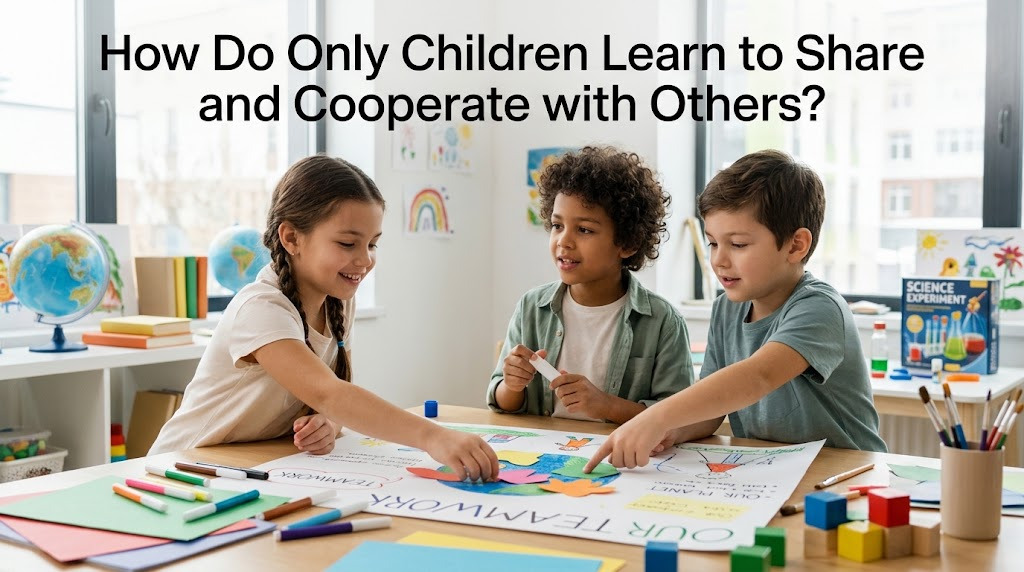
Sharing and cooperation are important social skills that children need to develop as they grow. Some people assume that only children have difficulty sharing because they do not have siblings at home. However, the absence of siblings does not prevent a child from learning how to cooperate, communicate, and consider the needs of others.
Social skills are developed through daily experiences and interactions. Parents, teachers, friends, relatives, and community activities can all provide opportunities for an only child to practice sharing and teamwork. With appropriate guidance, an only child can develop strong social abilities and build positive relationships with others.
UNDERSTANDING HOW CHILDREN LEARN TO SHARE
Sharing is not always an instinctive behavior for young children. They gradually learn that other people have needs, preferences, and feelings that deserve consideration. An only child can learn this concept through interactions with parents, classmates, friends, and other relatives. Sharing becomes easier when children understand why cooperation is important.
Parents can introduce sharing through simple everyday situations. For example, children can be encouraged to share snacks, take turns using toys, or lend books to friends. These small experiences can teach children that sharing does not mean losing everything they have. Instead, sharing can create opportunities for positive interactions and stronger relationships.
TEACHING THE IMPORTANCE OF TAKING TURNS
Taking turns is one of the easiest ways to introduce cooperation to an only child. Games, sports, and simple household activities can provide natural opportunities for children to wait patiently and allow others to participate. Parents can explain that everyone deserves a chance to use something or contribute to an activity. Learning to take turns helps children develop patience and respect.
Parents should avoid forcing children to give away every possession they have. Children can have personal belongings that they are not required to share. Teaching the difference between personal ownership and appropriate sharing can help children develop healthy boundaries. This approach allows children to become generous without feeling that their personal space is being ignored.
PROVIDING OPPORTUNITIES FOR GROUP ACTIVITIES
Group activities are valuable for helping an only child practice cooperation. Sports teams, school projects, music groups, art classes, and community activities require children to interact with people who have different personalities and ideas. Through these experiences, children learn how to communicate and work toward common goals. Team activities provide practical lessons that cannot always be learned through individual play.
Parents can choose activities based on the child's interests and personality. A child who enjoys sports may benefit from joining a team, while another child may prefer a science club, theater group, or creative workshop. The important thing is to provide regular opportunities for interaction. Over time, these experiences can make cooperation feel more natural.
ENCOURAGING EMPATHY AND UNDERSTANDING
Empathy helps children understand why sharing and cooperation matter. Parents can encourage an only child to think about how another person might feel in a particular situation. Questions such as "How do you think your friend feels?" can help children consider perspectives beyond their own. Empathy allows children to understand the emotional impact of their actions.
Parents can also demonstrate empathy through their own behavior. Children often learn by observing how adults listen, compromise, apologize, and help others. When parents consistently model respectful communication, children have a practical example to follow. These everyday interactions can gradually strengthen emotional awareness.
LETTING CHILDREN SOLVE SMALL CONFLICTS
Conflicts are a normal part of learning how to cooperate. An only child may need opportunities to experience disagreements with friends or classmates and learn how to resolve them. Parents can provide guidance without immediately solving every problem for the child. Allowing children to handle age-appropriate conflicts can strengthen communication and problem-solving skills.
For example, if two children want to use the same toy, parents can encourage them to discuss possible solutions. They might decide to take turns, find another activity, or play together. These experiences teach children that disagreements do not necessarily have to end a friendship. Healthy conflict resolution is an important part of successful cooperation.
PRAISING COOPERATIVE BEHAVIOR
Positive feedback can encourage children to repeat helpful social behaviors. When an only child shares, listens, helps someone, or participates effectively in a group, parents can recognize the effort. Specific praise is often more useful than simply saying that the child is good. For example, parents can point out that the child showed patience by waiting for another person.
However, parents should avoid making children feel that they must always please others. Cooperation should involve mutual respect rather than constant self-sacrifice. Children need to understand that being kind does not mean ignoring their own needs or boundaries. Balanced encouragement can help children become considerate while maintaining healthy self-confidence.
BUILDING SOCIAL SKILLS THROUGH DAILY EXPERIENCES
Children do not need special lessons every day to develop cooperation skills. Ordinary experiences such as helping prepare meals, cleaning the house, playing with friends, or working on school assignments can become opportunities to practice teamwork. Parents can involve an only child in age-appropriate responsibilities and explain how everyone's contribution helps. Daily routines can become practical social learning experiences.
As children grow older, they can take on more complex responsibilities and participate in larger social environments. They may learn to negotiate, lead a group, compromise, and support others. These skills can benefit them at school, university, work, and in personal relationships. Being an only child does not limit social development when children receive enough opportunities to interact and cooperate with others.
CONCLUSION
Only children can learn to share and cooperate just as effectively as children who grow up with siblings. The key is providing meaningful opportunities to interact with others and teaching important values such as empathy, patience, communication, and respect. Social skills are developed through experience, not determined by the number of siblings a child has.
Parents can support this process by encouraging group activities, teaching children to take turns, allowing them to solve small conflicts, and recognizing positive cooperative behavior. At the same time, children should learn that healthy sharing includes respecting personal boundaries. With consistent guidance and real-life practice, an only child can become a confident, caring, and cooperative member of society.
About the Author
Gusti Ayu Tita P
Author — STEKOM University
An active author focused on academic issues, educational technology, and human resource development in the campus environment.















