How Do Outfits Gadgets and Accents Create Unwritten Social Hierarchies Among Students?
Gusti Ayu Tita P
24 Agustus 2026
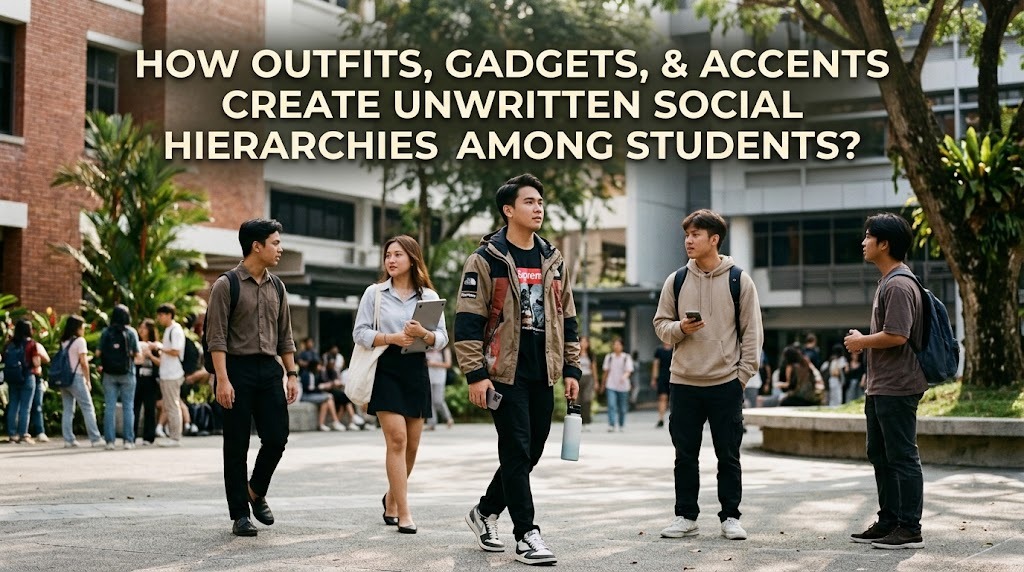
Student social life is influenced by many factors beyond academic performance. Outfits, gadgets, and accents can affect first impressions and sometimes shape how students perceive one another. These elements may communicate information about lifestyle, identity, interests, or social background, even when students do not intentionally use them to gain attention. Over time, repeated perceptions can create unwritten social hierarchies within student communities. However, these hierarchies are informal and do not necessarily reflect a person's actual ability, character, or value.
HOW SOCIAL GROUPS FORM ACADEMIC HIERARCHIES
Students naturally form friendships and social groups based on shared interests and experiences. Clothing styles, gadgets, hobbies, and ways of speaking can become visible markers of these groups. People may feel more comfortable interacting with others who appear similar to themselves. Shared symbols can strengthen a sense of belonging.
At the same time, group boundaries can create informal hierarchies. Some groups may receive more attention or social recognition than others. This does not necessarily happen through deliberate exclusion, but repeated patterns of interaction can gradually create differences in perceived popularity. Social hierarchies can develop through everyday behavior rather than formal rules.
THE ROLE OF BRANDS AND CONSUMER CULTURE
Brands can carry meanings beyond their practical functions. Some products become associated with success, luxury, creativity, technology, or particular lifestyles. Students may therefore use brands as ways of expressing identity or recognizing people with similar interests. Consumer culture can influence how social status is communicated among students.
However, brand recognition can also encourage unnecessary comparison. Students may feel pressure to purchase certain products simply to fit into a social environment. This can create financial pressure and make material possessions seem more important than personal qualities. Social acceptance should not depend on the ability to afford particular brands.
SOCIAL MEDIA STRENGTHENS VISUAL STATUS SIGNALS
Social media allows students to display outfits, gadgets, events, achievements, and lifestyles to a wider audience. A carefully presented online identity can influence how classmates perceive someone's social position. Posts showing fashionable clothing or expensive devices may create an impression of popularity or success. Digital platforms can amplify social symbols that already exist offline.
The problem is that online content often represents only selected moments. Students may compare their ordinary daily lives with carefully prepared images from other people. This can create unrealistic perceptions of social status. Online visibility should not be treated as a complete representation of someone's real life.
WHY STUDENTS MAY FOLLOW SOCIAL TRENDS
Students often want to feel accepted by their peers. Following popular fashion trends or using widely recognized gadgets can make someone feel connected to a particular group. This behavior is not necessarily negative because shared interests can help people form friendships. The desire for belonging is a normal part of social interaction.
Problems can arise when students feel that they must constantly follow trends to maintain their position. They may spend money they cannot comfortably afford or hide aspects of themselves to fit expectations. A healthier environment allows students to participate without forcing them to imitate others. Belonging should not require students to sacrifice their individuality.
SOCIAL HIERARCHIES DO NOT ALWAYS REFLECT REAL ABILITY
Informal status can influence first impressions, but it does not reliably measure intelligence, creativity, kindness, or competence. A student with simple clothing may have excellent academic or leadership skills. Someone with an expensive laptop may have no interest in competing socially. Visible symbols provide limited information about a person's actual capabilities.
Students should therefore avoid making quick judgments based on appearance. Taking time to understand someone's ideas, behavior, and character provides a more accurate impression. Personal qualities are usually more meaningful than material signals.
THE IMPACT ON STUDENT CONFIDENCE
Unwritten social hierarchies can affect how students feel about themselves. Someone who believes they do not fit the dominant style may become less confident in social situations. They may avoid discussions, events, or friendships because they fear being judged. Social comparison can influence participation and self confidence.
Students can reduce this pressure by recognizing that social trends change constantly. Personal worth does not depend on wearing a particular brand or owning the newest device. Building confidence around skills, values, and personal interests can create a more stable sense of identity. Confidence becomes stronger when it is based on internal qualities rather than external approval.
HOW STUDENTS CAN CREATE A MORE INCLUSIVE ENVIRONMENT
Students can help reduce unhealthy social hierarchies by avoiding assumptions about classmates. Instead of judging people based on clothing, gadgets, or accents, they can focus on how individuals behave and contribute. Simple actions such as inviting different classmates into conversations can make social environments more welcoming. Inclusion begins with everyday interactions.
Educational institutions can also support this process. Discussions about diversity, digital culture, consumer behavior, and social stereotypes can help students recognize unconscious biases. Teachers can encourage students to value different backgrounds and forms of expression. Awareness can reduce the influence of superficial status symbols.
CONCLUSION
Outfits, gadgets, and accents can create unwritten social hierarchies among students because people often use visible and audible signals to form quick impressions. Fashion can communicate identity, gadgets can suggest lifestyle, and accents can influence perceptions of background or social position. Social media and consumer culture can make these signals even more visible.
However, these symbols should never be treated as reliable measures of someone's worth or ability. A healthier student environment values character, knowledge, creativity, communication, respect, and individuality rather than material appearance. By questioning assumptions and promoting inclusion, students can build social communities where differences become sources of connection instead of reasons for hierarchy.
About the Author
Gusti Ayu Tita P
Author — STEKOM University
An active author focused on academic issues, educational technology, and human resource development in the campus environment.