How Do Ports Support Efficient Goods Distribution?
Gusti Ayu Tita P
10 Agustus 2026
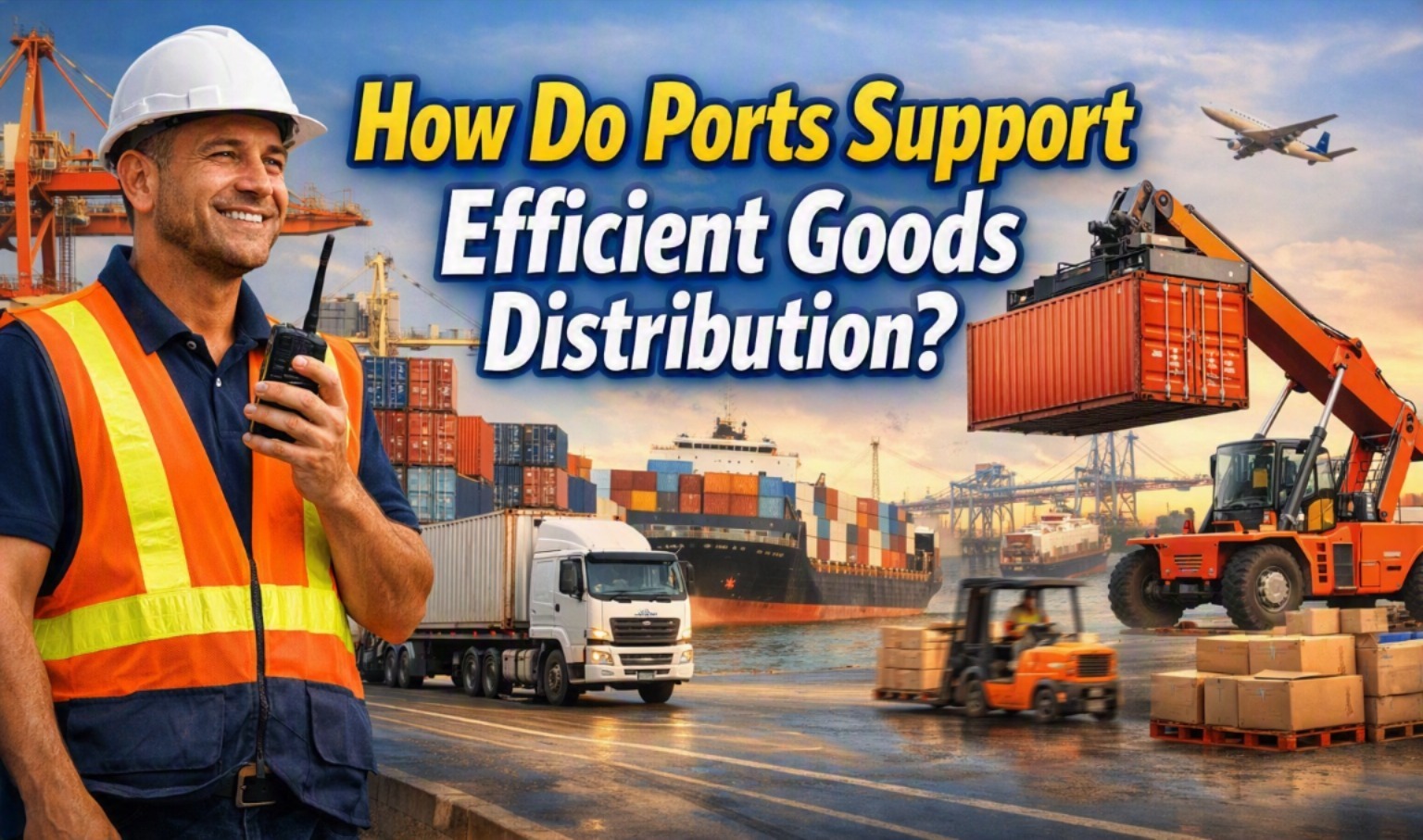
Ports play an important role in moving goods from one region to another and connecting businesses with domestic and international markets. They serve as key transportation hubs where cargo can be transferred between ships, trucks, trains, and warehouses. Efficient port operations help goods reach their destinations faster, safer, and at a lower cost. This makes ports an essential part of modern supply chains and international trade.
PORTS CONNECT DIFFERENT TRANSPORTATION MODES
One of the main ways ports support efficient goods distribution is by connecting multiple transportation modes. Imported and exported goods often need to move between ships, trucks, trains, and distribution centers. Ports provide facilities where containers can be transferred efficiently from one mode of transport to another. This process, known as intermodal transportation, helps reduce unnecessary handling and delays.
A well-connected port can also improve the movement of goods across long distances. Rail and road connections allow cargo to leave the port and continue toward factories, warehouses, retailers, or customers. When these transportation networks work together, businesses can manage deliveries more efficiently and maintain a more reliable supply chain.
MODERN CARGO HANDLING SPEEDS UP DISTRIBUTION
Efficient ports use modern cargo-handling equipment to move goods quickly between vessels and land transportation. Container cranes, automated systems, forklifts, and specialized handling equipment can reduce the time required to load and unload cargo. Faster cargo handling helps ships spend less time at terminals and allows ports to process more goods.
Technology also supports better cargo management. Digital tracking systems can provide information about the location and status of shipments throughout the distribution process. With accurate information, logistics companies can coordinate transportation more effectively, reduce waiting times, and respond more quickly to potential problems.
PORTS HELP REDUCE LOGISTICS COSTS
Efficient distribution depends not only on speed but also on controlling logistics costs. Delays at ports can increase expenses related to storage, fuel, labor, vessel operations, and transportation. Efficient port management can reduce these unnecessary costs by improving cargo flow and minimizing waiting times.
Ports can also create economic advantages through large-scale cargo handling. Ships can transport significant quantities of goods in a single journey, which can make maritime transportation cost-effective for international trade. When ports operate efficiently, these cost advantages can be passed through the supply chain and help businesses manage their distribution expenses.
WAREHOUSES AND STORAGE SUPPORT CARGO FLOW
Ports often provide access to storage facilities, warehouses, and distribution centers that help businesses manage cargo before it reaches its final destination. These facilities are useful when goods cannot be transported immediately after arriving at the port. Proper storage prevents congestion and gives logistics operators greater flexibility in managing deliveries.
Strategic storage can also support inventory management. Businesses can keep goods closer to their target markets and distribute them when demand increases. However, efficient storage requires good planning because excessive inventory can increase costs while insufficient storage capacity can create congestion and delays.
DIGITAL TECHNOLOGY IMPROVES PORT EFFICIENCY
Technology has become increasingly important in modern port operations. Port management systems can help coordinate vessels, cargo, equipment, workers, and transportation providers. Digital documentation can also reduce paperwork and make information exchange between different parties faster and more accurate.
Technologies such as automated equipment, cargo tracking, data analytics, and electronic documentation can improve visibility throughout the supply chain. Better data allows port operators and logistics companies to identify bottlenecks and make informed decisions. As a result, digitalization can improve reliability while supporting faster goods distribution.
PORTS IMPROVE SUPPLY CHAIN RELIABILITY
A reliable port helps businesses maintain a stable supply chain. Manufacturers depend on the timely arrival of raw materials, while retailers need finished products to reach stores and customers according to demand. When port operations are predictable, businesses can plan transportation, production, and inventory more effectively.
Ports also need to manage risks such as weather disruptions, equipment failures, congestion, and changes in cargo volumes. Effective planning, sufficient infrastructure, and coordinated operations can help reduce the impact of these challenges. Strong risk management makes goods distribution more resilient when unexpected disruptions occur.
EFFICIENT PORTS SUPPORT INTERNATIONAL TRADE
Ports are essential for international trade because a large share of global merchandise moves by sea. They connect producers and suppliers with markets across countries and continents. Efficient port operations therefore influence how quickly and economically businesses can participate in global trade.
A competitive port can attract shipping services, logistics companies, manufacturers, and other businesses. This can support regional economic growth by creating employment and increasing demand for transportation, warehousing, maintenance, and other services. For this reason, port efficiency has benefits that extend beyond cargo movement alone.
CONCLUSION
Businesses benefit from ports that provide fast, reliable, and predictable cargo services. Efficient distribution can reduce delivery times, improve inventory planning, and lower transportation-related expenses. These advantages can help companies respond more effectively to customer demand and changing market conditions.
Ultimately, ports are more than locations where ships load and unload goods. They are strategic links within the supply chain that connect transportation networks, logistics services, warehouses, businesses, and consumers. By combining modern infrastructure, technology, skilled workers, and effective management, ports can make goods distribution more efficient and support stronger economic activity.
About the Author
Gusti Ayu Tita P
Author — STEKOM University
An active author focused on academic issues, educational technology, and human resource development in the campus environment.