How Do Ports Support Smooth Export and Import Activities?
Gusti Ayu Tita P
10 Agustus 2026
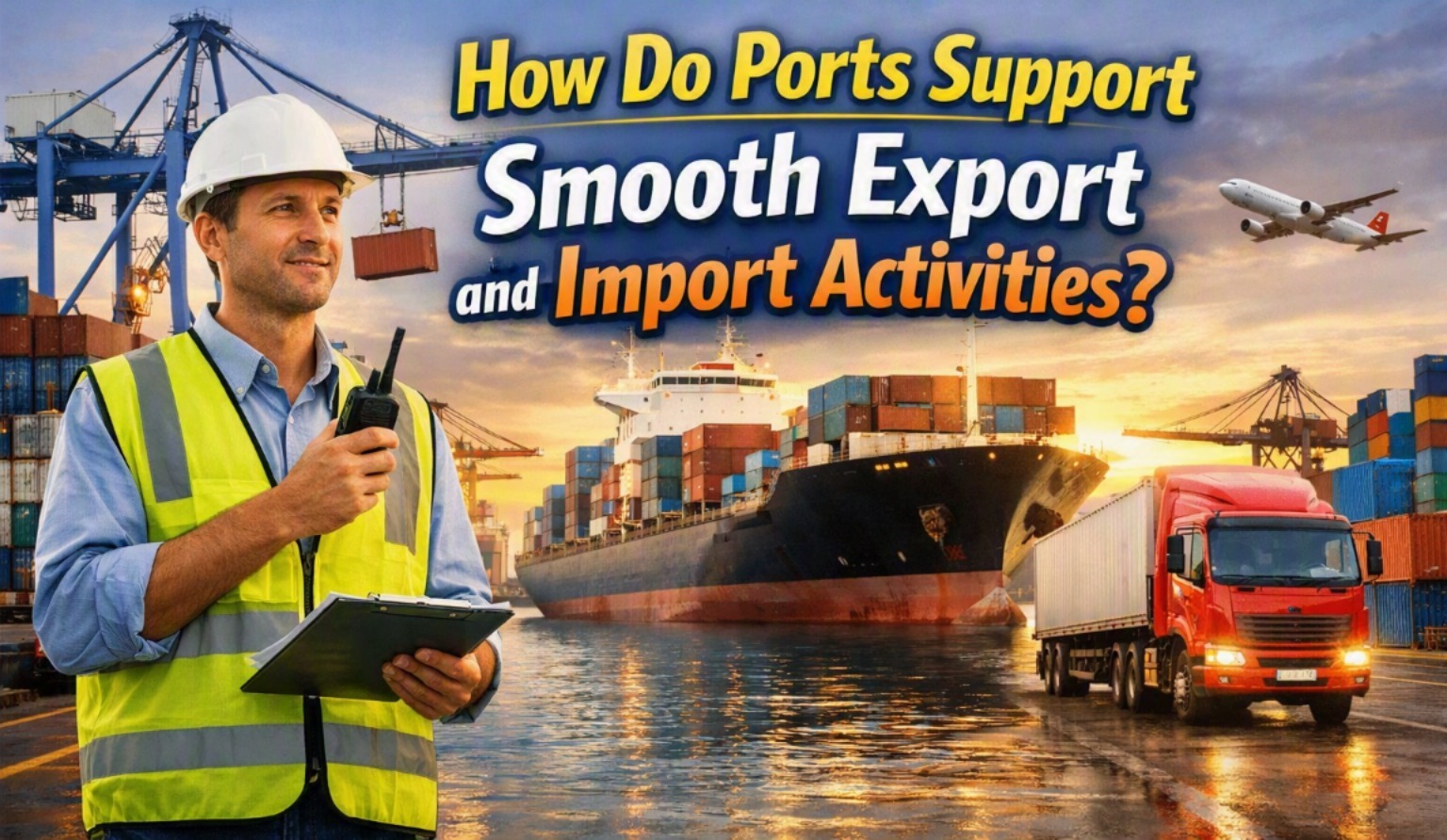
Ports are essential facilities that support international trade by connecting countries through sea transportation. Most goods traded across borders, including raw materials, manufactured products, food, machinery, and consumer goods, are transported by ships because maritime transport can carry large quantities over long distances. A well-managed port helps goods move efficiently from producers to international markets and from foreign suppliers to domestic businesses. Without reliable ports, export and import activities could face delays, higher costs, and supply chain disruptions.
Ports do more than provide a place for ships to arrive and depart. They also manage cargo handling, storage, customs procedures, documentation, inspections, and transportation connections. These functions make ports important links between the sea, land, businesses, and consumers. Efficient port operations can therefore improve trade performance and support economic growth.
FACILITATING THE MOVEMENT OF GOODS
One of the main roles of ports is to facilitate the loading and unloading of cargo between ships and land transportation. Modern ports use cranes, forklifts, conveyor systems, and other equipment to handle different types of goods efficiently. Containers can be transferred from ships to trucks or trains and then delivered to warehouses, factories, distribution centers, or other destinations. Efficient cargo handling helps reduce the time ships spend in port.
Ports also organize cargo according to its type, destination, and handling requirements. Container terminals, bulk terminals, liquid cargo facilities, and specialized storage areas are designed for different products. Proper cargo management reduces the risk of damage, loss, or misplacement. As a result, exporters and importers can move their goods more safely and predictably.
SUPPORTING CUSTOMS AND TRADE PROCEDURES
Export and import activities require various customs procedures and trade documents. Ports provide facilities where customs authorities and other relevant agencies can inspect shipments and verify information. These processes help ensure that goods comply with regulations related to taxation, safety, security, and international trade. Proper documentation also helps authorities identify the origin, destination, quantity, and type of goods.
Efficient coordination between port operators, customs authorities, shipping companies, freight forwarders, and traders can make these procedures faster. Digital documentation and electronic data systems can further reduce paperwork and improve information accuracy. When administrative processes are well organized, businesses can avoid unnecessary delays. This is especially important for goods that are time-sensitive or require special handling.
REDUCING LOGISTICS COSTS AND DELAYS
Efficient ports can help businesses control logistics costs by reducing waiting times and improving the movement of cargo. Delays at ports may create additional expenses for storage, transportation, labor, and ship operations. When cargo can be processed quickly, companies can manage their supply chains more efficiently. This can contribute to more competitive prices for products in domestic and international markets.
Port efficiency also depends on good infrastructure and coordination. Adequate berths, modern cargo equipment, sufficient storage capacity, reliable roads, and rail connections can help prevent congestion. Port authorities and operators must continuously improve operational planning to respond to changing cargo volumes. Better coordination can make the movement of goods more predictable from the port to the final destination.
CONNECTING PORTS WITH THE SUPPLY CHAIN
Ports are important parts of a larger global supply chain. Goods arriving by ship usually need to continue their journey by truck, train, barge, or other forms of transportation. This means a port must have strong connections with inland transportation networks. Efficient connections allow cargo to move smoothly between ports, warehouses, factories, distribution centers, and markets.
The integration of different transportation modes is often known as multimodal transportation. For example, imported containers can be unloaded from a ship, transported by rail to an inland terminal, and then delivered by truck to a factory. A similar process can happen in reverse for exported products. Good coordination between these transportation modes reduces unnecessary handling and helps maintain a steady flow of goods.
PROVIDING SAFE AND SECURE TRADE OPERATIONS
Safety and security are also important for smooth export and import activities. Ports must manage risks related to cargo damage, accidents, illegal activities, hazardous materials, and unauthorized access. Security measures can include cargo inspections, surveillance systems, access controls, identification procedures, and cooperation with relevant authorities. These measures help protect workers, vessels, cargo, and surrounding communities.
At the same time, safety procedures must not unnecessarily slow down legitimate trade. Ports need to balance effective security with efficient operations by using appropriate technology and risk-based inspection methods. Proper safety standards also help protect workers who operate heavy equipment and handle different types of cargo. A secure and well-managed port creates greater confidence for shipping companies, traders, and logistics providers.
USING TECHNOLOGY TO IMPROVE PORT EFFICIENCY
Technology has become increasingly important in improving port operations. Port management systems, electronic documentation, cargo tracking, automated equipment, and real-time data can help operators monitor shipments and coordinate activities. Digital systems can provide information about vessel schedules, container locations, cargo status, and terminal operations. Better information allows businesses and authorities to make faster and more accurate decisions.
Some modern ports are also adopting automation and smart port technologies to improve productivity. Automated cranes and intelligent scheduling systems can help optimize the use of equipment and terminal space. Data analysis can also help identify congestion and improve planning. However, technology must be supported by skilled workers, reliable infrastructure, cybersecurity measures, and effective management.
WHY EFFICIENT PORTS MATTER FOR INTERNATIONAL TRADE
Efficient ports provide benefits that extend beyond the movement of individual shipments. They help businesses reach international markets, obtain imported materials, and maintain reliable supply chains. Countries with efficient port infrastructure can become more attractive locations for trade, manufacturing, logistics, and investment. Ports can therefore contribute to broader economic development.
For exporters, efficient ports can make it easier to send products to overseas buyers on schedule. For importers, they provide access to goods and materials needed by businesses and consumers. Reliable port services, efficient customs procedures, strong transportation connections, and modern technology work together to support smooth trade. In this way, ports serve as strategic gateways that connect local economies with the global economy.
CONCLUSION
Ports support smooth export and import activities by managing the movement, handling, storage, inspection, and distribution of goods. Their role covers much more than allowing ships to dock because ports connect maritime transportation with customs services, logistics networks, businesses, and inland transportation. Efficient infrastructure and well-coordinated operations can reduce delays, improve cargo safety, and control logistics costs.
The development of digital systems, modern equipment, secure facilities, and multimodal transportation networks can further improve port performance. As international trade continues to depend heavily on maritime transportation, efficient ports remain essential for maintaining reliable supply chains. By providing safe, fast, and well-connected services, ports help businesses trade more effectively and support sustainable economic growth.
About the Author
Gusti Ayu Tita P
Author — STEKOM University
An active author focused on academic issues, educational technology, and human resource development in the campus environment.