How Do Public Facilities Support Daily Activities?
Gusti Ayu Tita P
18 September 2026
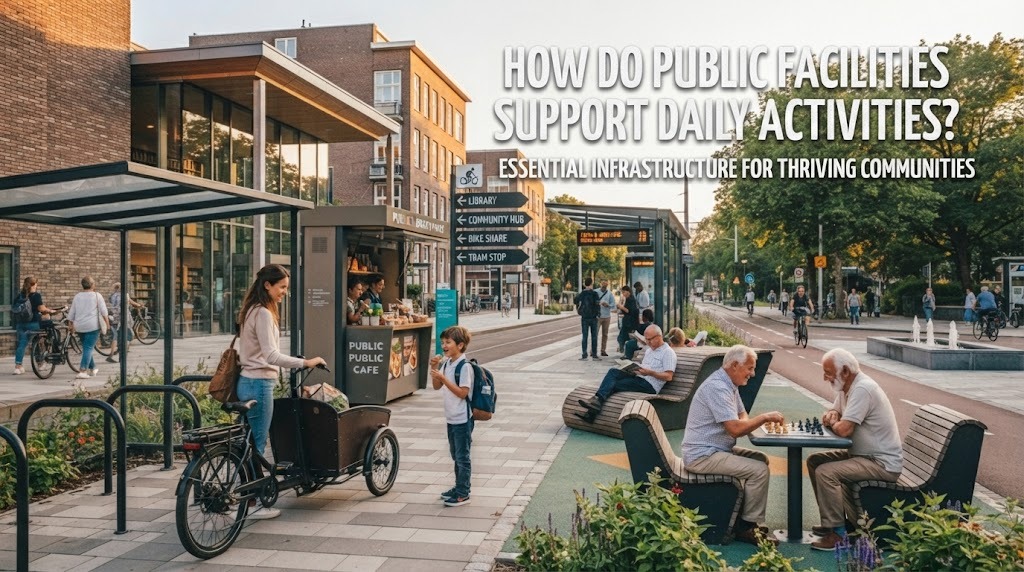
Public facilities are important parts of everyday life because they help people complete different activities more easily. Roads, public transportation, schools, hospitals, parks, and public toilets are examples of facilities that communities use regularly. Good facilities can make daily activities safer, easier, and more comfortable. They also help people access important services and move from one place to another. Without proper public facilities, many daily activities could become more difficult and time-consuming.
SUPPORTING DAILY MOBILITY
Public facilities help people move from one place to another for work, school, shopping, and other activities. Roads, sidewalks, bridges, bus stops, and public transportation provide important support for daily travel. People can use these facilities to reach their destinations more safely and efficiently. Good transportation facilities can also reduce difficulties caused by long distances. As a result, people can manage their daily schedules more easily.
HELPING PEOPLE ACCESS EDUCATION
Educational facilities such as schools, libraries, and learning centers support people's need for knowledge and skills. Students need safe classrooms, clean environments, and suitable learning spaces to study effectively. Libraries and public learning spaces can also provide access to books, information, and educational resources. These facilities help make education more accessible to different members of the community. Good educational facilities can therefore support learning and personal development.
PROVIDING HEALTHCARE SERVICES
Public healthcare facilities play an important role when people need medical services. Hospitals, health centers, and clinics can provide examinations, treatment, health information, and other essential services. Easy access to healthcare allows people to respond to health problems more quickly. Clean and well-maintained healthcare facilities also help create a safer environment for patients and workers. This makes healthcare facilities an important part of community life.
MAKING DAILY NEEDS EASIER
Public facilities can also help people meet their basic daily needs. Public markets, water facilities, sanitation systems, and waste collection services support activities that people perform regularly. Clean water is important for drinking, cooking, and personal hygiene, while proper waste management helps keep the environment clean. Public toilets can also provide necessary sanitation in busy public areas. These services make everyday life more practical and comfortable.
CREATING SAFE AND COMFORTABLE SPACES
Public parks, sidewalks, street lighting, and other public spaces can improve safety and comfort in the community. Parks give people places to relax, exercise, or spend time with family and friends. Street lighting can improve visibility, especially in areas that people use after dark. Clean and well-maintained public spaces can also make people feel more comfortable when carrying out activities outside their homes. Therefore, facility maintenance is important for creating useful public environments.
SUPPORTING ECONOMIC ACTIVITIES
Public facilities also contribute to economic activities in local communities. Good roads and transportation systems help workers, customers, and business owners travel more easily. Markets and public commercial areas provide spaces where people can buy and sell goods. Reliable infrastructure can make the movement of products and services more efficient. This support can help local businesses continue their activities and serve customers.
ENCOURAGING SOCIAL INTERACTION
Public facilities provide spaces where people can meet and interact with others. Parks, community centers, public squares, and recreational areas can be used for social activities and community events. These spaces allow people from different backgrounds to communicate and build relationships. Positive social interaction can strengthen cooperation within a community. In this way, public facilities support not only physical activities but also community connections.
SUPPORTING DIFFERENT COMMUNITY NEEDS
Well-designed public facilities should be usable by different groups of people, including children, older adults, and people with disabilities. Features such as ramps, accessible paths, clear signs, and suitable seating can make public spaces easier to use. Equal access helps more people participate in education, work, transportation, and social activities. Facilities should also be maintained so they remain safe and functional. Inclusive design makes public facilities more useful for the wider community.
CONCLUSION
Public facilities support daily activities in many important ways. They help people travel, study, receive healthcare, meet basic needs, work, relax, and interact with others. Safe, clean, accessible, and well-maintained facilities can improve the quality of everyday life. Their benefits can be felt by individuals as well as the wider community. Therefore, maintaining and improving public facilities is an important part of creating a comfortable and functional community.
About the Author
Gusti Ayu Tita P
Author — STEKOM University
An active author focused on academic issues, educational technology, and human resource development in the campus environment.