
How Do Social Media Trends Affect The Way People Communicate?
Gusti Ayu Tita P
18 September 2026
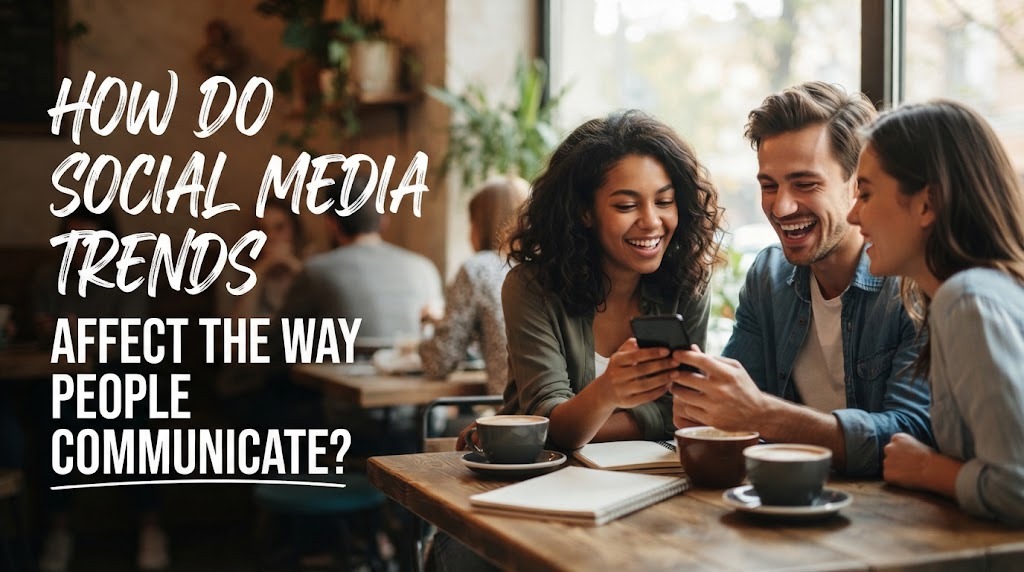
Social media has changed the way people communicate in everyday life. Messages can now be delivered quickly through text, images, videos, voice notes, and live broadcasts. Social media trends also influence the language, communication styles, and content people use online. These changes create new opportunities for connection, but they also require users to communicate carefully and responsibly.
CHANGES IN DIGITAL COMMUNICATION
Social media trends have made communication more fast, visual, and interactive. People can respond to posts through comments, reactions, stickers, emojis, and short videos. Instead of writing long messages, users often communicate ideas through images, memes, or short-form videos. This allows information to spread quickly among large groups of people. Communication has therefore become more flexible and varied.
The use of informal language has also become common on many social platforms. Users may use abbreviations, slang, emojis, and popular expressions to make conversations feel more natural. These communication styles can change as new trends appear. However, informal language may not always be suitable in professional or academic situations. Users should adjust their communication style according to the audience and context.
THE RISE OF VISUAL AND SHORT FORM CONTENT
Visual content plays an important role in modern online communication. Photos, infographics, GIFs, and short videos can communicate ideas without requiring lengthy explanations. Short form content is particularly popular because it can deliver information in a simple and accessible format. Users can explain experiences, opinions, tutorials, or entertainment through brief visual messages. This makes social media communication more engaging for many audiences.
However, short content can sometimes lack important context. Complex subjects may require more detailed explanations than a short video or post can provide. Users should therefore avoid judging an issue based only on a brief piece of content. Clear communication requires enough information for the audience to understand the intended message. Longer explanations can be useful when a topic involves complicated or sensitive information.
INFLUENCE ON LANGUAGE AND ONLINE CULTURE
Social media trends can introduce new words, expressions, and communication habits. Certain phrases may become widely recognized because they are repeatedly used by creators and online communities. Internet language can develop quickly as users modify existing expressions or create new ones. Some of these expressions may eventually become part of everyday conversations outside social media. This shows how digital communication can influence broader language habits.
At the same time, online language can sometimes create misunderstandings. Sarcasm, jokes, abbreviations, and emojis may be interpreted differently by different people. A message that seems harmless to one person may appear rude or confusing to another. Users should consider how their words could be understood by others before posting them. Respectful communication is important even when conversations take place online.
EFFECTS ON SOCIAL RELATIONSHIPS
Social media allows people to maintain relationships even when they live far apart. Friends and family members can share updates, celebrate important moments, and communicate regularly through digital platforms. Online communities can also connect people with others who have similar interests. Digital connection can therefore support relationships that may be difficult to maintain through face-to-face communication alone.
However, frequent online communication does not always replace personal interaction. Text-based communication can sometimes make emotions harder to understand because users cannot always hear someone's tone or see their facial expressions. Misunderstandings can occur when messages are interpreted differently from what the sender intended. Spending too much time online may also reduce opportunities for direct interaction. A balanced approach can help people maintain both digital and real-world relationships.
RESPONSIBLE COMMUNICATION IN THE DIGITAL ERA
The rapid spread of information makes responsible communication increasingly important. Users should check information before sharing it, especially when a post contains serious claims or potentially harmful information. Digital literacy helps people evaluate sources, recognize misleading content, and understand how online information spreads. Users should also avoid sharing private information about themselves or others without permission. These habits can create a safer digital environment.
People should also remember that online communication can have long-lasting effects. Posts, comments, screenshots, and shared content may continue circulating after the original publication. Thinking before posting can help users avoid unnecessary conflicts or damage to their digital reputation. Empathy, accuracy, privacy, and respect should remain important parts of online communication. Social media can then become a useful space for connection and information sharing.
CONCLUSION
Social media trends affect communication by making it faster, more visual, interactive, and constantly changing. They influence language, online culture, social relationships, and the way information is presented. Although these changes provide many benefits, they can also create misunderstandings and information-related risks. By practicing digital literacy and respectful communication, users can take advantage of social media while communicating responsibly.
About the Author
Gusti Ayu Tita P
Author — STEKOM University
An active author focused on academic issues, educational technology, and human resource development in the campus environment.



