
How Do Waste Banks Encourage People to Sort Their Waste?
Gusti Ayu Tita P
20 Agustus 2026
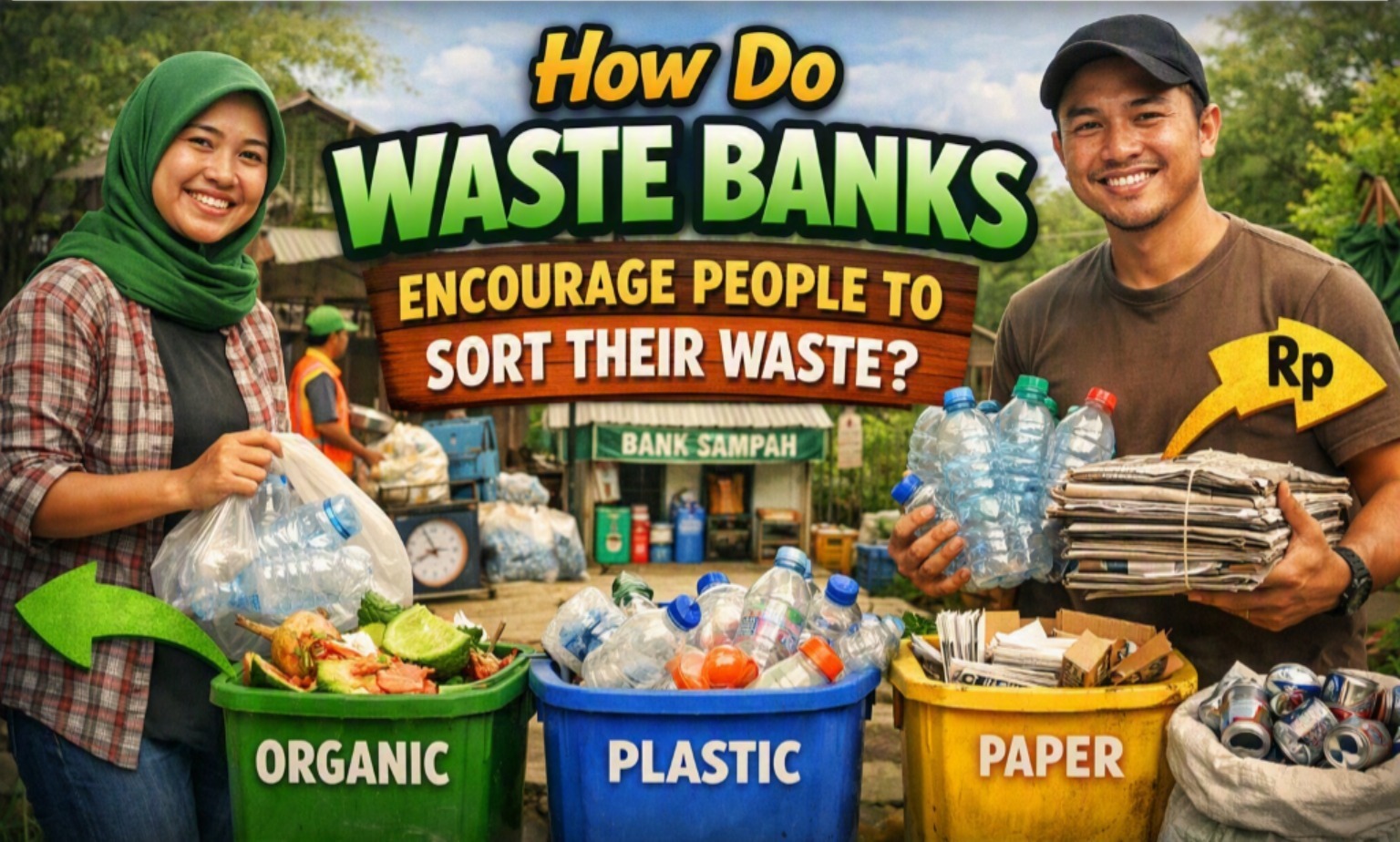
Waste management is becoming an important issue as cities and communities produce increasing amounts of household waste. One practical approach is the development of waste banks, which encourage people to separate recyclable materials from other types of waste. Unlike ordinary disposal systems, waste banks give communities a more active role in managing the waste they produce. They also show that properly sorted waste can have economic and environmental value.
Waste banks generally collect materials such as plastic bottles, paper, cardboard, metal, and other recyclables. Residents can bring their sorted waste to a collection point, where the materials are weighed, recorded, and transferred for recycling or further processing. This simple system can make waste sorting easier to understand and more rewarding. So, how exactly do waste banks encourage people to change their waste-sorting habits?
WASTE BANKS MAKE WASTE SORTING MORE PRACTICAL
One of the main ways waste banks encourage sorting is by providing a clear collection system. People do not need to guess where recyclable materials should go because the waste bank usually provides information about accepted materials and collection procedures. Residents can separate recyclable waste at home and bring it to the designated collection point. This creates a practical routine that can gradually become part of everyday life.
Waste banks can also reduce the difficulty of recycling for communities that do not have convenient access to recycling facilities. By creating a local collection point, recyclable materials can be gathered more systematically before being sent to recycling businesses or processing facilities. As people become familiar with the process, separating waste can feel less complicated and more manageable.
FINANCIAL INCENTIVES MOTIVATE PARTICIPATION
Another important factor is the economic incentive offered by many waste banks. Depending on the local system, residents may receive money, savings credits, or other forms of value based on the recyclable waste they deposit. The value usually depends on the type and weight of the material collected. This approach helps people recognize that some waste can still have economic value instead of being treated as something completely useless.
The financial benefit does not need to be large to influence behavior. Even small savings can provide an additional reason for households to sort recyclable waste consistently. Over time, people may become more aware of the materials they consume and the potential value of items they previously threw away. This combination of environmental awareness and economic motivation can make participation more sustainable.
EDUCATION BUILDS BETTER WASTE HABITS
Waste banks also function as community education centers in many areas. Through activities, campaigns, demonstrations, and direct interaction with residents, they can explain why waste separation is important. People can learn about recyclable materials, proper sorting methods, and the consequences of unmanaged waste. Practical education is especially useful because residents can immediately apply what they learn at home.
Education can also help correct common misunderstandings about recycling. For example, some recyclable materials may need to be kept relatively clean and separated from food waste before collection. When people understand these basic requirements, the quality of collected materials can improve. This makes the recycling process more efficient while encouraging households to develop responsible waste habits.
COMMUNITY PARTICIPATION CREATES SOCIAL MOTIVATION
Waste sorting becomes easier when it is supported by the surrounding community. Waste banks often involve residents, neighborhood groups, schools, community organizations, and local institutions. These groups can work together to organize collection schedules, educational programs, and environmental campaigns. Such cooperation can make waste management feel like a shared responsibility rather than an individual task.
Social participation can also encourage people to follow positive examples from their neighbors. When residents see others regularly sorting and depositing recyclable materials, the behavior can become more socially accepted. Community activities may also create friendly motivation to participate more actively. In this way, waste banks can help turn individual actions into collective environmental habits.
WASTE BANKS INCREASE ENVIRONMENTAL AWARENESS
Waste banks encourage people to understand the environmental consequences of poor waste management. When recyclable materials are separated from general waste, more materials have the opportunity to enter recycling and recovery systems. This can help reduce the amount of recyclable material sent to disposal facilities. It can also encourage people to think more carefully about consumption and waste generation.
However, waste banks are not a complete solution to the waste problem. Recycling works best when it is supported by waste reduction, reuse, proper collection, and responsible consumption. Waste banks are most effective when they are integrated into broader waste management systems and supported by reliable recycling markets. Their greatest contribution is helping communities develop practical habits that support better resource management.
TECHNOLOGY CAN MAKE WASTE BANKS MORE ATTRACTIVE
Technology can make waste bank services more convenient and transparent. Some waste banks use digital records, mobile applications, online communication, or electronic payment systems to manage deposits and member information. Digital tools can make it easier for residents to monitor their waste deposits and savings. They can also help administrators maintain more organized records.
Technology may also support communication between waste banks and their members. Information about collection schedules, accepted materials, prices, and environmental campaigns can be shared more quickly through digital platforms. When combined with face-to-face education, these tools can make participation more accessible. As a result, digital waste management can strengthen the connection between communities and recycling activities.
WASTE BANKS ENCOURAGE LONG TERM BEHAVIOR CHANGE
The most important impact of a waste bank is not simply the amount of recyclable material collected. Its broader value lies in encouraging long-term behavioral change. People who regularly separate waste may become more aware of how much waste their households produce and which materials can be recovered. This awareness can influence other decisions, such as reducing unnecessary purchases and choosing reusable products.
For waste banks to remain effective, they need consistent collection services, clear rules, community participation, and reliable channels for selling or processing recyclable materials. Support from local authorities, businesses, schools, and community organizations can strengthen their operations. When these elements work together, waste banks can become an effective bridge between households and the wider recycling system. Ultimately, they help people see waste not only as something to discard but also as a resource that can be managed responsibly.
CONCLUSION
Waste banks encourage people to sort their waste by combining convenience, education, economic incentives, and community participation. They provide a practical place where households can deposit recyclable materials while learning how proper separation supports better waste management. Financial benefits can strengthen motivation, while community programs can make sorting a shared habit. With consistent support and effective recycling systems, waste banks can contribute to cleaner communities and more responsible resource use.
About the Author
Gusti Ayu Tita P
Author — STEKOM University
An active author focused on academic issues, educational technology, and human resource development in the campus environment.















