
How Do Waste Banks Increase Community Environmental Awareness?
Gusti Ayu Tita P
20 Agustus 2026
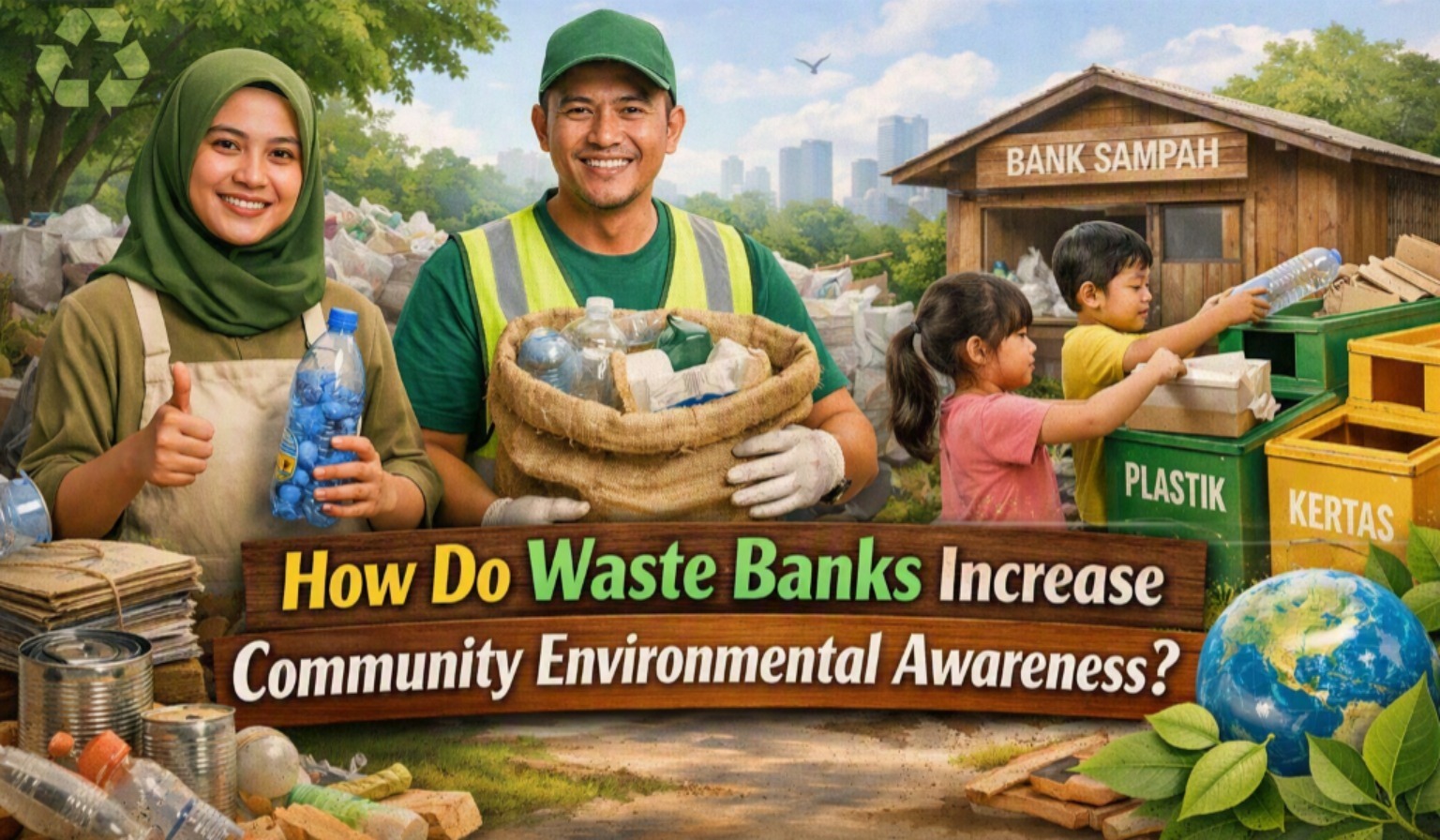
Waste banks are community-based initiatives that encourage people to sort, collect, and manage recyclable waste instead of throwing everything into the same disposal system. The concept combines environmental education with practical waste management, making sustainability easier to understand and practice in daily life. Through waste banks, residents can see that certain types of waste still have value when they are properly separated and collected. This approach can gradually change waste from something people simply discard into a resource that can be managed responsibly.
Waste banks can also strengthen community participation because their activities often involve households, schools, neighborhood groups, and local organizations. By participating regularly, people gain direct experience with waste sorting and learn why responsible waste management matters. As awareness grows, environmentally friendly habits can become part of everyday community behavior.
WASTE BANKS MAKE WASTE MANAGEMENT EASIER TO UNDERSTAND
One important way waste banks increase environmental awareness is by making waste sorting a practical activity rather than only a topic discussed in campaigns. Residents learn to identify recyclable materials such as plastic bottles, paper, cardboard, and metal and separate them from other waste. This simple process helps people understand that different types of waste require different forms of management. Regular practice can make sorting waste feel like a normal household responsibility.
Waste banks can also provide explanations about the consequences of poor waste management. People may learn how unmanaged waste can contribute to pollution, blocked drainage, unpleasant surroundings, and pressure on landfills. When environmental information is connected to activities that residents perform themselves, the message can become easier to remember. As a result, education through waste banks can support more responsible attitudes toward waste.
WASTE BANKS ENCOURAGE DAILY ENVIRONMENTAL HABITS
Environmental awareness becomes more meaningful when people turn knowledge into consistent daily behavior. Waste banks encourage residents to separate recyclable materials before disposing of other household waste. This routine can help families become more conscious of the amount and type of waste they produce. Over time, simple actions such as reducing unnecessary packaging and reusing suitable materials may become easier to adopt.
The habit of sorting waste can also influence other members of the household. Children can learn environmental responsibility from their parents, while adults can gain new ideas from community activities. When these practices are repeated by many households, individual actions can develop into a broader culture of environmental responsibility.
WASTE BANKS SHOW THE VALUE OF RECYCLABLE MATERIALS
Another important contribution of waste banks is helping residents understand the economic value of recyclable waste. Instead of viewing used bottles, paper, or metal as completely worthless, participants can learn that properly sorted materials may have value within recycling systems. Depending on the waste bank and local market conditions, collected materials can be recorded and exchanged for money, savings, or other agreed benefits. This practical experience can make responsible waste management more attractive.
However, the economic benefit is not the only purpose of a waste bank. Its larger environmental value comes from encouraging people to keep recyclable materials separate and channel them toward appropriate recycling processes. When residents understand both the environmental and economic aspects of waste, they may become more motivated to participate consistently.
COMMUNITY PARTICIPATION STRENGTHENS ENVIRONMENTAL AWARENESS
Waste banks can create opportunities for residents to learn and act together. Activities such as waste collection, sorting sessions, environmental campaigns, and educational discussions can bring community members into direct contact with one another. This interaction allows people to exchange experiences and discuss practical solutions to local waste problems. Community participation can therefore make environmental awareness a shared responsibility rather than an individual concern.
A strong community network can also encourage residents to maintain better environmental habits. When people see neighbors participating in waste management programs, they may become more willing to take similar actions. Social participation and positive examples can help create a stronger culture of cleanliness and environmental responsibility.
WASTE BANKS HELP CONNECT EDUCATION WITH REAL ACTION
Environmental education is often more effective when people have opportunities to apply what they learn. Waste banks provide a direct connection between environmental knowledge and practical action because participants can immediately practice sorting and collecting waste. This makes concepts such as recycling, waste reduction, and resource conservation easier to understand. Residents can also observe the results of their participation over time.
Schools and educational institutions can use waste bank activities as practical learning opportunities. Students can learn about recycling, responsible consumption, and environmental conservation while taking part in real community activities. Such experiences can help younger generations develop habits that support more sustainable lifestyles.
WASTE BANKS SUPPORT A CULTURE OF WASTE REDUCTION
Waste banks can encourage people to think beyond simply disposing of waste. Once residents become more aware of the waste they produce, they may begin considering ways to reduce consumption, reuse products, and choose more sustainable alternatives. This broader awareness is important because recycling alone cannot solve every waste problem. Waste prevention and reduction should remain important parts of responsible waste management.
The presence of a waste bank can therefore become a starting point for wider environmental discussions. Communities may begin talking about single-use plastics, household consumption, recycling systems, and local cleanliness. These conversations can gradually encourage more informed decisions and strengthen long-term environmental awareness.
WASTE BANKS CREATE LONG TERM ENVIRONMENTAL IMPACT
The effectiveness of a waste bank depends on consistent participation, proper management, education, and reliable recycling channels. A waste bank cannot solve all environmental problems by itself, but it can provide a practical foundation for community action. When residents participate regularly and understand why waste separation matters, environmental awareness can become stronger over time. This can contribute to cleaner neighborhoods and more responsible waste management practices.
The long-term goal is not simply to collect more recyclable materials. It is to develop a community that understands the importance of reducing waste, protecting natural resources, and maintaining a clean environment. When awareness is supported by practical systems and collective participation, waste banks can become valuable tools for building sustainable community behavior.
CONCLUSION
Waste banks increase community environmental awareness by combining education, participation, waste sorting, and practical economic incentives. They help residents understand the difference between recyclable and non-recyclable waste while encouraging responsible habits at home and in the community. Their activities can also connect environmental knowledge with direct action, making sustainability easier to practice. Through repeated participation, residents can develop stronger awareness of the consequences of waste and the importance of reducing unnecessary consumption.
Ultimately, the success of a waste bank should be measured not only by the amount of waste collected but also by the positive behavioral changes within the community. When people become more aware, participate actively, and maintain responsible waste habits, waste banks can support a cleaner and more environmentally conscious society.
About the Author
Gusti Ayu Tita P
Author — STEKOM University
An active author focused on academic issues, educational technology, and human resource development in the campus environment.















