How Do Waste Banks Support the Circular Economy in Indonesia?
Gusti Ayu Tita P
20 Agustus 2026
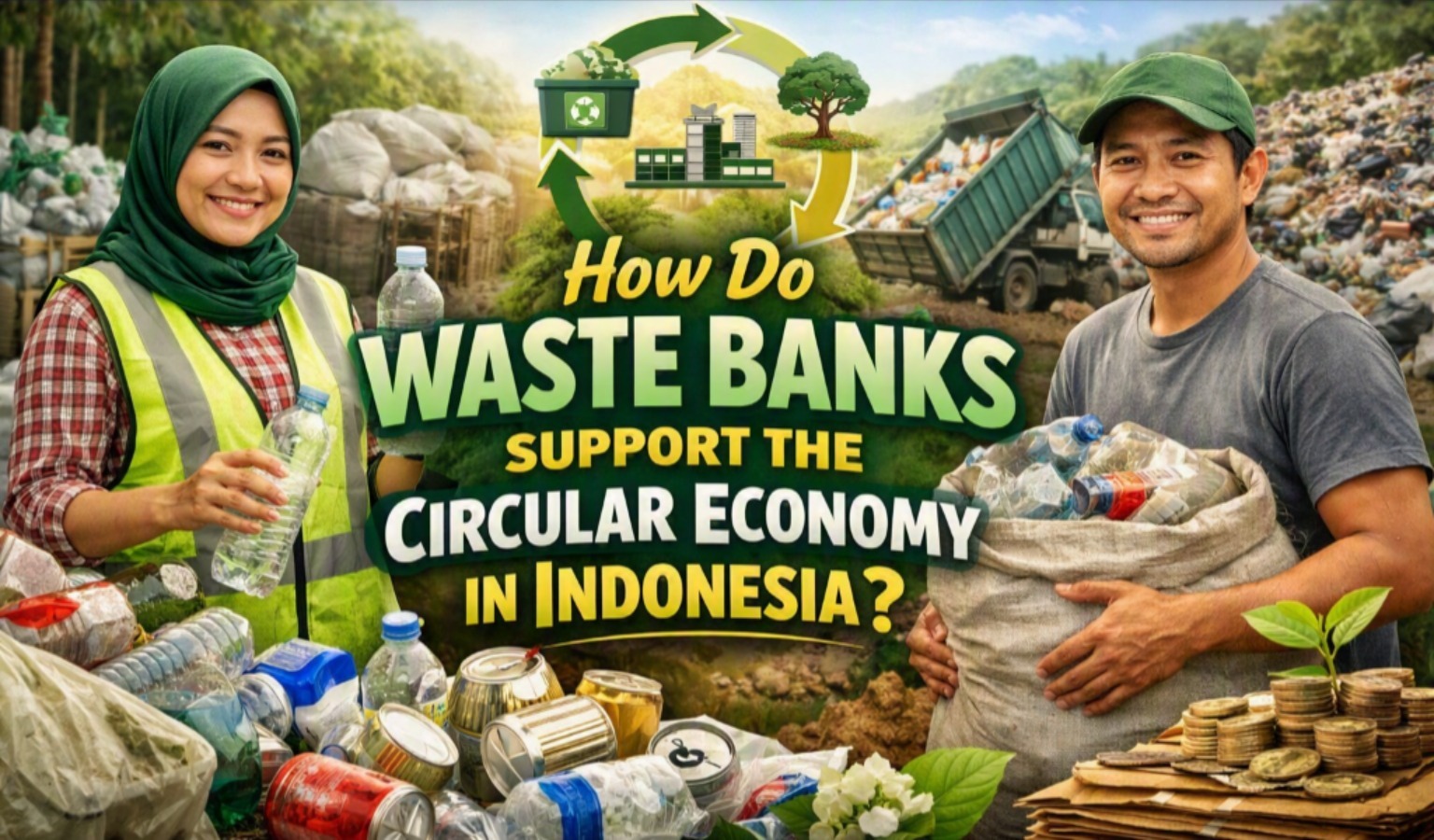
Indonesia faces a growing waste challenge as population growth, consumption, and urban development increase the amount of waste generated every day. One practical approach to addressing this issue is the development of waste banks, community-based systems that collect, sort, and manage recyclable materials. Waste banks can do more than reduce waste because they also encourage people to see discarded materials as valuable resources.
In the context of the circular economy, waste banks help keep materials in use for as long as possible. Instead of sending recyclable materials directly to landfills, communities can collect and separate them so they can be reused, recycled, or sold to recycling businesses. This approach supports environmental protection while also creating economic and social benefits for local communities.
UNDERSTANDING THE CIRCULAR ECONOMY
The circular economy is an economic approach that aims to reduce waste by keeping products and materials in circulation for as long as possible. Unlike the traditional linear model of take, make, use, and dispose, a circular economy emphasizes reuse, repair, recycling, and resource recovery. The goal is to reduce dependence on new raw materials while minimizing waste and environmental damage. This model is increasingly important as communities face pressure from rising consumption and limited waste management capacity.
In Indonesia, the circular economy can be applied through community-level waste management programs, including waste banks. These programs connect households with collectors, recycling businesses, and other actors in the waste value chain. By separating recyclable materials at the source, communities can help ensure that materials such as plastic, paper, cardboard, glass, and metal have a greater chance of being recovered. Waste banks therefore provide a practical way for ordinary households to participate in circular economic activities.
HOW WASTE BANKS WORK?
A waste bank generally operates by encouraging residents to separate recyclable waste from other household waste. Residents can bring or deposit recyclable materials at a waste bank, where the materials are sorted, weighed, recorded, and stored. Depending on the management system, residents may receive money, savings records, or other forms of value in exchange for their recyclable materials. The collected materials can then be sold to recycling partners or other businesses that can process them further.
This system creates a connection between households and the recycling industry. Materials that might otherwise be discarded can enter a more organized recovery process. Effective waste banks also provide education about waste separation, cleanliness, and responsible consumption. As a result, waste banks are not simply collection points but can become community platforms for improving waste management behavior.
REDUCING WASTE SENT TO LANDFILLS
One of the most important contributions of waste banks is their potential to reduce the amount of recyclable waste sent to landfills. When recyclable materials are separated from mixed household waste, they can be recovered before becoming contaminated or difficult to process. This can help improve the efficiency of waste management systems and reduce unnecessary disposal. Waste banks are particularly useful when they work together with local governments, waste collectors, recycling businesses, and communities.
However, waste banks are not a complete solution to Indonesia's waste problem. Their effectiveness depends on consistent participation, proper sorting, reliable collection systems, adequate storage, and access to recycling markets. They should therefore be viewed as one part of an integrated waste management system rather than a replacement for broader public infrastructure. Strong cooperation among stakeholders can make the system more sustainable and effective.
CREATING ECONOMIC VALUE FROM WASTE
Waste banks support the circular economy by transforming certain discarded materials into economic resources. Recyclable materials have value when they can be collected efficiently and sold to appropriate buyers or processors. For participating households, this can provide an additional financial benefit while encouraging better waste separation. At the community level, waste bank activities can also support jobs and small-scale economic opportunities related to collection, sorting, transportation, and recycling.
The economic value does not stop at the waste bank itself. Recovered materials can become inputs for recycling industries that produce new materials or products. This helps reduce the need for some virgin resources and keeps materials circulating within the economy. In this way, waste banks contribute to the resource recovery chain that is central to a circular economy.
ENCOURAGING BETTER COMMUNITY HABITS
A successful circular economy requires changes in how people think about products and waste. Waste banks can encourage residents to understand that waste separation begins at home and that everyday choices influence the wider waste management system. Regular participation can make sorting recyclable materials part of a household's routine. Education provided by waste bank managers can also increase awareness of recycling and responsible consumption.
Community involvement is important because waste management cannot depend entirely on government services. When residents actively participate, they become part of the solution rather than simply waste producers. Waste banks can also organize campaigns, training sessions, and environmental activities that strengthen community participation. These activities can help build a stronger culture of environmental responsibility over time.
SUPPORTING INDONESIA'S SUSTAINABILITY GOALS
Waste banks can support Indonesia's broader efforts to improve waste management and environmental sustainability. Their activities are consistent with approaches that prioritize waste reduction, reuse, recycling, and resource recovery. By increasing the amount of recyclable material that is separated and recovered, waste banks can complement formal waste management services. They can also help communities understand the practical application of sustainable waste management principles.
Their contribution becomes stronger when waste banks are connected to broader policies and local waste management plans. Support may include training, facilities, market access, digital record systems, and partnerships with recycling companies. Stronger integration can improve operational efficiency and help waste banks remain economically viable. Ultimately, the long-term success of these initiatives depends on consistent community participation and supportive waste management systems.
CHALLENGES FACED BY WASTE BANKS
Despite their potential, waste banks can face several challenges. Some communities have limited awareness or participation, while others struggle with insufficient storage space, equipment, transportation, or trained personnel. The fluctuating prices of recyclable materials can also affect the income and financial sustainability of waste bank operations. Contaminated or poorly sorted materials may have lower value and can make recycling more difficult.
Another challenge is maintaining consistent management and building reliable partnerships with recycling businesses. Waste banks need clear operating procedures, accurate records, appropriate sorting practices, and dependable buyers. Capacity building and institutional support can help address these problems. Collaboration between communities, local authorities, private companies, educational institutions, and recycling industries can make waste banks more resilient.
THE FUTURE OF WASTE BANKS IN INDONESIA
The future development of waste banks can benefit from digital technology and stronger partnerships. Digital systems can help managers record deposits, track materials, monitor transactions, and communicate with members more efficiently. Technology can also support better information sharing between waste banks and recycling businesses. When combined with education and reliable infrastructure, these improvements can strengthen the role of waste banks in the circular economy.
Waste banks can also expand their impact by promoting waste reduction before recycling. Communities can be encouraged to choose reusable products, reduce unnecessary packaging, repair usable items, and separate materials correctly. This reflects the broader principle that recycling is important, but preventing waste is even better. With stronger integration into local waste management systems, waste banks can become an increasingly important part of Indonesia's transition toward a more circular and sustainable economy.
CONCLUSION
Waste banks support the circular economy in Indonesia by helping communities separate, recover, and circulate recyclable materials instead of immediately sending them to disposal sites. They create a practical connection between households, recycling businesses, and local waste management systems. At the same time, they can provide economic opportunities and encourage stronger environmental awareness.
Their success, however, depends on more than collecting recyclable materials. Community participation, proper management, stable recycling markets, infrastructure, education, and institutional support are all important. When these elements work together, waste banks can contribute to reducing waste, conserving resources, creating economic value, and building a more sustainable future for Indonesia.
About the Author
Gusti Ayu Tita P
Author — STEKOM University
An active author focused on academic issues, educational technology, and human resource development in the campus environment.