
How Do You Choose Transportation For Land Tourism?
Gusti Ayu Tita P
17 September 2026
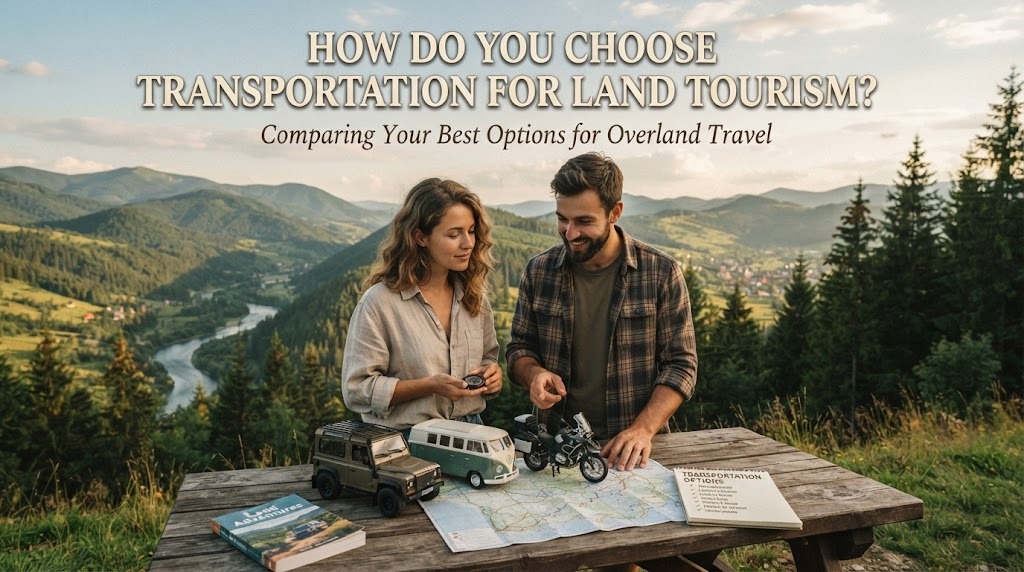
Choosing the right transportation is an important part of planning land tourism. Travelers can use cars, buses, trains, motorcycles, or other land vehicles depending on their destination and travel needs. The right transportation can make a journey more comfortable, efficient, and enjoyable. Travelers should consider several factors before deciding which option to use. Careful planning can also help avoid unnecessary costs and travel problems.
CONSIDER THE TRAVEL DISTANCE
The distance between the starting point and destination is one of the first things travelers should consider. A short-distance trip may be convenient by motorcycle, private car, bus, or local train. For longer journeys, travelers may prefer trains or buses that provide comfortable seating during the trip. The choice should also consider the condition of the roads and the availability of transportation routes. Understanding the distance can help travelers estimate both travel time and costs.
Travelers should also consider whether they need to make stops along the way. Private vehicles provide more freedom to stop at restaurants, rest areas, or interesting places. Public transportation usually follows a fixed route and schedule. Therefore, travelers should choose transportation based on how much freedom and flexibility they need. Checking the route before departure can make the journey easier to manage.
CHECK YOUR TRAVEL BUDGET
Budget is another important factor when choosing transportation for land tourism. Travelers should compare fuel costs, tickets, parking fees, tolls, and other transportation expenses. A private car may be convenient, but the total cost can increase because of fuel, tolls, and parking. Public transportation may offer a simpler way to control individual travel expenses. Comparing the estimated costs can help travelers choose an option that fits their budget.
Traveling in a group can also affect the transportation decision. Several people sharing one vehicle may be able to divide fuel and parking costs. On the other hand, trains or buses may be more practical when driving and parking are difficult. Travelers should calculate the total group cost, rather than looking only at the price for one person. This approach can help prevent unexpected expenses.
CONSIDER COMFORT AND CONVENIENCE
Comfort is especially important when traveling for several hours. Travelers should consider seating space, travel duration, luggage capacity, air conditioning, and rest opportunities. A private vehicle can provide more control over stops and personal space. Trains and some long-distance buses may allow passengers to relax without having to drive. The best choice depends on personal preferences and the length of the journey.
Convenience should also be considered before making a final decision. Public transportation can be useful when travelers do not want to drive or deal with parking. Private transportation can be more convenient when visiting several destinations in areas with limited public transport. Travelers should think about what will make the journey comfortable and practical from beginning to end. A convenient transportation choice can improve the overall travel experience.
CHECK THE DESTINATION ACCESS
Not every tourist destination can be reached easily by every type of transportation. Some destinations have well-developed public transportation, while others may be located in rural or remote areas. Travelers should check whether buses, trains, or other vehicles operate near the destination. If public transportation is limited, a private vehicle or local transportation may be more practical. Checking accessibility before leaving can prevent difficulties after arriving.
Travelers should also consider the final distance between the transportation stop and the tourist attraction. A train station or bus terminal may still be several kilometers away from the destination. In such cases, travelers may need a taxi, local shuttle, or other transportation. Understanding the complete route from departure point to final destination is important. This helps travelers prepare for every part of the journey.
CONSIDER THE NUMBER OF TRAVELERS
The number of people traveling together can influence the most suitable transportation choice. A small group may find a private car or motorcycle convenient, while a larger group may prefer a bus or train. Travelers should also consider the amount of luggage and personal belongings they need to bring. A vehicle with enough space can make the journey more comfortable. Choosing transportation according to group size can also simplify travel arrangements.
For family trips, comfort and safety may receive greater attention. Families with children may need convenient stops, sufficient seating, and easy access to food or rest areas. Groups of friends may prefer transportation that allows them to travel together and share expenses. Every group has different needs, so there is no single transportation option for all travelers. The decision should be based on group needs, destination, budget, and travel plans.
CHECK SAFETY AND TRAVEL CONDITIONS
Safety should always be considered when choosing transportation for land tourism. Travelers should check the condition of the vehicle, driver qualifications, weather, road conditions, and transportation reliability when relevant. Private vehicles should be properly maintained before a long trip. Public transportation should be chosen from reliable and legally operating providers where possible. These steps can help reduce avoidable travel risks.
Weather and road conditions can also affect travel plans. Heavy rain, traffic congestion, road construction, or other conditions may increase travel time. Travelers should check available travel information before departure and prepare an alternative plan if necessary. Choosing transportation that matches the current conditions can make the journey safer and more comfortable. Good preparation is an important part of responsible land tourism.
COMPARE DIFFERENT TRANSPORTATION OPTIONS
Before making a final decision, travelers can compare several transportation options. They can consider price, travel time, comfort, accessibility, flexibility, safety, and convenience. For example, a train may be suitable for a long-distance trip, while a private car may be useful for visiting several places in one area. A bus can be practical for certain routes and budgets. Comparing these factors helps travelers understand the advantages and limitations of each option.
Travelers should avoid choosing transportation based on price alone. A cheaper option may take longer or require additional transportation after arrival. Similarly, a more expensive option may provide convenience that is useful for a particular trip. The best decision depends on the traveler's specific needs and circumstances. A balanced comparison can lead to a smoother and more enjoyable journey.
CONCLUSION
Choosing transportation for land tourism requires careful consideration of distance, budget, comfort, destination access, group size, and safety. Travelers should understand their travel needs before selecting a car, bus, train, motorcycle, or another transportation option. Comparing travel time, costs, convenience, and accessibility can make the decision easier. It is also important to check current road and weather conditions before departure. With proper planning, the right transportation can make land tourism more comfortable, efficient, and enjoyable.
About the Author
Gusti Ayu Tita P
Author — STEKOM University
An active author focused on academic issues, educational technology, and human resource development in the campus environment.