
How Does a Cabinet Determine Government Policies?
Gusti Ayu Tita P
12 Agustus 2026
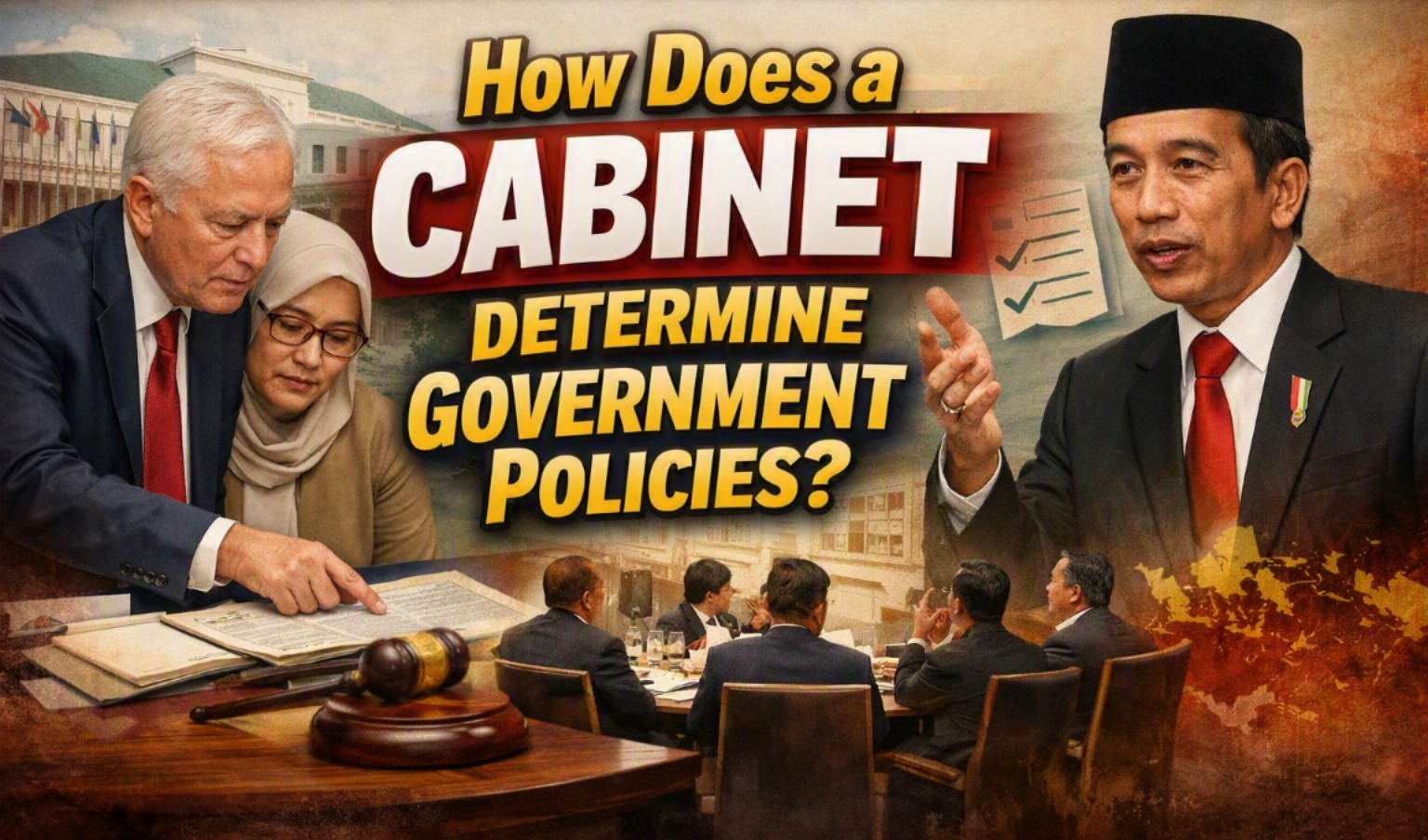
A government cabinet plays an important role in deciding how a country should respond to national needs and public challenges. It usually consists of ministers who lead different government departments and work together under the direction of the head of government. Through cabinet discussions, ministers examine problems, consider policy options, and coordinate government priorities. The process helps ensure that major decisions are not made by one ministry alone but are considered from different areas of public administration. Understanding how a cabinet determines government policies can help people recognize how government decisions are developed and implemented.
THE ROLE OF THE CABINET IN GOVERNMENT POLICY
The cabinet serves as a central forum where senior government ministers discuss and coordinate important government policies. Each minister brings knowledge and information from their respective ministry, such as finance, education, health, transportation, or foreign affairs. This allows the government to examine an issue from several perspectives before reaching a decision. The head of government generally provides overall direction and ensures that cabinet decisions support the government's priorities. However, the exact role and authority of a cabinet can vary depending on a country's constitutional system and political structure.
Cabinet discussions also help prevent policies from working against one another. For example, a new economic policy may affect employment, education, public spending, and social programs at the same time. Ministers therefore need to coordinate their plans before the government adopts a major policy. This process encourages policy coordination and creates greater consistency across government institutions.
HOW POLICY ISSUES REACH THE CABINET?
Government policies often begin with a public problem, political priority, legal requirement, or economic challenge. A ministry may identify an issue and prepare a policy proposal based on research, statistics, public needs, and existing laws. Civil servants and government experts commonly support ministers by collecting evidence, analyzing possible effects, and preparing briefing materials. In some systems, proposals can also emerge from political commitments made by the governing party or coalition. The proposal is then reviewed through the government's established policy process before it reaches the cabinet for consideration.
Before a proposal is discussed by the cabinet, relevant ministries may be asked to provide comments or identify potential concerns. This step is important because one policy can affect several areas of government. Ministers may also consider budget requirements, legal implications, administrative capacity, economic effects, and public interests. As a result, cabinet consideration is normally based on more than political preference alone.
EVIDENCE AND INFORMATION IN POLICY DECISIONS
Reliable information is an important part of cabinet decision making. Ministers need to understand the size of a problem, its causes, possible solutions, and the likely consequences of different policy choices. Government agencies can provide statistics, research findings, financial estimates, and assessments of existing programs. Expert advice may also help policymakers understand technical or complex issues. The quality of this information can strongly influence whether a proposed policy is considered practical and effective.
Cabinets may compare several policy alternatives instead of immediately accepting the first proposal. They can examine the expected benefits, costs, risks, and possible effects on different groups in society. Evidence based policymaking can help governments make more informed choices, although political priorities and public values can also influence the final decision. In difficult situations, ministers may need to balance competing objectives rather than finding a solution that benefits everyone equally.
DISCUSSION AND NEGOTIATION AMONG MINISTERS
Cabinet decision making often involves discussion, negotiation, and compromise. Ministers may have different priorities because their ministries serve different responsibilities and groups. A finance minister, for example, may focus strongly on fiscal sustainability, while another minister may emphasize expanding public services. Cabinet meetings provide an opportunity for these different perspectives to be considered together. The purpose is to reach a decision that can be supported and implemented across the government.
Political circumstances can also influence cabinet discussions. In coalition governments, ministers may need to negotiate with representatives of different political parties before agreeing on important policies. Even within a single governing party, ministers can disagree about priorities or implementation methods. Strong cabinet coordination helps transform these differences into a coherent government position.
THE IMPORTANCE OF THE BUDGET AND LEGAL FRAMEWORK
A government policy must generally be compatible with the country's laws and available public resources. Some proposals require new legislation, amendments to existing laws, or approval from a legislature. Other policies can be implemented through existing administrative authority, depending on the country's legal framework. Government lawyers and relevant ministries may therefore review proposals to determine whether they have a sufficient legal basis. This helps reduce the risk of policies being inconsistent with constitutional or statutory requirements.
Financial considerations are equally important because policies often require public funding. The cabinet may examine whether the government can afford a program and whether its expected benefits justify the costs. Budget agencies or finance ministries can provide estimates of spending and revenue effects. A policy may therefore be modified, delayed, expanded, or rejected because of financial constraints.
HOW THE CABINET REACHES A FINAL DECISION?
After reviewing evidence, legal considerations, financial implications, and different viewpoints, the cabinet determines whether a proposal should move forward. The exact decision procedure depends on the country's political and constitutional arrangements. In some systems, decisions are reached through collective agreement, while formal voting or other procedures may be used when necessary. The head of government generally has an important role in guiding the cabinet and resolving major disagreements. Once a decision is made, the responsible ministries are expected to carry it out according to the approved policy.
A cabinet decision does not always mean that implementation will happen immediately. Government agencies may need to prepare regulations, allocate funds, develop programs, or coordinate with regional and local authorities. Ministers must monitor whether implementation follows the government's objectives. Policy implementation and evaluation are therefore important stages after the initial cabinet decision. If a policy produces unexpected results, the government may revise it based on new evidence and changing circumstances.
PUBLIC INTEREST AND ACCOUNTABILITY
Cabinet policies can affect millions of people, so public interest is an important consideration in responsible policymaking. Governments may consider the potential effects of policies on households, workers, businesses, vulnerable groups, and the wider economy. Public consultations, stakeholder input, parliamentary discussions, and other forms of engagement may contribute to the policymaking process, depending on the country and the type of policy. These mechanisms can provide additional information and help identify possible problems before a policy is fully implemented.
Accountability is also essential because cabinet decisions involve the use of public authority and, often, public money. Legislatures, courts, audit institutions, the media, and citizens can play different roles in scrutinizing government actions. Transparency about policy objectives and implementation can strengthen public trust. Accountable government requires policymakers to explain important decisions and remain responsible for their outcomes.
WHY CABINET POLICYMAKING MATTERS?
The cabinet is important because modern governments manage complex issues that rarely belong to only one sector. Economic growth, public health, education, national security, infrastructure, and environmental protection can all influence one another. Cabinet coordination helps government ministries work toward shared national priorities rather than operating independently. It also allows senior policymakers to identify conflicts between proposed programs and develop more consistent solutions.
Effective cabinet policymaking can improve the quality and coordination of government action, but it is not automatically successful. Good policies require reliable evidence, realistic funding, clear legal authority, capable administration, and continuous evaluation. Political leadership and cooperation among ministers are also necessary to turn policy decisions into practical results. Ultimately, the cabinet helps connect government priorities with concrete public action, making it a key part of effective governance.
CONCLUSION
A cabinet determines government policies through a process that combines evidence, political priorities, legal considerations, financial analysis, ministerial coordination, and public interests. Policy proposals are examined from multiple perspectives before ministers agree on a course of action. After a decision is reached, government institutions must implement, monitor, and evaluate the policy. The process can differ between countries because constitutional systems and political structures are not the same. Nevertheless, effective cabinet decision making generally depends on cooperation, informed analysis, accountability, and a clear focus on national needs.
About the Author
Gusti Ayu Tita P
Author — STEKOM University
An active author focused on academic issues, educational technology, and human resource development in the campus environment.















