
How Does a Cabinet Work to Achieve Government Programs?
Gusti Ayu Tita P
12 Agustus 2026
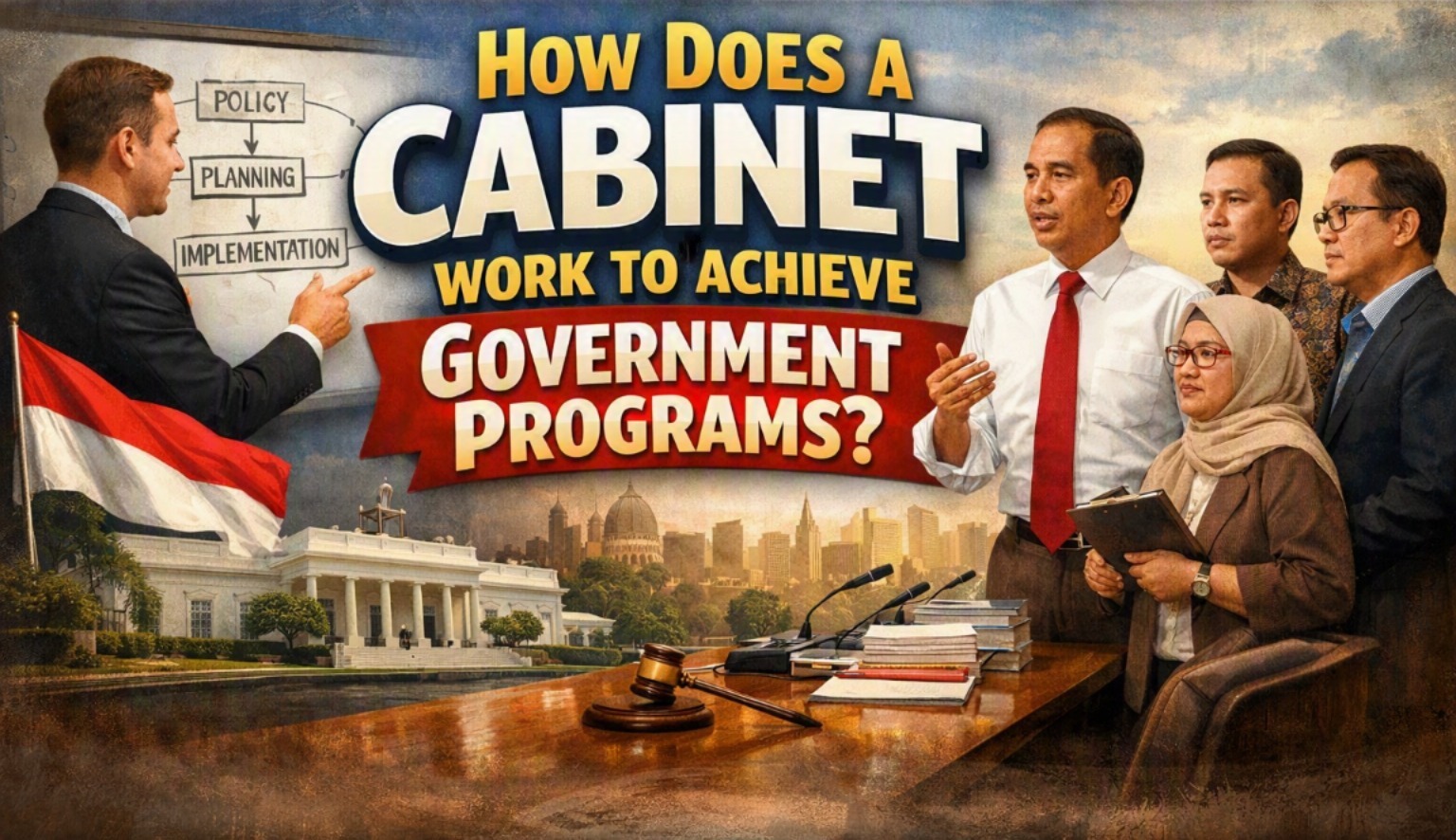
A government cabinet is a group of ministers responsible for managing important areas of government and helping the head of government carry out national priorities. Although cabinet structures differ between countries, ministers generally lead specific ministries and coordinate policies within the broader direction of the government. Understanding how a cabinet works helps explain how government plans are turned into practical programs that affect society.
WHAT IS A GOVERNMENT CABINET?
A government cabinet is usually made up of senior ministers who oversee major areas such as finance, education, health, transportation, foreign affairs, and other public services. The cabinet works under the leadership of a president or prime minister, depending on the country's political system. Each minister is responsible for managing a ministry while also contributing to wider government decisions. This means cabinet ministers must consider both their ministry's needs and the government's overall priorities.
Cabinet meetings provide a formal setting for ministers to discuss policies, coordinate actions, and make strategic decisions. Important proposals may be reviewed before they are implemented to ensure that they are consistent with laws, national priorities, and available resources. Through this process, the cabinet helps create a more coordinated approach to government administration.
HOW DOES A CABINET TURN PLANS INTO PROGRAMS?
Government programs usually begin with national priorities, political commitments, public needs, or problems that require government action. The relevant ministry studies the issue, develops policy options, and prepares proposals for consideration. Other ministries may become involved when a program affects several sectors. This coordination helps prevent different government agencies from working toward conflicting objectives.
After proposals are reviewed and approved through the appropriate governmental process, ministries begin implementing the programs. Implementation can involve preparing regulations, allocating budgets, developing public services, and coordinating with regional or local authorities. Ministers are responsible for ensuring that their ministries follow the approved direction while government officials handle much of the day-to-day administration.
WHY IS CABINET COORDINATION IMPORTANT?
Many government programs involve more than one ministry, making interministerial coordination essential. For example, a national employment program could involve ministries responsible for education, labor, finance, industry, and social affairs. Without coordination, programs may overlap, leave important responsibilities uncovered, or use public resources inefficiently. Cabinet discussions provide an opportunity to align objectives and clarify responsibilities.
Effective coordination also helps the government respond to complex national challenges. Economic development, public health, infrastructure, environmental protection, and social welfare often require combined policies rather than isolated actions. By working together, ministers can share information, identify potential conflicts, and develop solutions that support broader national goals.
HOW DOES THE CABINET MANAGE GOVERNMENT RESOURCES?
Government programs require financial and human resources to operate effectively. The cabinet works within the government's budgetary framework, while finance authorities and ministries prepare and manage spending according to applicable laws and procedures. Priorities must be compared because government resources are limited and cannot fund every proposal at the same level.
Resource management also involves setting clear priorities and measurable objectives. A program may require funding for infrastructure, personnel, technology, public facilities, or social assistance. Careful planning allows the government to direct resources toward programs that are considered important and feasible. Proper budgeting also supports transparency and reduces the risk of inefficient public spending.
HOW DOES A CABINET MONITOR GOVERNMENT PROGRAMS?
Approving a program is only the beginning because the government must also determine whether the program is achieving its intended results. Ministries can use performance indicators, reports, evaluations, and administrative data to monitor implementation. These tools help officials identify delays, budget problems, or other obstacles that could affect outcomes.
Cabinet-level monitoring can encourage ministries to review progress and improve policies when necessary. If a program does not produce the expected results, the government may adjust its design, funding, implementation strategy, or targets. Monitoring therefore creates an important connection between government decisions and actual results experienced by citizens.
WHAT ROLE DO MINISTERS PLAY IN GOVERNMENT PROGRAMS?
Ministers have a central role because they provide political leadership and policy direction within their respective ministries. They communicate government priorities, make strategic decisions, and represent their ministries in cabinet discussions. Ministers also need to coordinate with other members of government when policies cross administrative boundaries.
At the same time, ministers generally work with professional civil servants and government institutions that provide technical advice and manage administration. Civil servants can help prepare policy analysis, implement regulations, manage programs, and evaluate results. The combination of political leadership and professional administration helps transform cabinet decisions into practical government action.
HOW DOES PUBLIC ACCOUNTABILITY SUPPORT CABINET PERFORMANCE?
A cabinet is expected to operate within the constitution, laws, regulations, and established government procedures of its country. Accountability mechanisms can include parliamentary oversight, audits, public reporting, judicial review, independent institutions, and other legal or democratic controls. These mechanisms help ensure that government authority is exercised responsibly.
Transparency and accountability are also important for maintaining public trust. Citizens need to understand government priorities, how public resources are used, and whether programs are producing meaningful results. When government institutions are accountable for their decisions and performance, cabinet programs can be implemented with greater public confidence.
WHY IS CABINET EFFECTIVENESS IMPORTANT?
An effective cabinet helps ensure that government programs are consistent, coordinated, realistic, and focused on public needs. Strong cabinet coordination can reduce policy conflicts and improve the use of public resources. It can also help the government respond more quickly when national circumstances change.
However, cabinet effectiveness depends on more than meetings and formal decisions. It requires clear priorities, cooperation among ministries, reliable information, capable public administration, responsible budgeting, and continuous evaluation. When these elements work together, cabinet decisions have a stronger chance of becoming effective programs that deliver practical benefits to society.
CONCLUSION
A cabinet works as a central mechanism for coordinating government policies and turning national priorities into programs. Ministers discuss important issues, develop and coordinate policies, manage responsibilities, and support implementation through their respective ministries. Government officials then carry out many of the administrative tasks needed to put those decisions into practice.
The success of government programs ultimately depends on effective coordination, responsible resource management, monitoring, accountability, and public administration. A well-functioning cabinet can connect political priorities with practical action and help government institutions respond to the needs of citizens. Understanding this process makes it easier to see how major government decisions can become real programs and public services.
About the Author
Gusti Ayu Tita P
Author — STEKOM University
An active author focused on academic issues, educational technology, and human resource development in the campus environment.















