
How Does a District Head Coordinate Local Government Programs?
Gusti Ayu Tita P
12 Agustus 2026
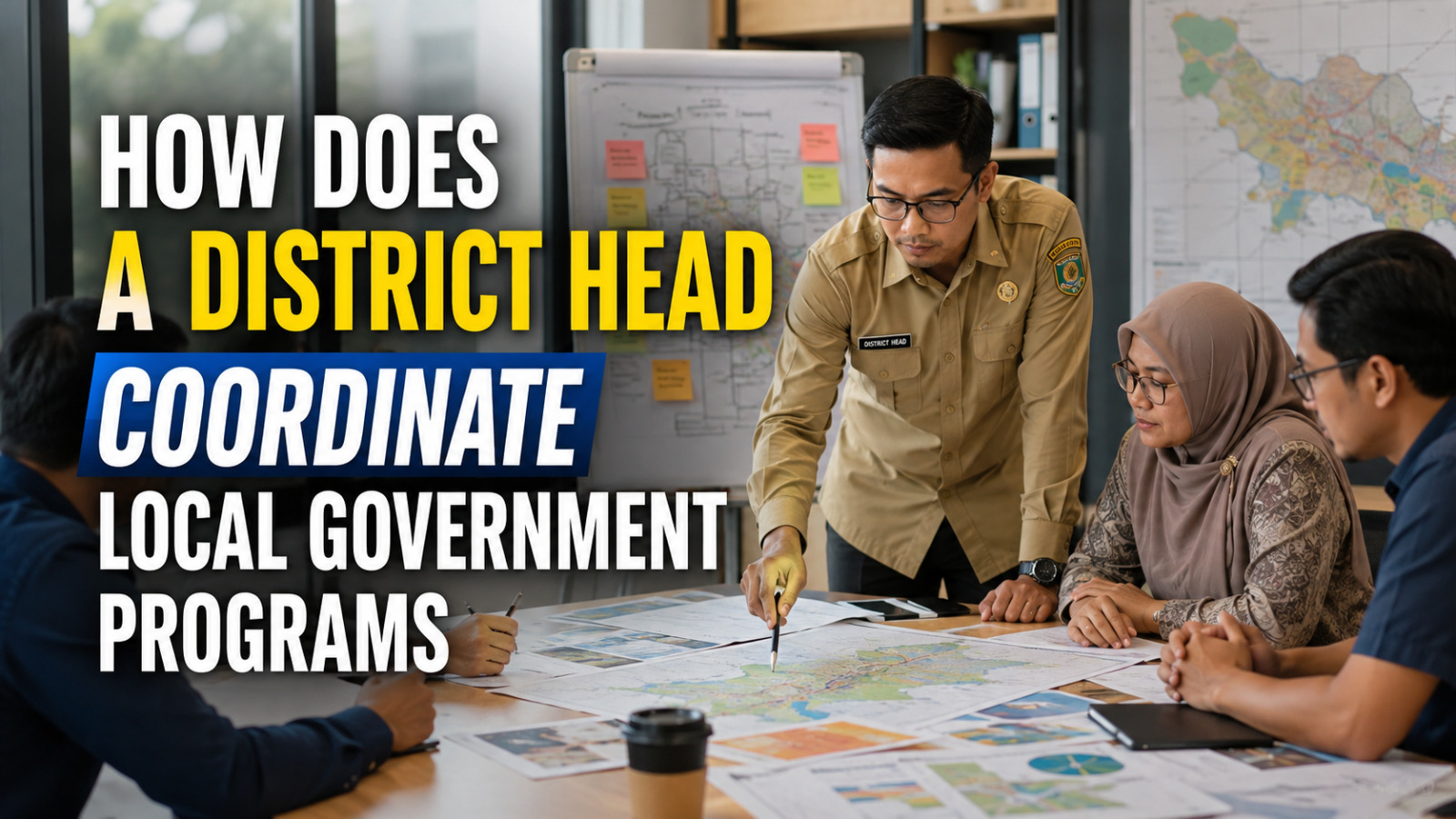
A district head plays an important role in connecting local government policies with the needs of communities. In many local government systems, the district head helps ensure that programs are implemented properly at the district level. This role requires coordination, communication, leadership, and supervision because local programs often involve several government offices and community groups. Effective coordination can prevent overlapping programs and help public resources reach the people who need them most.
The district head also works with village governments, public institutions, community organizations, and other stakeholders. Through regular communication and careful planning, local programs can become more organized and responsive. Understanding how a district head coordinates government programs helps explain why this position is important for local development and public services.
UNDERSTANDING THE ROLE OF A DISTRICT HEAD
A district head generally serves as a local government coordinator within a district or subdistrict administrative area, depending on the country's government structure. One of the main responsibilities is helping implement government policies and programs at the local level. The district head may coordinate activities involving public services, infrastructure, social programs, economic development, and community affairs. This position requires an understanding of both government priorities and local community conditions.
The district head does not normally work alone. Coordination involves communicating with government departments, village leaders, community representatives, and other relevant institutions. By bringing different parties together, the district head can help ensure that programs are implemented according to established plans and regulations.
HOW DISTRICT HEADS PLAN GOVERNMENT PROGRAMS
Effective coordination usually begins with careful planning. A district head needs to understand local problems, identify priorities, and communicate these needs to the appropriate government institutions. Information from community meetings, reports, surveys, and local officials can help determine which programs require greater attention. Clear planning also helps establish responsibilities, schedules, and expected results.
After priorities have been identified, the district head can help coordinate the implementation process. Each institution involved needs to understand its responsibilities and how its activities relate to other programs. Clear objectives and communication can reduce confusion and make it easier to monitor progress.
COORDINATING DIFFERENT GOVERNMENT INSTITUTIONS
Local government programs often involve more than one institution. For example, a community development program may require cooperation between offices responsible for health, education, infrastructure, social services, and economic development. The district head can facilitate communication so that these institutions work toward shared objectives instead of operating separately.
Regular coordination meetings can be useful for discussing progress, identifying problems, and deciding on appropriate solutions. When institutions share information, they can avoid unnecessary duplication and use available resources more efficiently. This collaborative approach can make local government programs more integrated and effective.
WORKING WITH VILLAGE GOVERNMENTS AND COMMUNITIES
Village governments are important partners in implementing many local programs. A district head can communicate government priorities to village leaders while also receiving information about conditions and needs at the community level. This two-way communication allows local programs to become more responsive to actual circumstances.
Community participation is also important because residents often understand local problems better than outside institutions. Through public consultations, community meetings, and feedback channels, district heads can collect valuable suggestions. Involving residents can also increase public understanding and support for government programs.
MONITORING PROGRAM IMPLEMENTATION
Coordination does not end when a program begins. A district head needs to help monitor implementation to determine whether activities are progressing according to plan. Monitoring can involve reviewing reports, conducting meetings with responsible officials, visiting project locations, and receiving feedback from communities.
If problems appear, early monitoring allows local authorities to respond more quickly. Delays, limited resources, unclear responsibilities, or communication problems can be identified before they seriously affect program outcomes. Continuous supervision therefore helps improve accountability and the quality of government services.
USING COMMUNICATION TO SOLVE LOCAL PROBLEMS
Strong communication is one of the most important tools for local government coordination. A district head needs to communicate clearly with officials, village leaders, community organizations, and residents. Different groups may have different priorities, so effective communication helps create a common understanding of government objectives.
Good communication also makes problem-solving easier. When an issue affects several institutions, the district head can bring the relevant parties together to discuss possible solutions. Open communication and timely information sharing can reduce misunderstandings and help local programs move forward.
SUPPORTING EFFECTIVE AND RESPONSIVE GOVERNANCE
A district head can contribute to responsive governance by ensuring that local government programs reflect community needs. Government plans should not only focus on administrative targets but also consider how programs affect residents. Feedback from citizens can help officials identify services that need improvement.
Coordination can also strengthen accountability. When responsibilities are clearly assigned and progress is regularly reviewed, it becomes easier to determine whether programs are producing the expected results. This can encourage government institutions to work more responsibly and transparently.
CHALLENGES IN COORDINATING LOCAL PROGRAMS
District heads may face several challenges when coordinating government programs. These can include limited budgets, different institutional priorities, staff shortages, administrative procedures, and communication barriers. Rapid changes in technology and community expectations can also require local governments to adapt their methods.
Another challenge is ensuring that information reaches all stakeholders accurately and on time. Poor coordination can result in duplicated activities, delayed projects, or services that do not fully address community needs. Strong leadership, regular evaluation, and cooperation between institutions can help overcome these difficulties.
CONCLUSION
A district head plays an important role in coordinating local government programs and connecting government institutions with communities. Through planning, communication, supervision, and cooperation, the district head can help ensure that public programs are implemented effectively. Collaboration with village governments and residents is also essential for understanding local priorities and improving services.
Successful coordination requires more than administrative authority. It depends on strong leadership, clear communication, community participation, monitoring, and accountability. When these elements work together, local government programs can become more organized, responsive, and beneficial to the communities they serve.
About the Author
Gusti Ayu Tita P
Author — STEKOM University
An active author focused on academic issues, educational technology, and human resource development in the campus environment.















