
How Does a District Head Improve Public Services?
Gusti Ayu Tita P
12 Agustus 2026
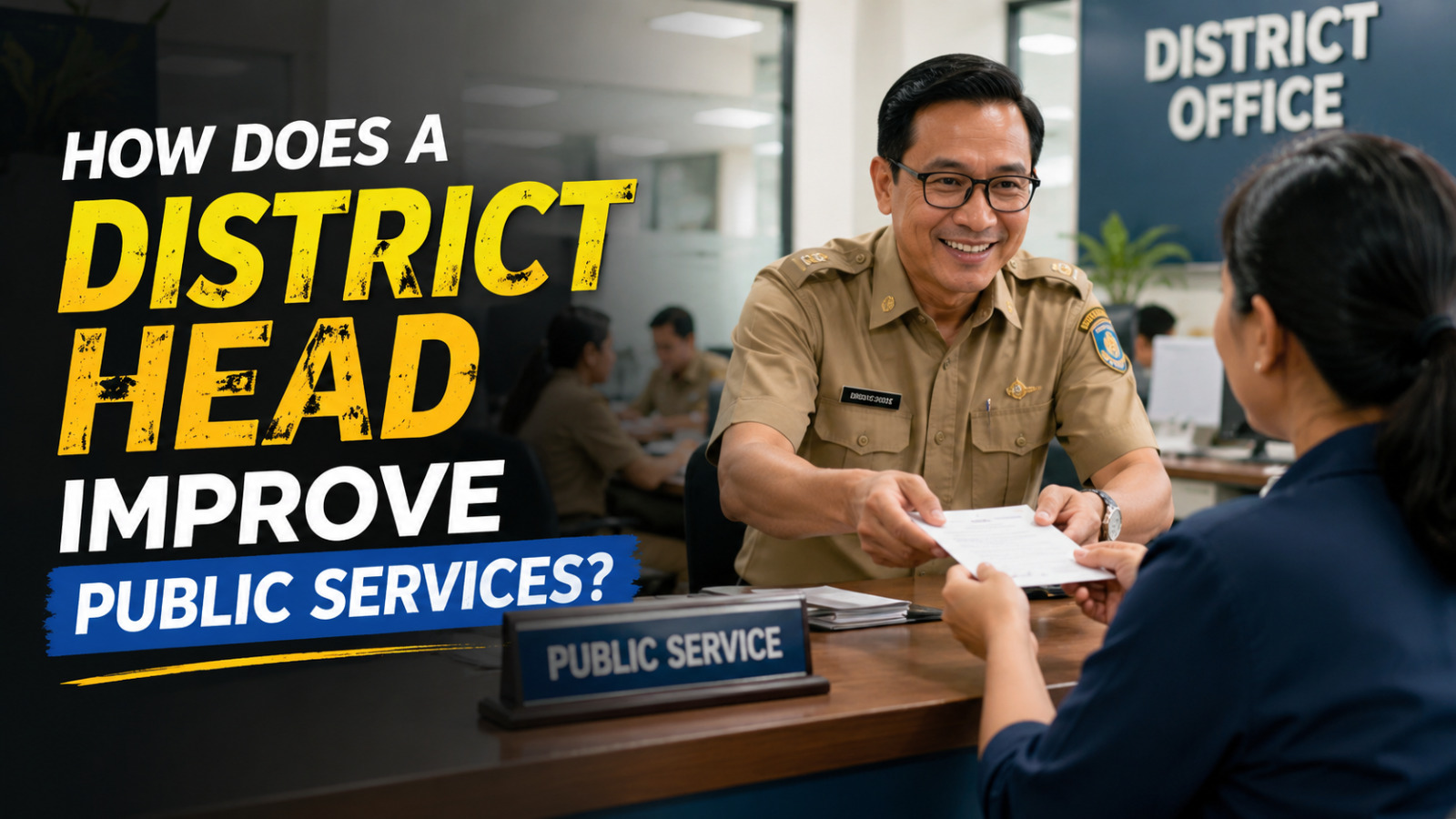
A District Head plays an important role in ensuring that public services are delivered effectively at the local level. In many local government systems, the District Head acts as a bridge between higher levels of government and communities within the district. This position requires strong coordination, communication, and administrative skills to ensure that government programs reach the people who need them. Good public services can make daily life easier by improving access to administration, health, education, infrastructure, and other essential services.
The District Head does not work alone. Effective public service improvement depends on cooperation with local government agencies, village leaders, community organizations, and residents. By understanding local needs and coordinating available resources, a District Head can help create services that are more responsive, accessible, and efficient. This makes the position important for building public trust and supporting local development.
UNDERSTANDING THE ROLE OF A DISTRICT HEAD
A District Head is generally responsible for managing and coordinating government activities within a specific district or subdistrict. The exact authority of the position depends on the country's administrative system and applicable laws. In Indonesia, for example, a Camat leads a kecamatan and carries out duties delegated by the regent or mayor under the framework of regional government administration.
One of the most important responsibilities is coordination. A District Head connects different government units and helps ensure that programs are implemented consistently at the local level. The District Head may also coordinate with village governments and community representatives to identify problems and determine appropriate solutions. Through effective coordination, government services can become more organized and responsive to community needs.
IMPROVING ACCESS TO PUBLIC SERVICES
One way a District Head improves public services is by making them easier for residents to access. Some communities may face difficulties because of distance, complicated procedures, limited information, or insufficient facilities. A District Head can identify these obstacles and coordinate with relevant agencies to find practical solutions. Improving information channels can also help residents understand service requirements and procedures.
Accessible services are especially important for people who may have difficulty reaching government offices. Local governments can use service centers, digital platforms, public information systems, and community outreach to bring information closer to residents. A District Head can encourage agencies to provide clear instructions and reduce unnecessary administrative barriers. As a result, residents can obtain services more efficiently and with less confusion.
STRENGTHENING COORDINATION BETWEEN GOVERNMENT AGENCIES
Public services often involve more than one government institution. For example, a community development program may require cooperation between administrative offices, health services, social agencies, infrastructure departments, and village governments. Without proper coordination, programs can overlap or important needs may be overlooked.
A District Head can serve as a local coordination point for these institutions. Regular meetings, information sharing, and joint planning can help different agencies understand their responsibilities. The District Head can also monitor whether government programs are progressing according to their objectives. Strong coordination allows limited public resources to be used more effectively.
RESPONDING TO COMMUNITY NEEDS
Effective public services should be based on the real needs of local communities. A District Head can gather information through public meetings, community discussions, surveys, complaints, and direct visits to local areas. Listening to residents helps local leaders understand which problems require immediate attention.
Community feedback can also reveal problems that may not appear in official reports. For example, residents may report difficulties with administrative procedures, damaged public facilities, or limited access to certain services. By responding to these concerns, a District Head can help government agencies make better decisions. Community participation therefore becomes an important part of improving local services.
USING DIGITAL TECHNOLOGY FOR BETTER SERVICES
Technology provides opportunities to make public services faster and more transparent. Digital systems can help residents obtain information, submit certain applications, monitor administrative processes, and communicate complaints. A District Head can encourage the appropriate use of digital tools to support local government services.
However, digital services should not completely ignore people who have limited access to technology. Some residents may have poor internet connections or limited digital skills. Therefore, local governments should combine digital services with direct assistance when necessary. This approach can make modernization more inclusive and prevent certain groups from being left behind.
IMPROVING TRANSPARENCY AND ACCOUNTABILITY
Public trust depends greatly on how government institutions manage their responsibilities. A District Head can support transparency by ensuring that information about programs, procedures, and public services is communicated clearly. Residents should know where to obtain services, what requirements are needed, and where they can submit complaints.
Accountability is equally important. Government officials should be encouraged to perform their duties according to regulations and established service standards. Complaints should be handled professionally rather than ignored. When residents see that their concerns receive proper attention, confidence in local government can gradually increase.
SUPPORTING VILLAGE AND COMMUNITY GOVERNMENTS
District Heads often work closely with village governments and community leaders because many public services are implemented close to residents. Cooperation can help ensure that village-level programs are aligned with broader local government priorities. The District Head can also help facilitate communication between villages and higher levels of government.
This relationship is particularly important when communities face problems that require support beyond the village's capacity. Through coordination, local concerns can be communicated to the appropriate government agencies. Strong cooperation between district and village administrations can make development programs more consistent and responsive.
MONITORING PUBLIC SERVICE QUALITY
Improving services is not only about creating programs but also about monitoring their results. A District Head can review whether services are meeting established standards and whether residents are satisfied with their implementation. Information from complaints, reports, field visits, and community feedback can help identify weaknesses.
Monitoring also allows local authorities to make adjustments when a program does not produce the expected results. For example, if residents continue to experience long waiting times, the responsible office may need to review its procedures. Continuous evaluation can help create more efficient and user-friendly public services.
CHALLENGES IN IMPROVING PUBLIC SERVICES
District Heads may face several challenges when trying to improve public services. Limited budgets, inadequate infrastructure, staff shortages, geographical difficulties, and differences in community needs can make service delivery more complicated. In addition, government regulations and administrative procedures may limit how quickly certain changes can be implemented.
Another challenge is ensuring that modernization benefits everyone. Digital transformation, for example, can improve efficiency but may create difficulties for residents who are unfamiliar with technology. District Heads therefore need to balance innovation, accessibility, and fairness. Careful planning and cooperation with different stakeholders can help overcome these challenges.
CONCLUSION
A District Head has an important role in improving public services by coordinating government agencies, understanding community needs, improving accessibility, supporting transparency, and monitoring service quality. Effective leadership can help ensure that government programs are delivered in a more organized and responsive way.
The success of public service improvement depends not only on the District Head but also on cooperation with government officials, village leaders, community organizations, and residents. By encouraging participation, using technology appropriately, and responding to local problems, District Heads can contribute to better government services and stronger communities.
About the Author
Gusti Ayu Tita P
Author — STEKOM University
An active author focused on academic issues, educational technology, and human resource development in the campus environment.















