
How Does a Governor Run Regional Government?
Gusti Ayu Tita P
12 Agustus 2026
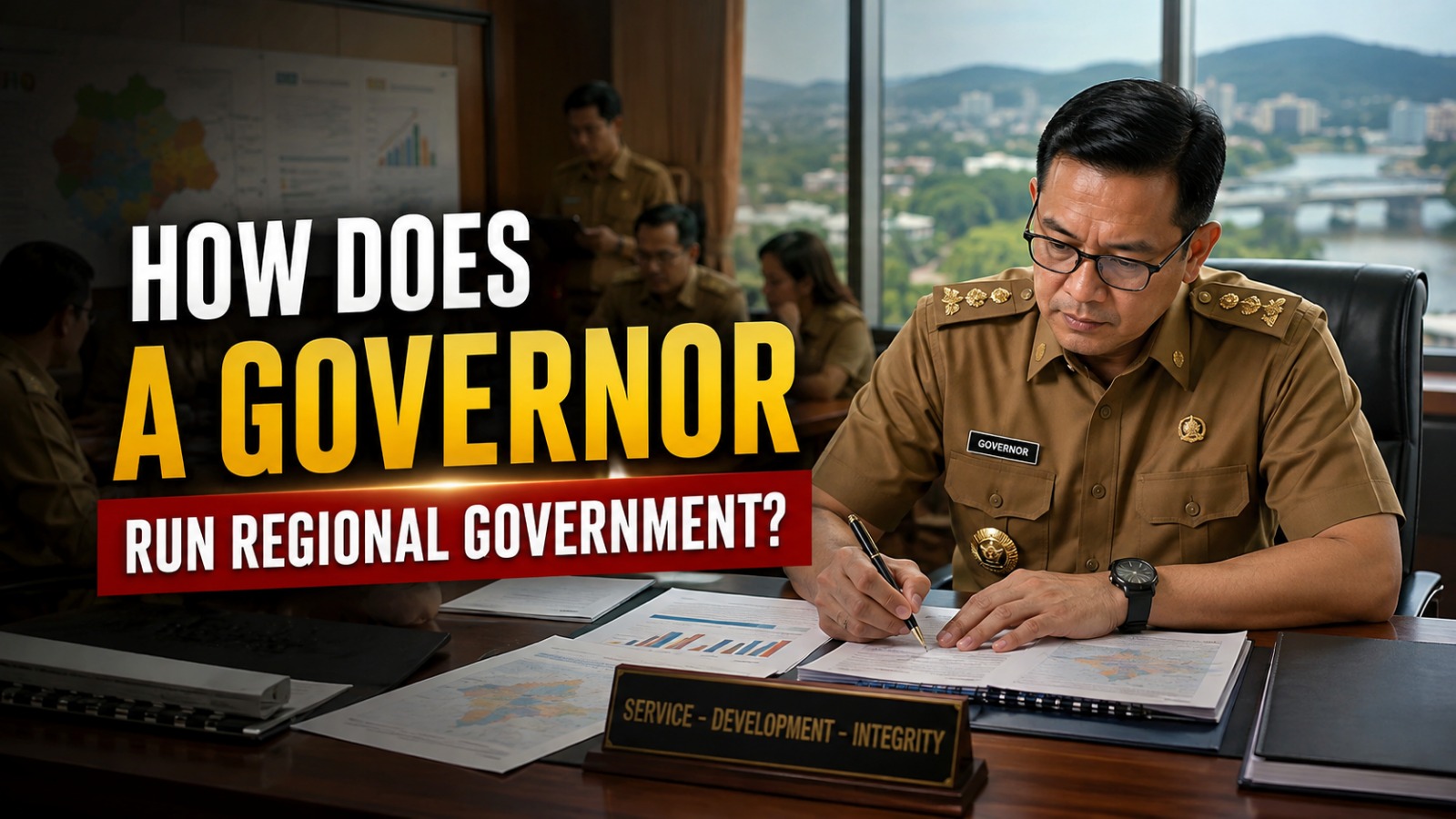
A governor plays an important role in managing regional government and ensuring that public administration works effectively. As the head of a province, a governor leads the implementation of government affairs within the authority of the regional government. The governor also works with the regional legislature, government agencies, local leaders, and communities to achieve development goals. Good leadership is needed to make sure that government policies respond to public needs.
Running a regional government involves more than making policies. A governor must coordinate programs, manage public resources, oversee public services, and evaluate development results. The governor also has a role as a representative of the central government in the province under Indonesia’s regional government system. Through effective coordination and responsible leadership, regional government can provide better services and support public welfare.
LEADING REGIONAL GOVERNMENT
A governor leads the administration of the province together with the deputy governor and regional government organizations. The governor provides direction so that government agencies can carry out their duties according to established plans and regulations. Each regional agency has specific responsibilities in areas such as education, health, infrastructure, transportation, social affairs, and economic development. Effective leadership helps ensure that these different sectors work toward common regional goals.
The governor also needs to respond to changing conditions in society. Economic challenges, natural disasters, public service problems, and other regional issues may require adjustments to government priorities. Decisions should be based on regulations, reliable information, and the actual needs of the community. Strong leadership allows the government to respond more quickly while maintaining accountability.
PLANNING REGIONAL DEVELOPMENT
Regional government requires clear development planning to determine which programs should receive priority. Governors work with regional agencies and the Regional People's Representative Council or DPRD to establish development policies and budgets according to applicable procedures. Development plans may focus on infrastructure, economic growth, education, healthcare, poverty reduction, and other regional priorities. Proper planning helps ensure that public resources are directed toward important needs.
Development planning should also consider the characteristics of each region. A province with strong agricultural potential may require different policies from a province with a large industrial or tourism sector. Public input can help the government understand problems that may not be visible from administrative data alone. Regular evaluation is then needed to determine whether development programs are producing the expected results.
MANAGING THE REGIONAL BUDGET
The regional budget, known as the APBD, is an important instrument for running provincial government. It finances government programs, public services, infrastructure, development activities, and other approved expenditures. The governor plays an important role in proposing and implementing the regional budget together with the DPRD according to the applicable legal framework. Budget management must follow principles of efficiency, transparency, accountability, and compliance with regulations.
Good budget management requires clear priorities and careful supervision. Government spending should be directed toward programs that provide meaningful public benefits. Monitoring is also necessary to identify inefficient spending or implementation problems. Responsible financial management helps maintain public trust and supports the continuity of regional development.
COORDINATING REGIONAL GOVERNMENT AGENCIES
A province has many government agencies with different responsibilities. Governors coordinate these agencies so that their programs do not work separately or contradict one another. For example, economic development may require cooperation between agencies responsible for industry, transportation, education, infrastructure, and investment. Coordination can make government programs more efficient and connected.
Governors can also evaluate the performance of regional government agencies. Clear targets and performance indicators help determine whether an agency has achieved its responsibilities. If problems occur, the government can make improvements or adjust its approach. Continuous coordination and evaluation are essential for maintaining effective regional administration.
WORKING WITH REGENCY AND CITY GOVERNMENTS
Indonesia's provinces consist of regencies and cities that have their own regional governments. Governors therefore need to coordinate with regents and mayors on matters that involve multiple administrative areas. Issues such as transportation, environmental management, infrastructure, economic development, and disaster response may require cooperation between different regions. Coordination helps prevent development programs from becoming fragmented.
The governor also has an important position in the relationship between the central government and regency or city governments. In accordance with national regulations, the governor also carries out certain duties as the representative of the central government in the province. This role helps coordinate the implementation of national policies at the regional level. Effective coordination can create stronger links between national and regional development priorities.
PROVIDING PUBLIC SERVICES
Public service is one of the main purposes of regional government. Depending on the division of authority, provincial governments provide or support services in areas such as education, healthcare, transportation, social protection, and other public needs. Governors are responsible for ensuring that services under provincial authority are delivered according to applicable standards. Services should be accessible, fair, and responsive to community needs.
Technology can also help improve public services. Digital platforms can make information and certain government services easier to access. However, digital transformation should be accompanied by adequate infrastructure, trained personnel, and protection of public data. Government should also ensure that people who have limited access to technology are not left behind.
SUPERVISING GOVERNMENT PERFORMANCE
Supervision is necessary to make sure government programs are implemented according to regulations and planned objectives. Governors oversee and provide guidance to regional government organizations within their authority. Monitoring can help identify problems before they become larger obstacles. It can also provide information for improving future policies and programs.
Evaluation should be conducted using measurable results rather than relying only on the completion of activities. The government needs to assess whether a program actually improves public services or contributes to development objectives. When results are below expectations, adjustments can be made. This continuous process helps regional government become more effective and responsive.
INVOLVING THE COMMUNITY
A successful regional government needs public participation. Governors can encourage communities to provide input through public consultations, development planning forums, complaint channels, and other forms of civic participation. Community feedback can help government understand local problems and improve public programs. Participation also gives citizens an opportunity to monitor government performance.
Transparency is equally important in building public trust. Information about policies, programs, budgets, and government performance should be communicated in accordance with applicable transparency rules. Clear communication can reduce misunderstandings and encourage constructive public involvement. A government that listens to its citizens is better positioned to create policies that reflect real community needs.
CONCLUSION
A governor runs regional government through leadership, planning, coordination, budgeting, public service delivery, supervision, and community engagement. The governor works with regional government agencies, the DPRD, regents and mayors, the central government, businesses, and communities to achieve development goals. Each policy must be implemented within the authority and legal framework established by Indonesian law.
Effective regional government requires more than strong leadership. It also depends on responsible financial management, good coordination, transparent decision making, and continuous evaluation. When these elements work together, provincial government can provide better public services, support regional development, and improve the welfare of its communities.
About the Author
Gusti Ayu Tita P
Author — STEKOM University
An active author focused on academic issues, educational technology, and human resource development in the campus environment.















