How Does a New SAR Team Handle Search and Rescue Challenges?
Gusti Ayu Tita P
29 September 2026
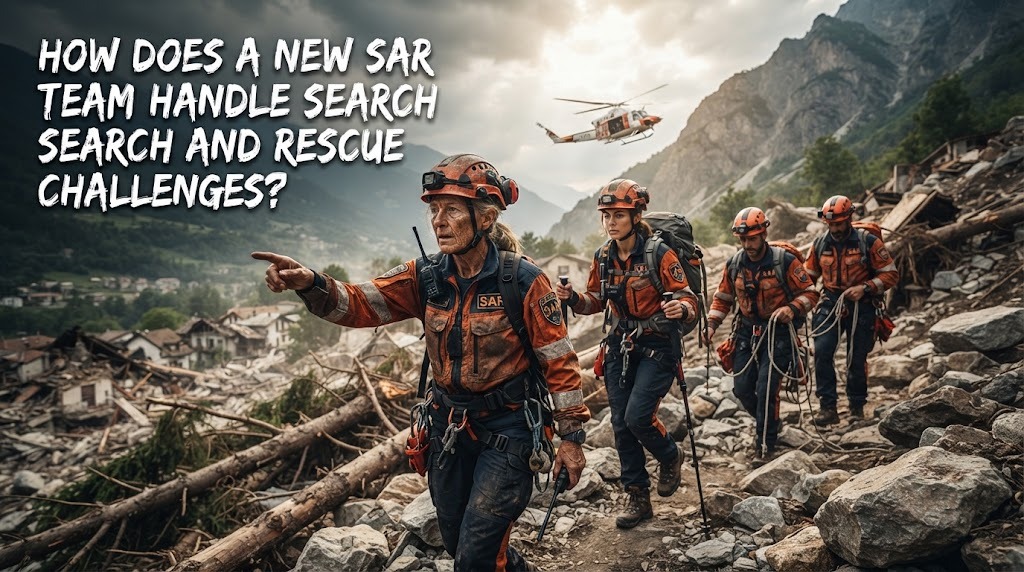
A new SAR team can face many challenges when carrying out search and rescue missions. Difficult terrain, changing weather, limited information, communication problems, and dangerous working conditions can make an operation more complicated. New rescuers therefore need clear procedures, practical training, and strong teamwork before handling difficult situations. INSARAG guidance emphasizes preparedness, safety, coordination, information management, and continuous training as important parts of effective USAR operations.
Handling challenges does not simply mean acting quickly. A new team must understand the situation, identify risks, organize resources, communicate with other responders, and adjust the operation when conditions change. These steps can help protect rescuers while supporting the search for victims. Good preparation and disciplined coordination are especially important when a team is still developing its operational experience.
ASSESSING THE SITUATION BEFORE STARTING
The first challenge for a new search and rescue team is understanding what is happening at the incident location. Members need to gather information about the number of possible victims, location, terrain, weather, access routes, and known hazards. A proper initial assessment can help the team determine which personnel and equipment are needed. In USAR operations, site assessment and continuing hazard analysis are part of the operational process.
The team should avoid entering a dangerous area without first evaluating the risks. New members also need to understand that conditions may change after the initial assessment. Situation awareness should therefore continue throughout the mission. A clear briefing before operations begin can help every member understand the mission, responsibilities, hazards, and communication procedures.
DEALING WITH DIFFICULT TERRAIN AND WEATHER
SAR teams may work in mountains, forests, rivers, remote areas, or disaster zones where access is difficult. Terrain and weather conditions can slow movement, reduce visibility, affect communication, and increase physical demands on rescuers. A new team needs training that reflects the environments where it may actually operate. Practice in realistic settings can help members become more familiar with these challenges.
Weather should also be monitored during the operation because conditions can change unexpectedly. The team may need to modify routes, postpone certain activities, or request additional support when conditions become unsafe. Safety must remain a priority even when rescuers are under pressure to reach a victim quickly. INSARAG guidance calls for continuous attention to safety and security throughout operations.
MAINTAINING CLEAR COMMUNICATION
Communication can become difficult when team members are spread across a wide search area or working in noisy and dangerous environments. A new SAR team should establish clear communication procedures before entering the field. Members need to know how to report their position, findings, hazards, and changes in operational conditions. Regular radio and communication exercises can help reduce misunderstandings.
Communication is also important when several organizations are involved in the same emergency. INSARAG describes coordination and information exchange among response entities as important components of USAR operations. A new team should therefore use established communication channels and keep important operational information organized.
WORKING EFFECTIVELY AS A TEAM
A new SAR team may have members with different experience levels, so teamwork and role clarity are essential. Each person should understand whether they are responsible for searching, medical support, navigation, communications, logistics, or another assigned function. Clear roles help prevent duplication and confusion during stressful operations. Team management also needs to coordinate different functional areas throughout the mission.
Regular team exercises can improve cooperation before members face real emergencies. Members should practice giving and receiving instructions, sharing important information, and reporting safety concerns. Trust should be supported by clear procedures, not by assumptions about what another member will do. Strong coordination helps the team respond in a more organized way when challenges appear.
MANAGING LIMITED RESOURCES
A new SAR team may not always have unlimited personnel, equipment, transportation, or logistical support. This makes resource management an important operational challenge. Teams need to determine which resources are essential for the mission and how they should be distributed. INSARAG identifies logistics, resource management, communications, and information management as parts of organized USAR operations.
When resources are insufficient, the team should communicate its needs through the established command structure rather than attempting tasks beyond its capabilities. Specialized assistance may be required for complex technical operations. Knowing the limits of the team is an important part of safe rescue work. Proper planning can also reduce unnecessary equipment use and prevent avoidable delays.
USING INFORMATION AND TECHNOLOGY PROPERLY
Technology can help a new SAR team manage difficult search operations. GPS devices, digital maps, communication systems, drones, and information management tools can support location tracking and operational planning when suitable for the mission. INSARAG's Information Management Working Group specifically works to improve information management and decision-making in USAR operations.
However, technology should not replace basic rescue skills. Equipment can fail because of damaged devices, poor signals, depleted batteries, or environmental conditions. New rescuers should therefore combine digital tools with map reading, navigation, observation, and established procedures. This approach gives the team alternative ways to continue working when technology becomes unavailable.
RESPONDING TO SAFETY AND OPERATIONAL RISKS
One of the most serious challenges in SAR work is protecting rescuers while trying to help victims. Hazards can include unstable structures, falling objects, floodwater, fire, hazardous materials, difficult terrain, or other dangerous conditions. FEMA guidance identifies hazard assessment, risk reduction, safety briefings, protective equipment, and evacuation planning as important elements of USAR safety management.
A new team should continuously monitor its working area and report newly identified hazards. Activities may need to be changed, restricted, or stopped when conditions become unsafe. Rescuer safety and victim safety are connected, because an injured rescuer can create an additional emergency and reduce the team's ability to continue its mission. A disciplined safety approach is therefore essential.
LEARNING FROM EVERY OPERATION
A new SAR team can become stronger by evaluating its performance after exercises and real missions. Lessons learned can reveal problems involving equipment, communication, planning, teamwork, or safety procedures. INSARAG's post-mission guidance calls for post-mission reporting and lessons-learned reviews to improve future response effectiveness and efficiency.
The results of an evaluation should lead to practical changes in training and procedures. Teams can update standard operating procedures, improve equipment preparation, and create new training scenarios based on previous experiences. INSARAG also identifies training, exercises, lessons learned, and SOP updates as core parts of preparedness. Continuous improvement allows a new team to develop its capabilities over time instead of repeating the same operational problems.
CONCLUSION
A new SAR team handles search and rescue challenges by combining careful assessment, practical training, clear communication, teamwork, resource management, and strong safety procedures. Difficult terrain, unpredictable weather, limited resources, and changing hazards require rescuers to remain flexible while still following established procedures. Technology and information systems can provide additional support, but they work best when combined with trained personnel and sound operational practices.
The team should also evaluate every exercise and mission to identify lessons that can improve future operations. Regular training, updated procedures, equipment readiness, and coordination with other responders can gradually strengthen the team's ability to manage complex emergencies. With consistent preparation and continuous improvement, a new SAR team can handle operational challenges in a more organized and safety-focused way.
About the Author
Gusti Ayu Tita P
Author — STEKOM University
An active author focused on academic issues, educational technology, and human resource development in the campus environment.