
How Does Cabinet Performance Affect People’s Lives?
Gusti Ayu Tita P
12 Agustus 2026
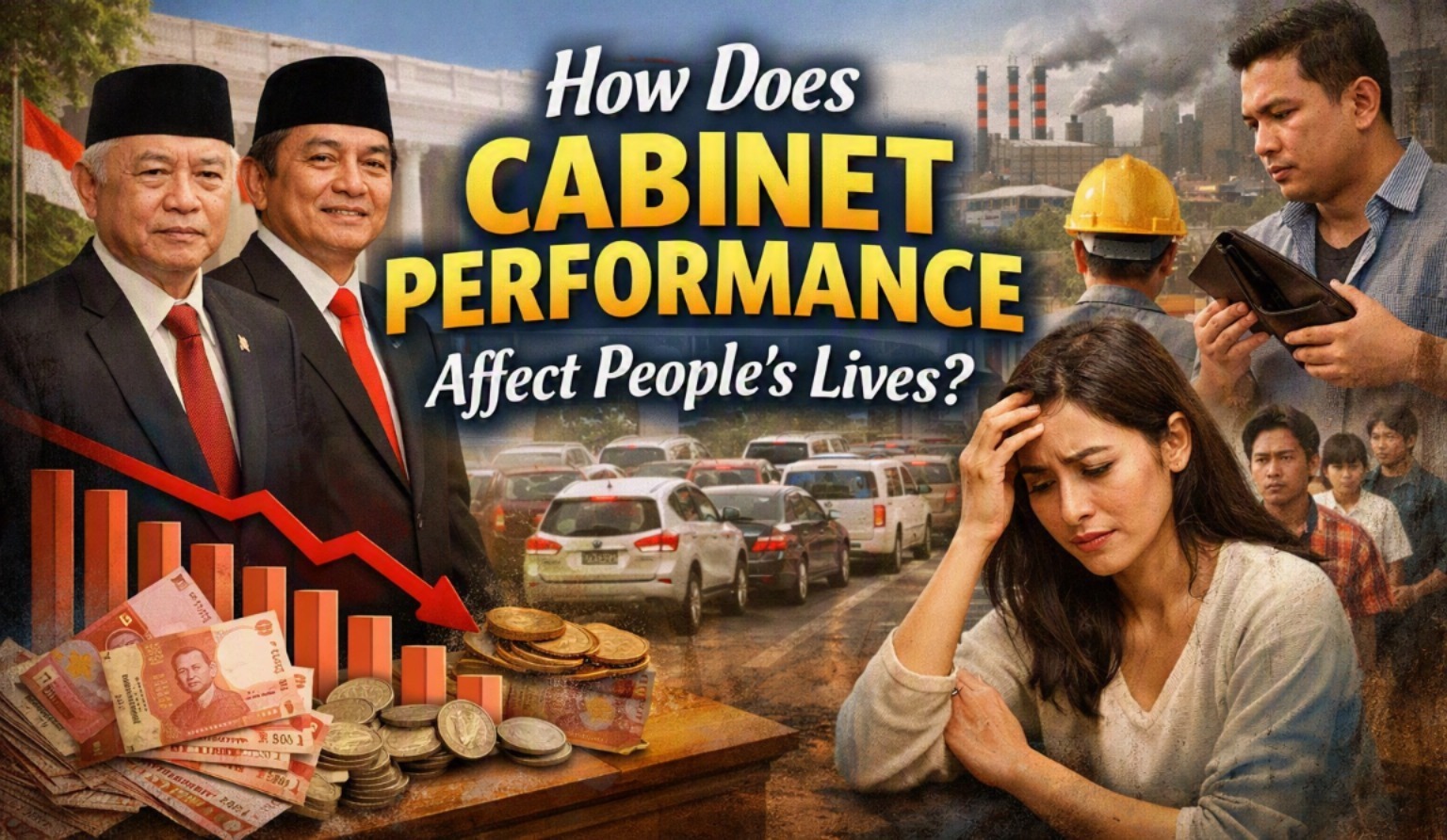
A government cabinet plays an important role in determining how public policies are planned, implemented, and evaluated. Although cabinet meetings may seem distant from everyday life, their decisions can directly affect education, healthcare, employment, transportation, public services, and economic conditions. When ministers coordinate effectively, government programs are more likely to reach communities efficiently and respond to real public needs. On the other hand, weak coordination can cause delays, wasted resources, and policies that do not produce the expected benefits.
Understanding cabinet performance helps people see how government decisions influence their daily experiences. A cabinet that works with clear priorities, responsible leadership, and strong coordination can help create more reliable public services and support national development.
THE ROLE OF A GOVERNMENT CABINET
A government cabinet generally consists of ministers who lead major government departments or ministries. Each minister is responsible for managing policies and programs within their area while also contributing to broader government priorities. The cabinet provides a forum for coordinating these different responsibilities so that government policies can work together rather than conflict with one another. Its exact structure and authority vary between countries because each nation has its own constitutional and political system.
Effective cabinet performance requires coordination, accountability, policy consistency, and informed decision making. Ministers need to consider evidence, available resources, legal requirements, and the potential effects of policies on different groups in society. Strong coordination can make government action more consistent and reduce unnecessary duplication between institutions.
HOW CABINET PERFORMANCE AFFECTS PUBLIC SERVICES?
The quality of cabinet performance can influence the delivery of public services that people use regularly. Decisions about education can affect school funding, teacher programs, curriculum development, and access to learning opportunities. Healthcare policies can influence hospital services, public health programs, medicine availability, and efforts to improve access to medical care. Transportation decisions can also affect roads, public transit, infrastructure development, and mobility.
When ministers coordinate their policies effectively, public programs can be implemented more smoothly. Efficient administration can reduce delays and make government services easier for citizens to access. However, poor planning or weak coordination may lead to overlapping programs, administrative problems, or inefficient use of public funds.
THE IMPACT ON THE ECONOMY AND EMPLOYMENT
Cabinet decisions can also influence the national economy and job opportunities. Government policies related to taxation, public spending, investment, trade, infrastructure, and business regulation can affect economic activity. Well-designed policies may encourage investment, support businesses, improve infrastructure, and create conditions that help employment grow. Economic decisions can therefore have consequences for household income, business confidence, and the cost of living.
At the same time, economic policies often involve difficult choices because government resources are limited. A cabinet must balance short-term needs with long-term economic stability. Responsible decision making can help protect public finances while supporting development, whereas poorly planned spending or inconsistent policies may create additional economic challenges.
THE IMPORTANCE OF CABINET COORDINATION
Cabinet coordination is essential because many public problems involve more than one government sector. For example, improving employment may require cooperation between ministries responsible for education, industry, transportation, and social protection. Cross-government cooperation can help ensure that different programs support the same national objectives. Without coordination, one policy may unintentionally create problems for another sector.
Good coordination also allows ministers to respond more effectively to major challenges. During economic disruptions, natural disasters, or public emergencies, government institutions may need to act quickly and share information. A cabinet that communicates clearly and establishes shared priorities can help government agencies respond in a more organized way.
CABINET PERFORMANCE AND PEOPLE’S TRUST
People often judge government performance through the services and outcomes they experience in daily life. If public programs are delivered fairly, efficiently, and transparently, citizens may develop greater confidence in government institutions. Transparency and accountability are therefore important parts of effective cabinet performance. Citizens need to understand how major decisions are made and how public resources are being used.
Trust can decline when policies appear inconsistent, services repeatedly fail, or government decisions lack clear explanations. Strong institutions should provide mechanisms for public oversight and accountability, including legislative scrutiny, audits, legal review, public reporting, and other processes appropriate to the country's system. These mechanisms help ensure that cabinet decisions remain subject to established rules and democratic checks.
WHY EFFECTIVE CABINET PERFORMANCE MATTERS?
Effective cabinet performance matters because government decisions eventually translate into real-world outcomes for communities and households. Better coordination can improve the implementation of public programs, while careful planning can help government resources reach important priorities. Effective leadership can also make it easier to respond to changing economic, social, and environmental conditions.
However, cabinet performance is only one part of government effectiveness. Public institutions, civil servants, local governments, legislatures, courts, and citizens can also play important roles in turning policies into practical results. A strong cabinet therefore needs to work within the country's laws and institutions while maintaining a clear focus on public needs.
CONCLUSION
Cabinet performance can have a significant influence on people’s everyday lives, even when citizens do not directly see the decision-making process. Its effects can be felt through public services, economic policies, infrastructure, employment programs, and social initiatives. Effective cabinet performance depends on clear priorities, strong coordination, responsible resource management, transparency, and accountability.
Ultimately, a cabinet is most effective when government decisions are translated into useful, fair, and sustainable outcomes for society. Understanding this connection helps citizens recognize why government leadership and policy coordination matter to their communities and to the country's long-term development.
About the Author
Gusti Ayu Tita P
Author — STEKOM University
An active author focused on academic issues, educational technology, and human resource development in the campus environment.















