
How Does Campus Fashion Shape Youth Social Identity?
Gusti Ayu Tita P
26 Agustus 2026
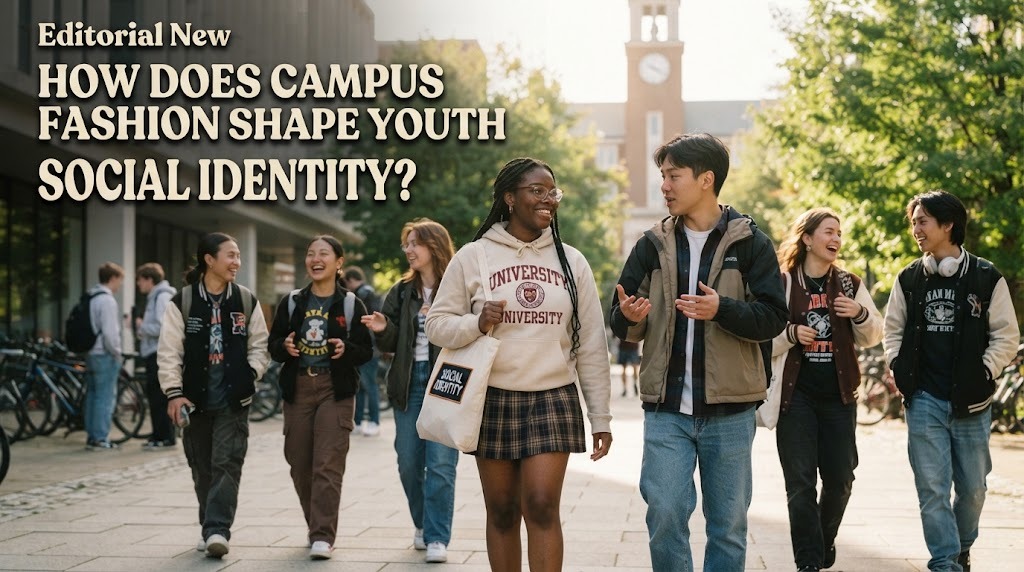
Campus is more than a place for academic activities. It is also a social environment where young people meet different individuals, explore interests, and develop their identities. One visible part of this process is campus fashion, which includes clothing, accessories, hairstyles, footwear, and overall appearance. The way students dress can communicate personal preferences, group belonging, confidence, and cultural influences. Therefore, fashion can become an important part of how youth understand and present themselves in social environments.
UNDERSTANDING CAMPUS FASHION AND SOCIAL IDENTITY
Campus fashion refers to the clothing and appearance choices commonly displayed by students in their university environment. These choices can be influenced by trends, personal taste, culture, financial circumstances, social groups, and online content. Students may choose certain styles because they feel comfortable or because the style reflects their personality. Others may change their appearance depending on the situation, such as attending lectures, presentations, organizations, or social events. Fashion therefore becomes a flexible way to communicate identity.
Social identity refers to how people understand themselves in relation to groups and social environments. Students may identify with particular communities based on interests, values, hobbies, culture, or lifestyle. Fashion can make these connections more visible because similar styles may create a sense of belonging. However, clothing does not completely define a person's identity. Personality, values, behavior, and relationships remain important parts of identity formation.
FASHION AS A FORM OF SELF EXPRESSION
Young people often use fashion to express aspects of their personality. Someone may prefer minimalist clothing because they value simplicity, while another student may choose bold colors to show creativity. Some students may also combine traditional elements with modern fashion to reflect their cultural background. Clothing can communicate personal preferences without requiring direct explanation. This makes fashion an accessible form of self-expression in everyday campus life.
Self-expression through fashion does not always mean following popular trends. Some students deliberately choose unique styles because they want to appear different from others. Others may prioritize comfort and practicality instead of appearance. Personal choice is one of the most important elements of fashion identity. As students gain confidence, their clothing choices may become more connected to their individual preferences rather than external expectations.
GENDER AND PERSONAL STYLE
Fashion is also connected to how young people explore gender expression and personal presentation. Students may choose clothing based on comfort, identity, cultural expectations, or individual preferences. Contemporary fashion provides many options that allow people to experiment with different styles. Personal style can develop as students become more aware of how they want to present themselves.
It is important to avoid assuming someone's personality or identity solely from their clothing. The same outfit can have different meanings for different people. Students should have the freedom to make reasonable clothing choices without unnecessary judgment. Respecting personal style contributes to a more inclusive campus environment.
FINANCIAL FACTORS AND ACCESS TO FASHION
Not every student has the same financial ability to purchase clothing. Some may frequently follow trends, while others rely on affordable, second-hand, or existing clothes. These differences can influence how students participate in fashion culture. Economic circumstances can shape access to particular styles and brands. This does not mean students with limited budgets have less creativity or weaker personal identities.
Students can develop attractive personal styles without spending excessively. Mixing basic clothing, choosing versatile pieces, and prioritizing quality can provide practical alternatives. Second-hand fashion can also offer affordable options while encouraging more responsible consumption. Personal style depends more on creativity and confidence than on the price of clothing.
BUILDING A HEALTHY FASHION CULTURE ON CAMPUS
A healthy campus fashion culture should allow students to express themselves without creating unnecessary competition. Students can appreciate different styles while avoiding negative judgments about appearance. Universities can also promote inclusive environments where clothing differences are treated with respect. Diversity in fashion can strengthen a sense of belonging when students feel accepted.
Students should also remember that appearance is only one part of social identity. Academic interests, skills, values, friendships, achievements, and contributions to the community are equally important. Fashion can support self-expression, but it should not become the primary measure of personal worth. Confidence should come from a combination of self-acceptance, personal development, and positive social relationships.
CONCLUSION
Campus fashion plays an important role in shaping youth social identity by providing a visible way for students to express personality, culture, group belonging, and personal preferences. Peer groups and social media can influence fashion choices, while economic conditions and cultural backgrounds create different experiences of campus style. Fashion may also affect perceptions of social status, but appearance should never be treated as a complete measure of someone's value. Students can develop their identities more confidently by choosing clothing that reflects their preferences while respecting differences. Ultimately, campus fashion becomes most meaningful when it supports self-expression, diversity, confidence, and social inclusion.
About the Author
Gusti Ayu Tita P
Author — STEKOM University
An active author focused on academic issues, educational technology, and human resource development in the campus environment.















