How Does FIVB Help Improve The Quality Of International Volleyball?
Gusti Ayu Tita P
29 September 2026
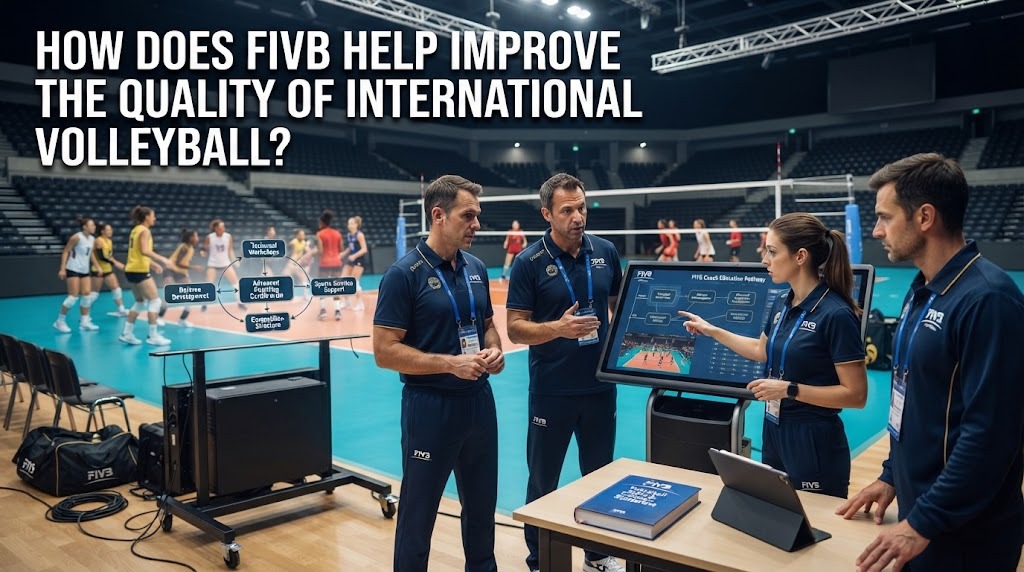
International volleyball needs clear standards, skilled athletes, professional coaches, and fair competition to continue growing. The Fédération Internationale de Volleyball (FIVB) plays an important role in developing and regulating volleyball around the world. Through rules, competitions, referee development, training programs, and support for national federations, FIVB helps improve the quality of the sport. These efforts allow athletes and teams from different countries to compete under more consistent conditions.
ESTABLISHING INTERNATIONAL VOLLEYBALL STANDARDS
One important way FIVB improves volleyball is by creating and maintaining international standards. FIVB establishes official rules that guide how volleyball matches should be played and officiated. These rules cover important areas such as the court, equipment, playing actions, and match procedures. Having common standards helps teams from different countries understand the same game requirements.
FIVB also sets standards for equipment and facilities used in international competitions. For example, official volleyballs must meet specific requirements for size, weight, pressure, and other characteristics. Standardized equipment helps create fairer and more consistent playing conditions. This is especially important when teams compete in major international tournaments.
DEVELOPING ATHLETES AND NATIONAL TEAMS
FIVB supports the improvement of athletes and national teams through its Volleyball Empowerment programme. The programme provides support designed to help national federations improve their technical level and develop stronger teams. Support can include coaching, equipment, and knowledge transfer. These resources can help athletes train more effectively and prepare for high-level international competitions.
In 2025, FIVB approved 341 development projects across 107 National Federations, with support focused on coaching, knowledge transfer, and volleyball equipment. This shows how development programmes can reach different volleyball communities around the world. By helping national federations build their own systems, FIVB contributes to the long-term development of athletes and teams.
IMPROVING COACHING AND TECHNICAL KNOWLEDGE
Coaches have a major influence on athlete development because they guide training, tactics, physical preparation, and team organization. FIVB supports coaching development through educational programmes, technical resources, and development initiatives. These efforts help coaches improve their knowledge and apply better training methods. Better coaching can contribute to stronger athlete performance and more competitive national teams.
FIVB also provides knowledge transfer programmes for national federations. These programmes can help countries access expertise that may not otherwise be easily available. In 2025, FIVB reported that 90 development courses were delivered across 54 organisers, involving 2,969 participants. Such education helps strengthen technical knowledge at different levels of volleyball.
STRENGTHENING REFEREE QUALITY
Fair competition depends on qualified referees who understand and apply the rules consistently. FIVB works to improve international refereeing through education, courses, standards, and referee development. Its Rules of the Game and Refereeing Commission focuses on maintaining consistent interpretations of the official rules. This helps reduce differences in how rules are applied between competitions and countries.
FIVB also recognizes different levels of referees and supports education for international referee candidates. Referee development includes learning the rules and understanding how to apply them during real match situations. Consistent officiating helps protect fairness and professionalism during international competitions.
IMPROVING TRAINING ENVIRONMENTS
Good training facilities are another important part of volleyball development. In 2026, FIVB introduced the International Centres of Excellence framework to create a global network of recognized high-quality training environments. The network includes facilities focused on elite performance as well as centres supporting athlete development, coach education, youth programmes, and regional activities.
These centres are intended to provide national federations with better access to professional training environments. National federations can apply for FIVB support to organize training camps at recognized International Centres of Excellence. This approach can help teams prepare in more structured and professional conditions. It also supports the long-term development of athletes and coaches.
UPDATING RULES FOR MODERN VOLLEYBALL
Volleyball continues to change as playing styles, technology, and audience expectations develop. Because of this, FIVB reviews and tests possible changes to rules and competition procedures. In 2026, FIVB approved several rule and procedure tests for international competitions, including tests involving playing actions, video challenges, coach-referee interaction, and pre-match procedures.
The purpose of testing is to understand how possible changes work in real competitions before official rules are changed. Rule development can help make matches easier to understand while maintaining fairness and competitive standards. This allows international volleyball to respond to changes without abandoning the basic structure of the sport.
SUPPORTING GLOBAL VOLLEYBALL DEVELOPMENT
FIVB does not only focus on major volleyball nations. Its development programmes are designed to provide resources, expertise, and support to national federations in different parts of the world. Application-based support can include coach support, volleyball equipment, and knowledge transfer. This can help countries with different levels of volleyball development strengthen their systems.
The wider goal is to create more opportunities for athletes and national teams to develop their abilities. When more countries have access to quality coaching, equipment, training environments, and technical knowledge, international volleyball can become more competitive. This also helps expand the global volleyball community over the long term.
CONCLUSION
FIVB improves the quality of international volleyball through rules, standards, athlete development, coaching, refereeing, training facilities, and global development programmes. These areas work together to create more consistent and professional volleyball competitions. Support for national federations also helps countries develop athletes and teams according to their own needs.
Through continued development and modernization, FIVB helps international volleyball adapt to new challenges while maintaining fair competition. Better standards and stronger development systems can give athletes, coaches, referees, and teams better opportunities to perform at the international level.
About the Author
Gusti Ayu Tita P
Author — STEKOM University
An active author focused on academic issues, educational technology, and human resource development in the campus environment.