
How Does Illegal Parking Affect Urban Environments?
Gusti Ayu Tita P
29 Agustus 2026
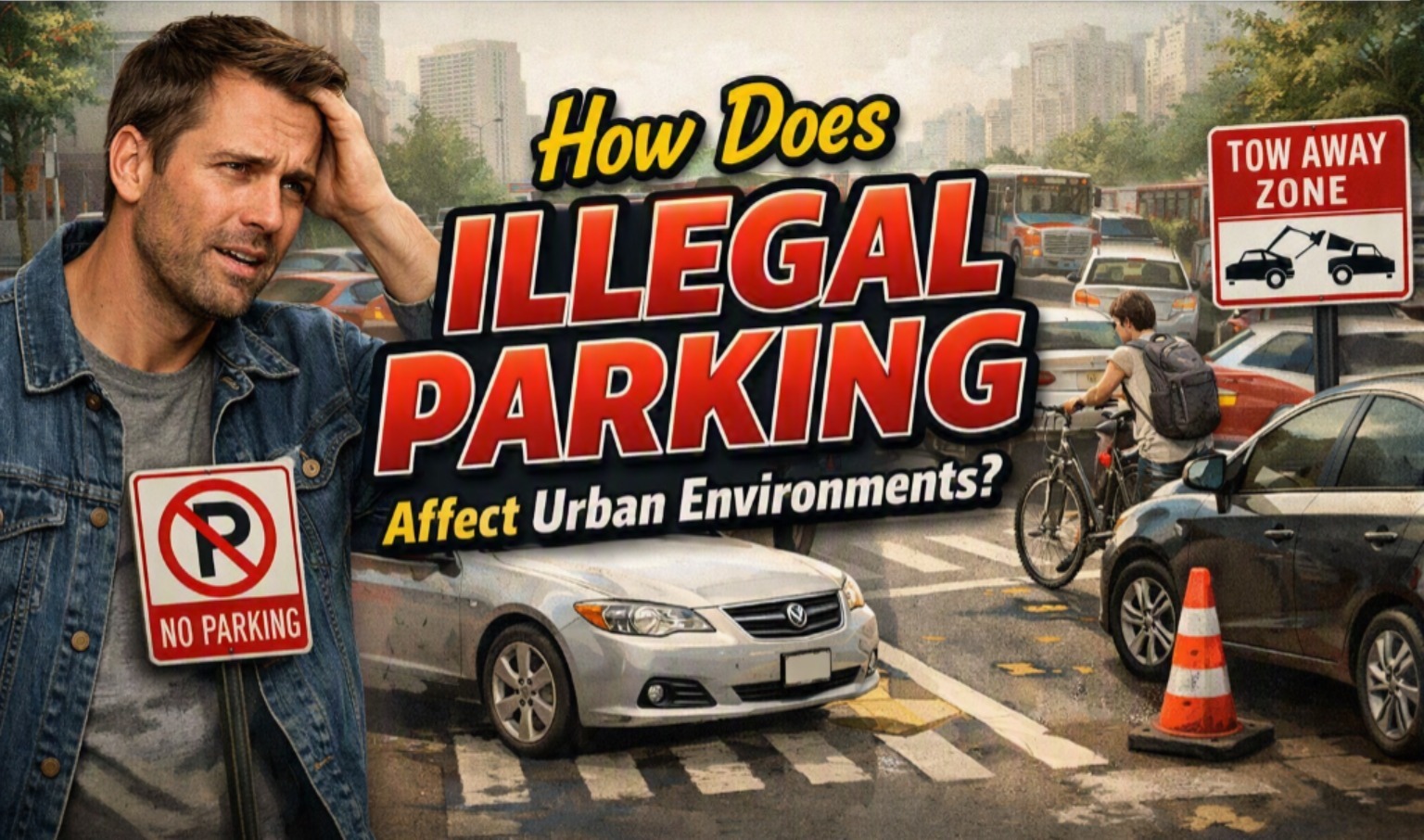
Illegal parking is a common problem in many cities, especially in areas with limited parking spaces and high traffic volumes. Although it may seem like a minor violation, illegal parking can create serious problems for urban environments. Vehicles parked on sidewalks, road shoulders, bike lanes, or other restricted areas can interfere with traffic and reduce public space. Over time, these conditions can affect urban mobility, environmental quality, and public safety.
Understanding the effects of illegal parking is important for drivers, pedestrians, businesses, and local authorities. Effective parking management can help cities become more organized, accessible, and environmentally friendly.
REDUCES ROAD SPACE AND INCREASES TRAFFIC CONGESTION
Illegal parking can reduce the amount of road space available for moving vehicles. When cars occupy road lanes or stop in restricted areas, other drivers may need to slow down, change lanes, or wait for a clear path. These small disruptions can become significant when they occur repeatedly on busy streets. As a result, traffic congestion can become worse, particularly during peak hours.
Congested roads also affect the surrounding urban environment. Vehicles that spend more time in traffic generally use more fuel than vehicles moving smoothly. This can contribute to higher fuel consumption and increased vehicle emissions. Therefore, illegal parking can indirectly contribute to poorer air quality by making urban traffic less efficient.
HARMS PEDESTRIAN AND CYCLIST MOBILITY
Illegal parking does not only affect motorists but also reduces safe space for pedestrians and cyclists. Vehicles parked on sidewalks can force pedestrians to walk closer to moving traffic or use the road itself. This can be particularly dangerous for children, older people, and individuals with disabilities. Blocked sidewalks also make urban areas less accessible and less comfortable for walking.
Parking in bicycle lanes creates similar problems for cyclists. When designated lanes are blocked, cyclists may have to merge with faster-moving vehicles. This can discourage people from choosing bicycles as an alternative means of transportation. In the long term, poor parking practices can make cities less supportive of sustainable transportation.
CONTRIBUTES TO AIR AND NOISE POLLUTION
Illegal parking can contribute to air pollution when drivers repeatedly slow down, stop, and accelerate to navigate blocked roads. Vehicles caught in congestion may remain on the road longer and consume additional fuel. The resulting emissions can include pollutants that reduce urban air quality. Areas with heavy traffic and frequent parking violations may therefore experience greater environmental pressure.
The problem can also increase noise pollution. Drivers may honk when illegally parked vehicles obstruct traffic or make roads difficult to navigate. Repeated engine acceleration, braking, and vehicle movement can add to noise levels in busy neighborhoods. This can reduce the comfort of people living, working, or studying near affected roads.
DAMAGES THE QUALITY OF PUBLIC SPACES
Sidewalks, public roads, bicycle lanes, and other shared spaces are important parts of the urban environment. When vehicles occupy areas that are not intended for parking, public spaces become less functional. Sidewalks may become difficult to use, while pedestrian areas can appear crowded and poorly maintained. This can reduce the overall quality and attractiveness of urban spaces.
Illegal parking can also affect the appearance of commercial and residential areas. Streets filled with improperly parked vehicles may look disorderly and make public areas feel less welcoming. In some locations, vehicles can block access to parks, public facilities, or building entrances. Good parking management helps ensure that urban spaces remain organized, accessible, and useful for the wider community.
MAKES URBAN TRANSPORTATION LESS EFFICIENT
Efficient transportation depends on roads and public spaces being used according to their intended purposes. Illegal parking can interfere with public buses, delivery vehicles, emergency vehicles, and other essential transportation services. A parked vehicle blocking a bus stop, for example, may prevent buses from stopping safely for passengers. This can create delays and make public transportation less reliable.
Emergency access is another important concern. Vehicles parked in restricted locations can make it more difficult for ambulances, fire trucks, or other emergency services to reach their destinations quickly. Even a short delay can become important during an emergency. For this reason, proper parking enforcement is part of effective urban transportation management.
INCREASES RISKS TO URBAN SAFETY
Illegal parking can create visibility problems for both drivers and pedestrians. A vehicle parked near an intersection, pedestrian crossing, or road corner can block the view of people approaching from different directions. Drivers may have less time to react when pedestrians or cyclists suddenly enter their path. This can increase the risk of collisions and other road incidents.
Poor parking practices can also create conflicts between road users. Drivers may need to make sudden maneuvers to avoid illegally parked vehicles, while pedestrians may be forced into areas with moving traffic. These conditions can make streets feel unsafe and discourage people from walking or cycling. Maintaining clear roadways and pedestrian areas is therefore essential for urban road safety.
ILLEGAL PARKING CAN AFFECT LOCAL BUSINESSES
Illegal parking can have both direct and indirect effects on local businesses. Vehicles that block entrances, loading areas, or sidewalks can make it harder for customers to access shops and services. Delivery vehicles may also struggle to reach businesses when designated loading areas are occupied. These disruptions can reduce operational efficiency and create inconvenience for customers.
At the same time, businesses located in areas with persistent parking problems may experience a less attractive surrounding environment. Crowded and disorganized streets can affect how people perceive a commercial district. Providing well-managed parking spaces and accessible pedestrian areas can create a more convenient environment for businesses and their customers.
BETTER PARKING MANAGEMENT CAN REDUCE THE PROBLEM
Reducing illegal parking requires cooperation between drivers, communities, businesses, and local authorities. Drivers should follow parking signs, use designated spaces, and avoid blocking sidewalks, crossings, bicycle lanes, and emergency access routes. Local authorities can support compliance through clear regulations, effective enforcement, and sufficient parking infrastructure. Public education can also help people understand why responsible parking matters.
Technology can provide additional support through digital parking systems, monitoring tools, and reporting platforms. Cities can use traffic and parking data to identify areas where violations occur frequently. Better planning can then help authorities improve parking availability and traffic management. Combining enforcement with education and adequate parking facilities can create safer, cleaner, and more efficient urban environments.
CONCLUSION
Illegal parking is more than a simple traffic violation because it can influence mobility, safety, accessibility, pollution, and the quality of public spaces. Blocked roads can increase congestion, while vehicles occupying sidewalks and bicycle lanes can make sustainable transportation more difficult. Illegal parking can also interfere with public transportation, emergency access, and local business activities.
A better urban environment requires responsible behavior from road users and effective action from authorities. Following parking regulations, improving parking facilities, educating the public, and strengthening enforcement can help reduce the negative effects of illegal parking. With consistent cooperation, cities can provide streets and public spaces that are safer, cleaner, and more accessible to everyone.
About the Author
Gusti Ayu Tita P
Author — STEKOM University
An active author focused on academic issues, educational technology, and human resource development in the campus environment.















