
How Does KRL Improve Community Mobility?
Gusti Ayu Tita P
11 Agustus 2026
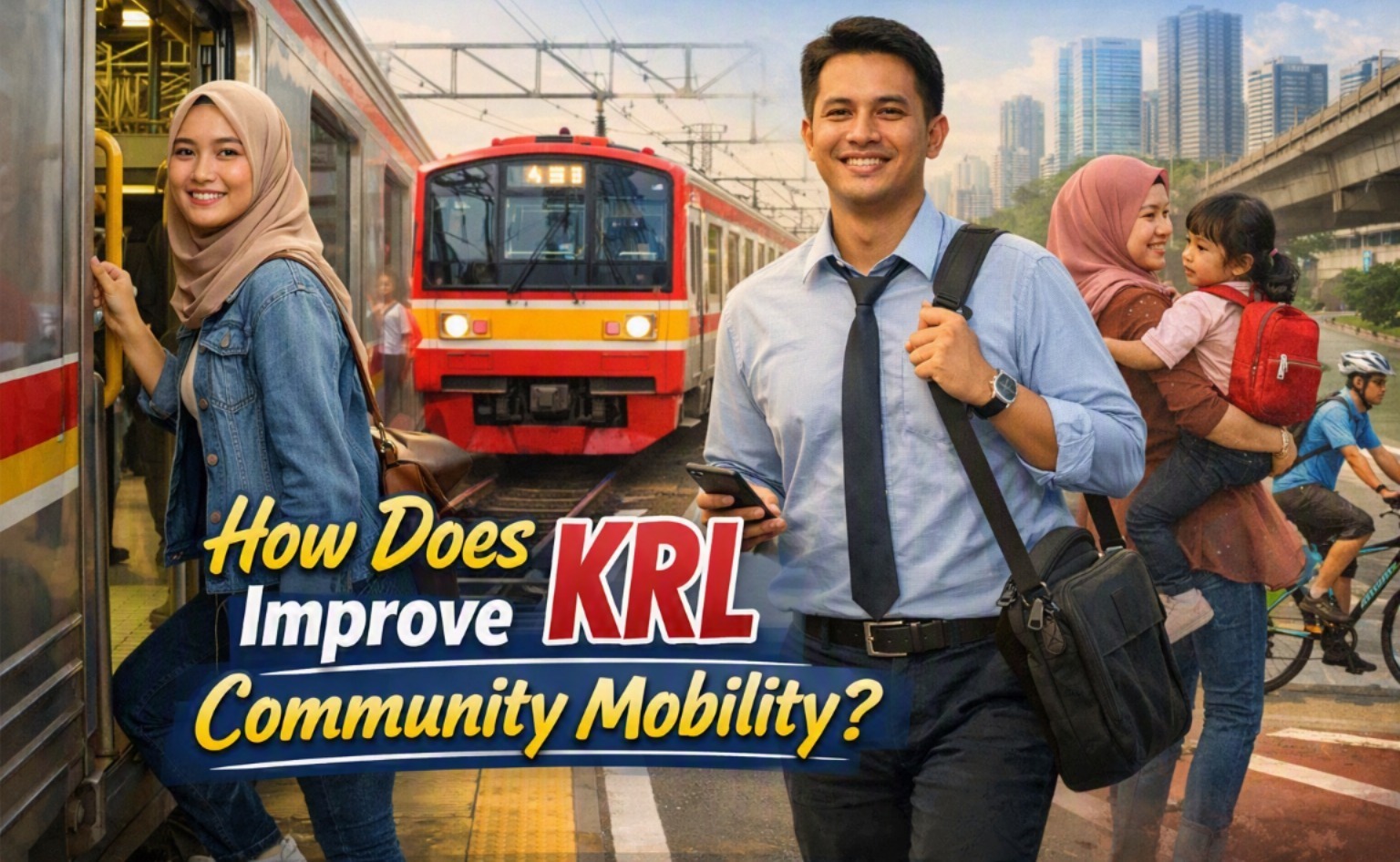
KRL, or Commuter Rail, has become an important part of daily transportation in many urban areas. It provides a practical way for people to travel between residential areas, business districts, schools, and other important destinations. As cities become more crowded, reliable public transportation is increasingly needed to support people's daily activities. KRL helps communities move more efficiently while reducing dependence on private vehicles. Its role is not only about transporting passengers but also about supporting a more connected and sustainable urban environment.
PROVIDING FAST AND RELIABLE TRANSPORTATION
One of the main advantages of KRL is its ability to transport a large number of passengers efficiently. KRL can carry many people in a single trip, making it useful for communities with high daily travel demand. Compared with road transportation, rail services can be less affected by traffic congestion because trains operate on dedicated tracks. This can help passengers reach their destinations with more predictable travel times, especially during busy periods. As a result, KRL gives commuters a practical transportation option for regular journeys.
KRL also supports people who need to travel between suburban and urban areas. Workers and students can use KRL for daily commuting without having to drive their own vehicles. Regular services and established routes make it easier for passengers to plan their activities. When public transportation is reliable, people can spend less time dealing with road congestion and parking problems. This makes KRL an important part of an efficient community mobility system.
REDUCING TRAFFIC CONGESTION
KRL can help reduce pressure on busy roads by encouraging people to leave private vehicles at home. One train can transport a large number of passengers at once, potentially replacing many individual car or motorcycle trips. Fewer private vehicles on the road can contribute to smoother traffic movement, particularly around major urban corridors. This benefit becomes more significant in densely populated areas where road space is limited. Therefore, KRL can support better traffic management when it is integrated with other forms of public transportation.
The impact of KRL is also connected to the way people choose their daily transportation. When passengers have access to a convenient rail service, public transportation can become a more attractive alternative to private vehicles. Reducing unnecessary vehicle trips can help communities use road infrastructure more efficiently. It can also reduce the amount of time people spend in traffic. In the long term, stronger public transportation networks can support more organized and accessible urban mobility.
CONNECTING COMMUNITIES AND IMPORTANT AREAS
KRL improves mobility by connecting residential areas with workplaces, schools, shopping centers, and other activity centers. This connection is especially important for people who live farther from major economic and educational areas. A well-connected rail network can make daily travel easier and expand people's access to opportunities. Passengers can also combine KRL with other transportation services to reach destinations that are not directly served by rail. This creates a wider transportation network for the community.
Integration between KRL and other public transportation is particularly important. Stations can function as transportation hubs where passengers transfer between trains, buses, feeder services, walking routes, or other modes of transport. Good connections can reduce the difficulty of traveling from a person's home to their final destination. Convenient transfers also make public transportation more attractive to new users. For this reason, KRL works best when it is supported by a broader and well-planned mobility system.
SUPPORTING AFFORDABLE AND INCLUSIVE MOBILITY
KRL can provide an important transportation option for people who do not own private vehicles. Affordable public transportation helps more members of the community access jobs, education, and essential services. This is particularly valuable for workers and students who travel frequently and need to manage their daily transportation expenses. By providing a shared transportation service, KRL can make urban mobility more accessible to a wider range of passengers. Its benefits therefore extend beyond convenience and include improved access to daily opportunities.
KRL can also support more inclusive mobility when stations and services are designed to accommodate different passenger needs. Accessibility features, clear information, safe stations, and organized passenger facilities can improve the travel experience. A reliable public transportation system can give people greater flexibility in choosing where they work, study, or conduct daily activities. Better mobility can also strengthen connections between different communities. In this way, KRL contributes to a transportation system that is more accessible and useful for everyday life.
SUPPORTING A MORE SUSTAINABLE CITY
Another important benefit of KRL is its potential contribution to more sustainable urban transportation. Moving many passengers through a shared rail system can be more space-efficient than relying heavily on individual vehicles. Reduced dependence on private transportation can also help lower fuel consumption and transportation-related emissions, depending on how the rail system is powered and operated. This makes rail transportation an important component of strategies aimed at improving urban environmental performance. KRL can therefore support mobility while helping cities manage the environmental challenges associated with growing transportation demand.
However, the benefits of KRL depend on service quality, network coverage, accessibility, safety, and integration with other transportation modes. A train service alone cannot solve every mobility problem in a large city. Communities need convenient connections between stations and neighborhoods, reliable schedules, comfortable facilities, and safe travel conditions. Continued improvements in public transportation infrastructure can encourage more people to use KRL for their daily activities. With effective planning and integration, KRL can play a major role in creating a faster, more connected, accessible, and sustainable community mobility system.
CONCLUSION
KRL improves community mobility by providing efficient, reliable, and high-capacity transportation for daily travel. It can help reduce dependence on private vehicles, ease pressure on busy roads, and connect residential areas with important destinations. KRL also provides an affordable transportation option for many workers, students, and other passengers. When integrated with buses, feeder services, walking facilities, and other transportation modes, its benefits can become even greater. Ultimately, a strong KRL network can help communities move more easily while supporting better urban development and sustainable transportation.
About the Author
Gusti Ayu Tita P
Author — STEKOM University
An active author focused on academic issues, educational technology, and human resource development in the campus environment.















