How Does LDKS Help Students Overcome the Fear of Public Speaking?
Gusti Ayu Tita P
19 September 2026
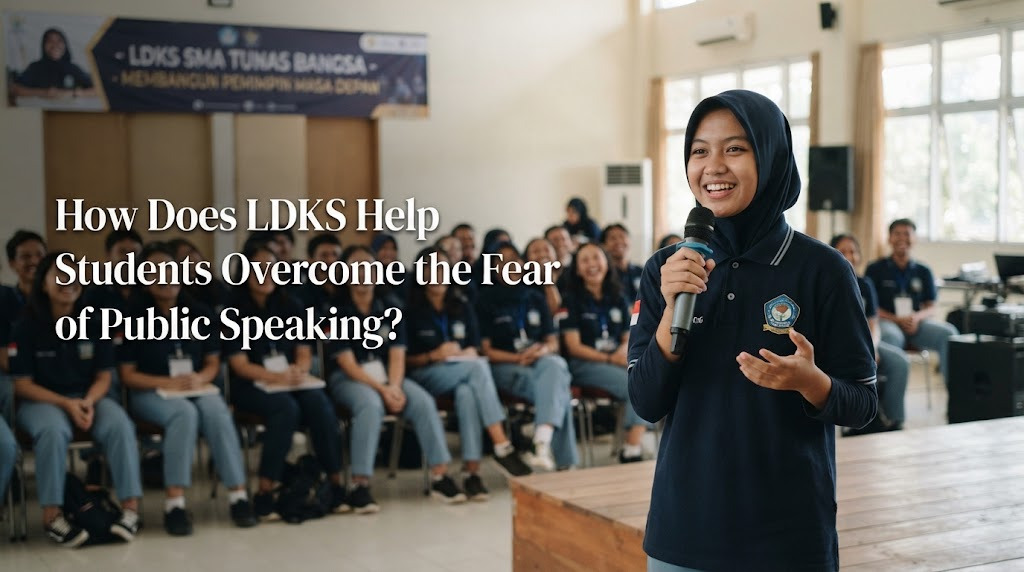
LDKS, or Student Leadership Training, is a school activity that helps students develop leadership, communication, and personal skills. One useful part of this training is giving students opportunities to speak in front of other people. For students who are afraid of public speaking, these activities can provide gradual practice in a supportive environment. Through repeated experience, students can become more comfortable expressing their ideas and communicating with an audience.
WHAT IS LDKS AND WHY IS PUBLIC SPEAKING INCLUDED?
LDKS is a leadership training program that usually involves discussions, teamwork, presentations, problem-solving, and other activities. Public speaking can be included because communication is an important part of leadership. Students may need to explain ideas, present group results, or speak during discussions. These activities give students practical opportunities to practice speaking rather than learning communication only through theory.
Fear of public speaking can come from nervousness, lack of experience, or worry about making mistakes. LDKS can provide a structured environment where students are encouraged to participate and learn from the experience. Instead of expecting students to become confident immediately, training can give them repeated opportunities to improve. This process can gradually support public speaking confidence.
HOW DOES REGULAR PRACTICE REDUCE SPEAKING FEAR?
Regular practice can help students become more familiar with speaking in front of others. During LDKS, students may speak during small group discussions before taking part in larger presentations. Starting with manageable activities can make the experience feel less overwhelming. As students gain experience, they may become more comfortable with the process of preparing and delivering a message.
Practice also allows students to identify which parts of speaking are difficult for them. They can improve their pronunciation, voice volume, body language, and organization of ideas over time. Each successful attempt can become a learning experience that encourages them to try again. In this way, communication practice can help reduce excessive nervousness.
HOW DOES TEAMWORK MAKE PUBLIC SPEAKING EASIER?
Teamwork can provide a supportive way for students to practice speaking. During group activities, students can discuss ideas with teammates before presenting them to a larger audience. They can also divide presentation responsibilities according to their abilities and gradually take on more speaking tasks. This can make students feel less isolated when facing an audience.
Working with teammates can also help students receive encouragement and suggestions. They can practice explaining their ideas to people they already know before speaking in front of a wider group. This supportive experience can help build speaking confidence. Over time, students may become more willing to communicate independently.
HOW DOES LDKS TEACH STUDENTS TO HANDLE MISTAKES?
Fear of making mistakes is one reason students may avoid public speaking. LDKS can help students understand that mistakes are a normal part of learning a new skill. When students forget a word, lose their train of thought, or give an imperfect answer, they can learn how to continue instead of immediately giving up. This can help them develop a more positive approach to public speaking challenges.
Constructive feedback can also help students understand how to improve without feeling discouraged. Teachers or instructors may point out strengths and suggest specific areas for improvement. Students can then use the feedback during their next speaking activity. This process can gradually reduce the fear of being judged for every small mistake.
HOW CAN LDKS IMPROVE STUDENTS’ BODY LANGUAGE AND VOICE?
Public speaking is not only about choosing the right words. Students also need to learn how to use body language, eye contact, voice volume, and facial expressions effectively. LDKS activities can give them opportunities to practice these elements while presenting or leading discussions. With regular practice, students can become more aware of how their physical communication affects their message.
Students can also learn to speak at an appropriate pace and use pauses when necessary. These techniques can make their presentations easier for others to understand. Becoming familiar with these basic speaking techniques may help students feel more prepared before standing in front of an audience. Better preparation can contribute to stronger public speaking skills.
WHY DOES LDKS HELP BUILD SELF-CONFIDENCE?
Confidence can develop when students experience progress through repeated activities. Completing a presentation, answering a question, or leading a discussion can give students evidence that they are capable of speaking in front of others. Small achievements can encourage them to accept more challenging communication tasks. This can support self-confidence both during LDKS and in other school activities.
Students can also discover that public speaking does not require perfection. What matters is communicating ideas clearly and responding appropriately to the audience. By focusing on improvement rather than avoiding mistakes, students can become more willing to participate. These experiences can help them feel better prepared for presentations, meetings, and organizational activities.
CONCLUSION
LDKS can help students overcome the fear of public speaking by providing regular practice, teamwork, constructive feedback, and opportunities to communicate in different situations. Students can gradually become familiar with speaking in front of others and learn how to manage nervousness. They can also improve important skills such as body language, voice control, organization of ideas, and active communication.
The experience gained through LDKS can be useful beyond the training program. Students may become more prepared to give presentations, participate in discussions, join school organizations, and communicate in future academic or professional settings. With consistent practice, public speaking confidence can develop as an important part of students' personal growth.
About the Author
Gusti Ayu Tita P
Author — STEKOM University
An active author focused on academic issues, educational technology, and human resource development in the campus environment.