
How Does Marine Conservation Support Sustainable Economic Growth?
Gusti Ayu Tita P
30 Juli 2026
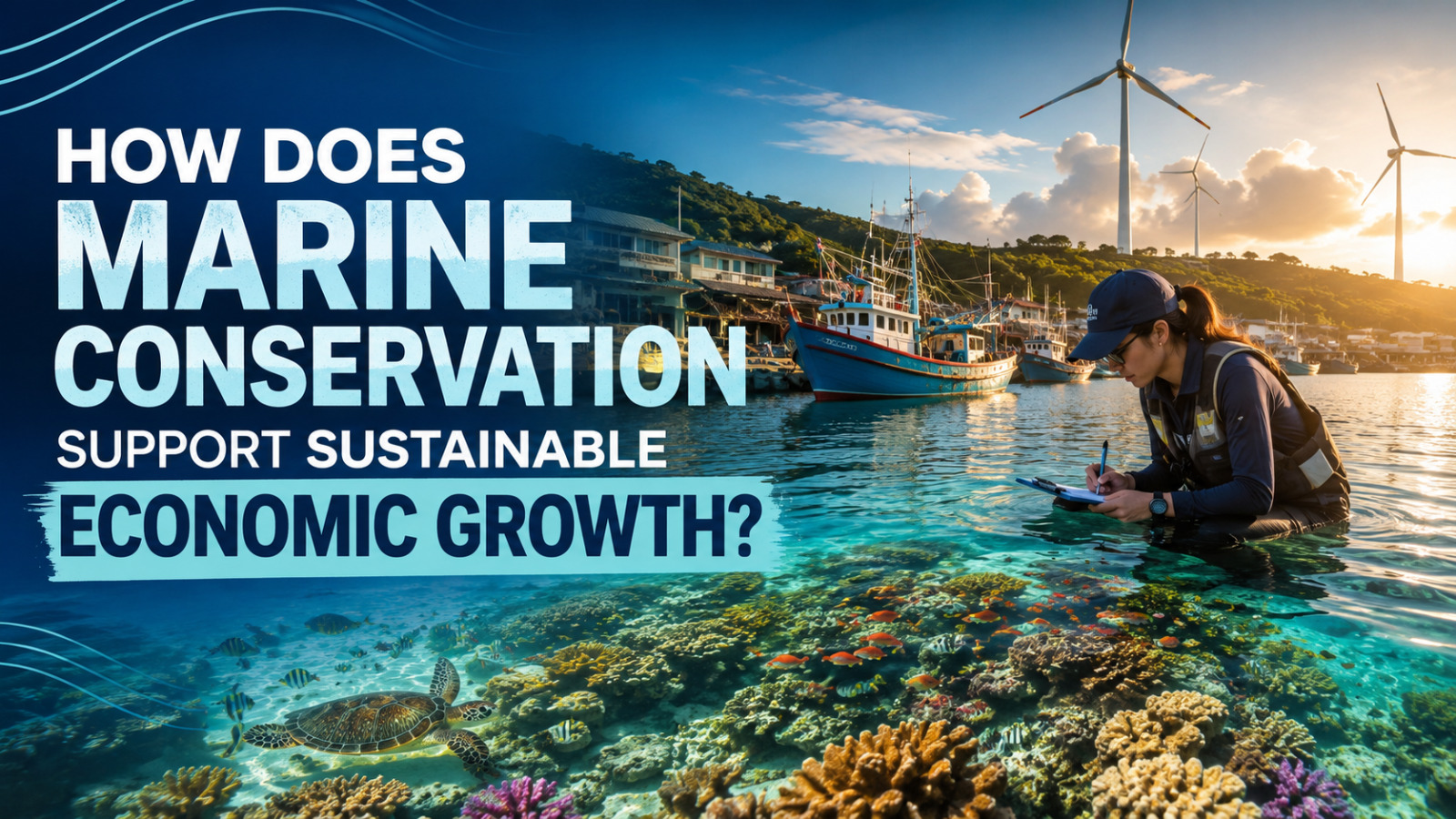
Marine conservation is no longer viewed solely as an environmental responsibility. Today, it is recognised as a key driver of sustainable economic growth, supporting industries such as fisheries, tourism, shipping, renewable energy, and coastal development. Healthy oceans provide valuable ecosystem services that sustain millions of jobs while ensuring food security and climate stability. Protecting marine ecosystems allows governments, businesses, and local communities to benefit from natural resources without exhausting them. As global demand for marine resources continues to increase, conservation has become essential for building a resilient and sustainable blue economy.
THE CONNECTION BETWEEN MARINE CONSERVATION AND ECONOMIC GROWTH
Marine conservation protects ecosystems that generate significant economic value. Healthy coral reefs, mangrove forests, and seagrass beds support fisheries, tourism, and coastal protection while reducing the costs associated with environmental degradation. These natural ecosystems also store carbon, helping countries address climate change while preserving biodiversity.
By investing in marine conservation, governments can create long-term economic stability instead of relying on short-term resource exploitation. Sustainable management ensures that marine resources remain productive for future generations, benefiting businesses and communities alike. A healthy ocean is ultimately a valuable economic asset.
HOW HEALTHY OCEANS SUPPORT FOOD SECURITY
Oceans provide an important source of protein for billions of people worldwide. Sustainable fisheries rely on healthy marine ecosystems where fish populations can reproduce naturally and maintain balanced food chains. Overfishing and habitat destruction reduce fish stocks, threatening both livelihoods and food supplies.
Marine conservation measures such as marine protected areas, responsible fishing regulations, and habitat restoration help replenish fish populations. As fish stocks recover, fisheries become more productive and reliable, ensuring consistent seafood supplies while supporting fishing communities economically.
THE ROLE OF THE BLUE ECONOMY
The Blue Economy promotes economic development while protecting marine ecosystems. It encourages industries to use ocean resources responsibly through sustainable fisheries, eco-tourism, offshore renewable energy, marine biotechnology, and environmentally friendly shipping practices.
A well-managed blue economy creates new investment opportunities while reducing environmental risks. Businesses adopting sustainable practices often improve efficiency, attract environmentally conscious investors, and strengthen their long-term competitiveness. Marine conservation therefore becomes an essential foundation for economic innovation.
BENEFITS FOR COASTAL COMMUNITIES
Millions of people living in coastal regions depend directly on marine resources for income and employment. Conservation projects often create jobs in habitat restoration, scientific research, eco-tourism, fisheries management, and environmental monitoring. These opportunities help diversify local economies beyond traditional fishing.
Healthy coastal ecosystems also reduce disaster risks by protecting shorelines from erosion, flooding, and storm surges. Mangrove forests and coral reefs serve as natural barriers, lowering infrastructure damage and reducing recovery costs after extreme weather events. This strengthens community resilience while supporting sustainable development.
THE IMPORTANCE OF BIODIVERSITY
Marine biodiversity supports ecosystem stability and productivity. Every species plays a role in maintaining healthy food webs, nutrient cycles, and ecological balance. Losing biodiversity weakens ecosystems, making them less capable of adapting to pollution, climate change, and invasive species.
Protecting biodiversity also supports scientific discoveries and innovation. Marine organisms contribute to the development of new medicines, biotechnology products, and sustainable industrial materials. Conserving biodiversity therefore provides both environmental and economic benefits that extend far beyond fisheries.
CHALLENGES TO EFFECTIVE MARINE CONSERVATION
Despite growing awareness, marine conservation still faces significant challenges. Illegal fishing, plastic pollution, climate change, coastal development, and habitat destruction continue to threaten marine ecosystems worldwide. Limited funding and weak law enforcement also reduce conservation effectiveness in many regions.
International cooperation is essential because oceans connect countries across the globe. Governments, private companies, researchers, and local communities must work together to improve marine governance, strengthen environmental regulations, and encourage responsible resource management for lasting results.
STRATEGIES FOR A SUSTAINABLE FUTURE
Modern technology is transforming marine conservation efforts. Satellite monitoring, artificial intelligence, drones, underwater sensors, and digital mapping allow scientists to monitor ecosystems more accurately and detect illegal activities more efficiently. These technologies improve decision-making while reducing conservation costs.
Education and public awareness also play a crucial role. Consumers can support sustainability by choosing responsibly sourced seafood, reducing plastic waste, and participating in conservation initiatives. When governments, industries, and individuals work together, marine conservation becomes a powerful driver of sustainable economic growth.
CONCLUSION
Marine conservation is not simply about protecting nature—it is about protecting the foundation of future prosperity. Healthy oceans support fisheries, tourism, biodiversity, climate resilience, and millions of livelihoods around the world. By investing in sustainable marine management today, societies can secure long-term economic growth while preserving valuable natural resources. The future of the global economy is closely connected to the health of the world's oceans, making marine conservation one of the smartest investments for sustainable development.
About the Author
Gusti Ayu Tita P
Author — STEKOM University
An active author focused on academic issues, educational technology, and human resource development in the campus environment.















