
How Does Marine Conservation Support Sustainable Economic Growth And Coastal Communities?
Gusti Ayu Tita P
11 Agustus 2026
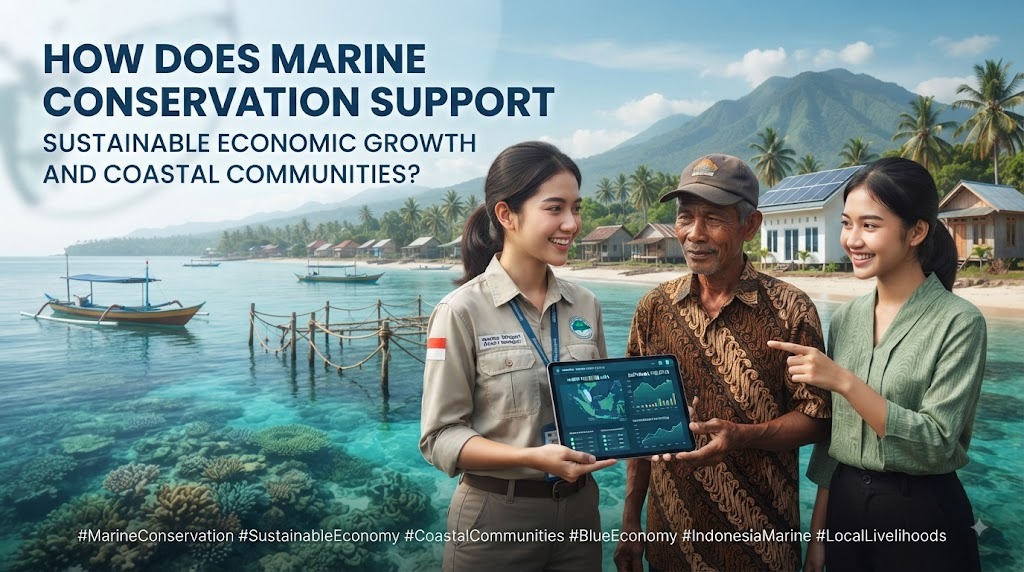
Marine ecosystems cover a large part of the planet and provide essential resources for people and economies. Oceans, coral reefs, mangroves, seagrass meadows, and coastal waters support fisheries, tourism, transportation, and many other economic activities. Millions of people depend directly or indirectly on healthy marine environments for food and income. Marine conservation is therefore not only an environmental responsibility but also an important foundation for sustainable economic development.
Coastal communities are particularly dependent on marine resources. When fish stocks decline, coral reefs are damaged, or coastal ecosystems disappear, local livelihoods can become more vulnerable. Protecting marine ecosystems can maintain natural resources while creating opportunities for responsible economic activities. Sustainable marine management can help balance environmental protection, economic development, and community welfare.
UNDERSTANDING MARINE CONSERVATION
Marine conservation refers to efforts to protect and manage oceans and coastal ecosystems so that they can continue functioning effectively. It can involve protecting habitats, managing fisheries, reducing pollution, restoring damaged ecosystems, and establishing protected areas. Marine conservation aims to maintain biodiversity and ecosystem health while allowing responsible human use.
Conservation does not necessarily mean preventing people from using marine resources. Instead, it focuses on ensuring that resources are used within ecological limits. Effective management considers scientific information, local knowledge, community needs, and long-term environmental conditions. This balanced approach can create benefits for both nature and society.
SUPPORTING SUSTAINABLE FISHERIES
Fisheries are an important source of food, employment, and income for many coastal communities. Healthy fish populations depend on productive marine ecosystems and responsible fishing practices. Sustainable fisheries can provide long-term economic benefits without exhausting fish stocks.
Marine conservation can protect spawning areas, nursery habitats, coral reefs, mangroves, and other ecosystems that support fish populations. Measures such as fishing regulations, seasonal closures, protected areas, and responsible fishing gear can reduce pressure on marine resources. When fish stocks remain productive, fishers have better opportunities to maintain their livelihoods. Sustainable fisheries can therefore connect conservation with food security and economic stability.
PROTECTING COASTAL LIVELIHOODS
Coastal communities often depend on fishing, aquaculture, tourism, transportation, and small businesses related to marine resources. Environmental degradation can reduce these economic opportunities and increase household vulnerability. Coastal livelihoods can become more secure when marine ecosystems remain healthy.
Conservation can support long-term access to fish, shellfish, tourism resources, and other marine products. Community participation is important because local residents often have detailed knowledge of seasonal conditions and resource use. Including communities in management decisions can improve both conservation outcomes and social acceptance. This approach can make marine protection more practical and sustainable.
DEVELOPING SUSTAINABLE MARINE TOURISM
Marine tourism can generate significant economic opportunities in coastal areas. Activities such as snorkeling, diving, boating, wildlife observation, and coastal recreation depend heavily on attractive and healthy marine environments. Sustainable marine tourism can create income while encouraging people to protect the ecosystems that attract visitors.
Tourism needs to be carefully managed to prevent overcrowding, pollution, habitat damage, and excessive resource use. Local communities can benefit through guiding services, accommodation, food businesses, transportation, handicrafts, and other activities. Tourism revenue can also support conservation programs when appropriate mechanisms are established. Responsible tourism can therefore create a direct economic incentive for protecting marine ecosystems.
PROTECTING CORAL REEFS AND MANGROVES
Coral reefs and mangroves provide important ecological and economic benefits. Coral reefs offer habitat for many marine species, while mangroves provide nursery areas and help protect coastlines. Coastal ecosystems also support fisheries, tourism, carbon storage, and other ecosystem services.
Mangroves can reduce the impact of waves and coastal erosion, while healthy reefs can support marine biodiversity. Restoration programs can create employment while improving ecosystem conditions. Protecting these habitats can reduce future economic losses caused by environmental degradation. Conservation therefore provides benefits that extend beyond biodiversity protection.
REDUCING COASTAL POLLUTION
Marine pollution can damage ecosystems and reduce the economic value of coastal areas. Plastic waste, untreated wastewater, oil pollution, agricultural runoff, and other pollutants can affect marine organisms and human health. Marine pollution control is essential for maintaining productive coastal environments.
Reducing pollution requires cooperation between governments, businesses, communities, and consumers. Waste management, wastewater treatment, environmental regulations, public education, and responsible production can help reduce pollution sources. Cleaner coastal environments can support fisheries, tourism, and other economic activities. Pollution prevention is often more cost-effective than restoring severely damaged ecosystems.
CREATING BLUE ECONOMY OPPORTUNITIES
The blue economy focuses on using ocean and coastal resources in ways that support economic development while maintaining ecosystem health. Blue economy opportunities can include sustainable fisheries, responsible aquaculture, marine tourism, renewable ocean energy, biotechnology, and other activities.
Marine conservation provides the environmental foundation needed for these industries to develop. Businesses depend on healthy ecosystems and stable marine resources for many activities. Sustainable investment can create jobs while reducing environmental pressure. A strong blue economy therefore requires conservation to be treated as an economic asset rather than simply a restriction on development.
SUPPORTING SUSTAINABLE AQUACULTURE
Aquaculture can contribute to food production and employment in coastal and rural areas. However, poorly managed aquaculture can create problems such as water pollution, habitat loss, disease, and excessive resource use. Sustainable aquaculture seeks to increase production while minimizing environmental impacts.
Good farm management can improve water quality, reduce waste, and use resources more efficiently. Appropriate site selection and environmental monitoring are also important. Sustainable aquaculture can provide additional income for communities while reducing pressure on some wild fish populations. Conservation and responsible aquaculture can therefore support each other.
CREATING GREEN AND BLUE JOBS
Marine conservation can create employment opportunities in both traditional and emerging sectors. Jobs can be generated through habitat restoration, environmental monitoring, sustainable tourism, fisheries management, research, waste management, and conservation education. Blue jobs can provide income while contributing to healthier marine ecosystems.
Training is important so that coastal residents can access these opportunities. Young people can develop skills in marine science, tourism, digital technology, environmental management, and sustainable business. Local employment can also reduce the need for people to leave their communities in search of work. Conservation can therefore contribute to both environmental and social development.
STRENGTHENING COASTAL RESILIENCE
Coastal areas are exposed to risks such as storms, erosion, flooding, sea-level rise, and other environmental changes. Healthy mangroves, coral reefs, and other coastal ecosystems can provide natural protection against some of these risks. Coastal resilience can help communities reduce economic losses and recover more effectively from environmental disturbances.
Nature-based solutions can complement engineered infrastructure in suitable locations. Restoring mangroves and protecting natural coastal barriers can provide environmental benefits while supporting livelihoods. Stronger ecosystems can also improve the ability of communities to adapt to changing conditions. Conservation can therefore be part of long-term climate adaptation strategies.
SUPPORTING LOCAL BUSINESSES
Small businesses in coastal communities often depend on marine resources. Fish processing, seafood sales, tourism services, boat operations, handicrafts, and food businesses can all benefit from healthy coastal environments. Local marine businesses can become more resilient when natural resources are managed responsibly.
Governments and organizations can support these businesses through training, financing opportunities, market access, infrastructure, and business development programs. Sustainable certification and traceability can also help responsible producers access certain markets. Strong local businesses can increase the economic value generated within coastal communities. This can create stronger incentives to protect marine resources.
INVOLVING COMMUNITIES IN CONSERVATION
Conservation programs are more likely to succeed when local communities are actively involved. Residents understand local ecosystems and may have traditional knowledge about fishing areas, seasonal changes, and marine species. Community-based conservation can combine local knowledge with scientific information.
Community participation can include monitoring, habitat restoration, sustainable fishing initiatives, tourism management, and environmental education. Communities should have opportunities to contribute to decisions that affect their livelihoods. Fair participation can increase trust and improve compliance with conservation rules. It can also help ensure that economic benefits are distributed more fairly.
USING MARINE PROTECTED AREAS EFFECTIVELY
Marine protected areas can help conserve important habitats and species by regulating certain human activities. Properly designed protected areas can support biodiversity and, in some circumstances, contribute to the recovery of fish populations. Marine protected areas should be based on ecological information and local conditions.
Protection measures need effective management, monitoring, and community support. Rules should be clear and appropriate for the objectives of each area. Local fishers and other stakeholders should be involved in planning where possible. Well-managed protected areas can support both conservation goals and sustainable economic activities.
INVESTING IN MARINE RESEARCH AND TECHNOLOGY
Reliable scientific information is essential for making effective conservation decisions. Research can provide information about fish populations, habitat conditions, pollution, climate impacts, and ecosystem changes. Marine research helps governments and communities understand how marine resources are changing.
Technology can improve monitoring through satellite systems, underwater sensors, digital mapping, drones, and other tools. Data can help identify environmental risks and evaluate conservation programs. However, technology should be combined with local knowledge and practical community experience. Better information can lead to more effective management and investment decisions.
CONCLUSION
Marine conservation supports sustainable economic growth by protecting the natural resources and ecosystems that coastal economies depend on. Healthy fisheries, coral reefs, mangroves, clean coastal waters, and productive marine habitats can support food production, tourism, local businesses, employment, and community livelihoods.
The most effective approach is to connect environmental protection with economic opportunity. Sustainable fisheries, responsible tourism, blue economy development, community participation, habitat restoration, pollution reduction, and climate resilience can work together to create long-term benefits. When marine ecosystems are treated as valuable economic assets, conservation can become an important pathway toward stronger coastal communities and more sustainable economic growth.
About the Author
Gusti Ayu Tita P
Author — STEKOM University
An active author focused on academic issues, educational technology, and human resource development in the campus environment.















