How Does Public Transportation Support Community Activities?
Gusti Ayu Tita P
18 September 2026
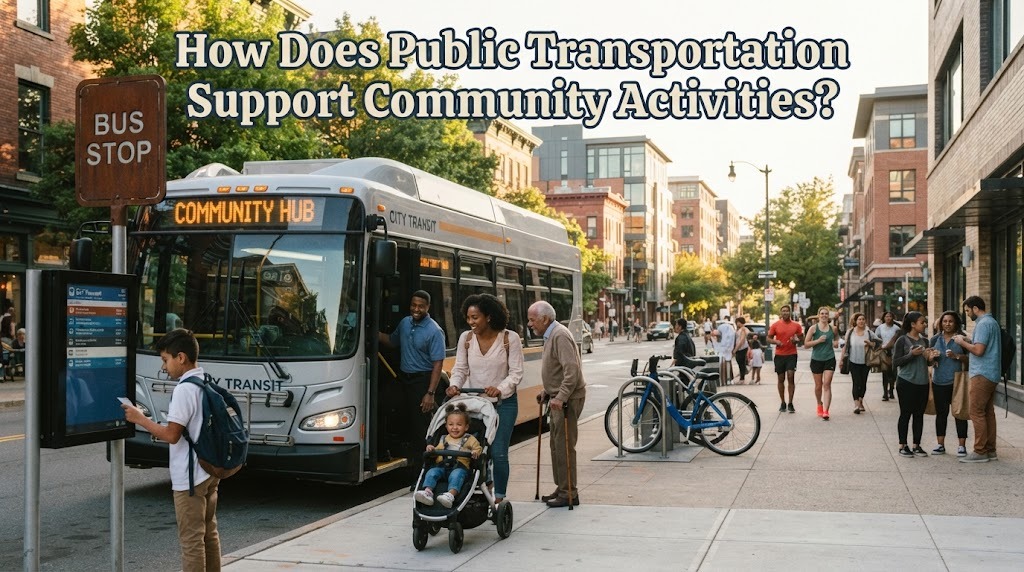
Public transportation is an important part of community life because it helps people travel between different places. Buses, trains, and other forms of shared transportation can connect residential areas with schools, workplaces, markets, hospitals, and public spaces. Reliable transportation makes it easier for people to complete their daily activities. It can also provide mobility for people who do not own private vehicles. As a result, public transportation can support a more connected and active community.
MAKING DAILY TRAVEL EASIER
Public transportation helps people travel to different destinations without needing to use a private vehicle. Buses, trains, and other public transport services can be used for school, work, shopping, healthcare, and social activities. Regular routes and schedules can help people plan their journeys more easily. Affordable fares can also make transportation more accessible to many members of the community. This allows people to manage their daily activities with greater convenience.
SUPPORTING EDUCATION
Students often depend on transportation to reach schools, colleges, libraries, and other learning facilities. Reliable public transportation can help students travel safely and arrive at their destinations on time. It can be especially useful for students who live far from educational institutions. Easy transportation access can reduce difficulties caused by distance. In this way, public transport can support access to education.
HELPING PEOPLE REACH WORKPLACES
Public transportation plays an important role in helping people travel to their workplaces. Workers can use buses, trains, or other services to travel between their homes and business areas, offices, factories, and commercial centers. Reliable transportation can make daily commuting more predictable. It can also help people access job opportunities that are located farther from their homes. Better mobility can therefore support employment and economic activities.
SUPPORTING LOCAL BUSINESSES
Public transportation can bring more people to markets, shopping areas, restaurants, and other commercial locations. Customers and workers can reach local businesses more easily when transportation services are available and convenient. Public transport can also help employees travel to work without relying entirely on private vehicles. The movement of people supports economic activity in different parts of a community. This makes transportation an important part of local economic development.
IMPROVING ACCESS TO HEALTHCARE
Transportation is also important when people need to visit hospitals, clinics, pharmacies, or health centers. Accessible public transportation can help people reach healthcare services without depending completely on family members or private vehicles. This can be especially useful for people who do not drive or cannot afford regular private transportation. Convenient routes can make important services easier to reach. Good mobility therefore supports access to healthcare.
CONNECTING DIFFERENT AREAS
Public transportation can connect residential neighborhoods with important destinations across a city or region. Transportation networks allow people to move between areas for education, work, shopping, healthcare, and recreation. Strong connections can reduce the difficulties created by long distances. They can also help communities become more connected socially and economically. This makes public transportation an important part of community connectivity.
SUPPORTING SOCIAL ACTIVITIES
People use transportation not only for work and education but also for social and recreational activities. Public transport can help people visit friends, attend community events, go to parks, or participate in cultural activities. Easy mobility gives people more opportunities to interact with others and take part in community life. This can support stronger relationships between residents. Public transportation therefore contributes to both physical mobility and social participation.
REDUCING PRIVATE VEHICLE DEPENDENCE
Public transportation provides an alternative to using private cars and motorcycles for every journey. When more people choose shared transportation, the number of private vehicles on some roads may be reduced. This can help communities manage traffic congestion and transportation demand. Public transport can also make better use of road space by carrying many passengers in one vehicle. However, its effectiveness depends on factors such as service coverage, reliability, safety, and convenience.
SUPPORTING INCLUSIVE MOBILITY
Public transportation should be accessible to people with different needs. People with disabilities, older adults, students, and people without private vehicles can benefit from transportation that is safe and easy to use. Accessible stations, ramps, priority seating, clear information, and suitable pathways can reduce barriers. Affordable services can also help more people participate in community activities. Inclusive transportation supports equal mobility opportunities for a wider range of residents.
CONCLUSION
Public transportation supports community activities by making it easier for people to travel, study, work, receive healthcare, shop, and participate in social activities. It connects different areas and provides mobility for people with various transportation needs. Reliable and accessible services can also support local businesses and reduce dependence on private vehicles. To provide these benefits effectively, public transportation needs to be safe, affordable, reliable, and accessible. A strong transportation system can help create a more connected and active community.
About the Author
Gusti Ayu Tita P
Author — STEKOM University
An active author focused on academic issues, educational technology, and human resource development in the campus environment.