
How Does Regional Autonomy Encourage Community Participation?
Gusti Ayu Tita P
31 Juli 2026
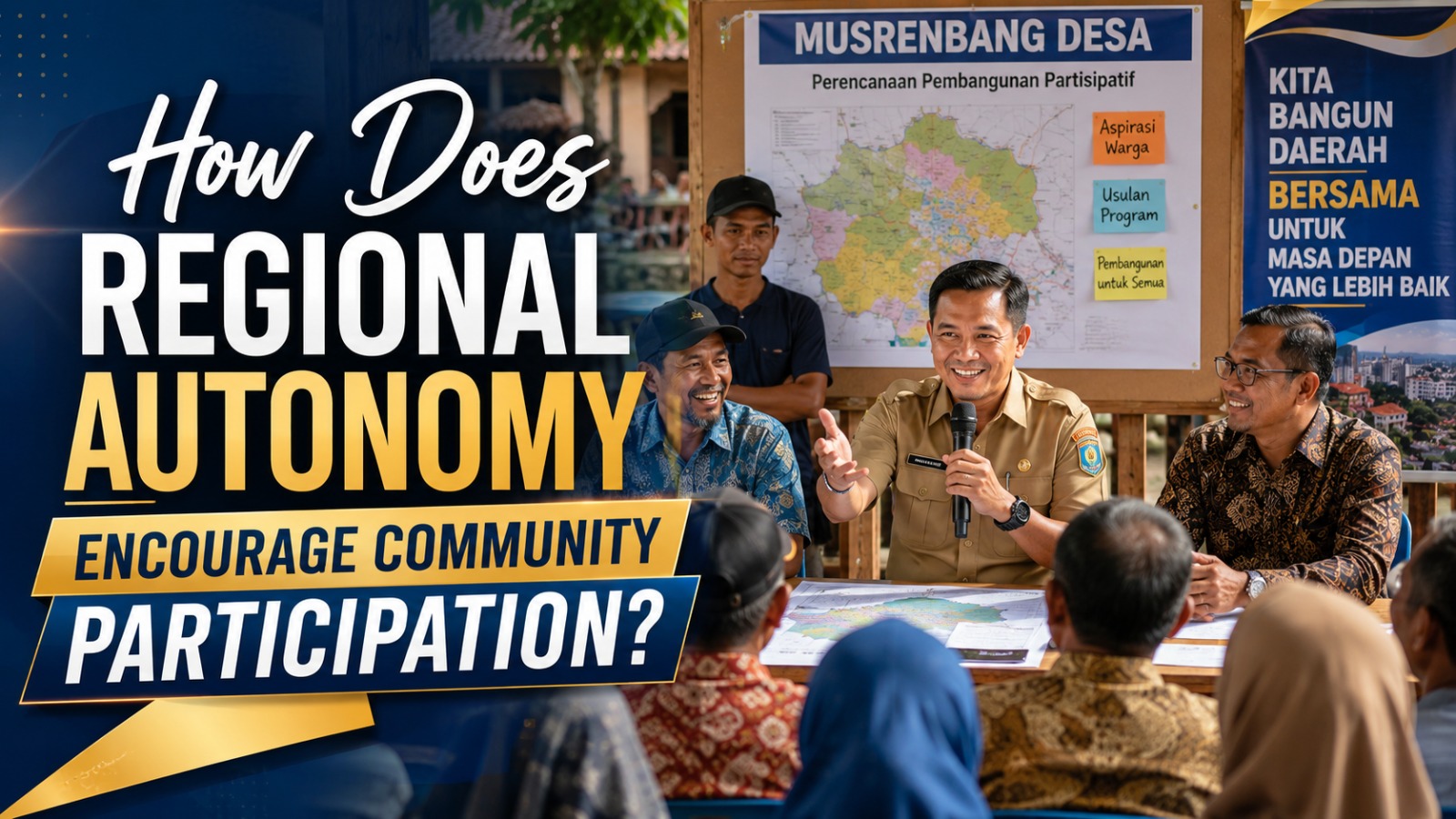
Community participation is one of the most valuable outcomes of regional autonomy. When local governments have greater authority to manage their own affairs, citizens gain more opportunities to contribute to planning, decision-making, and public development. Instead of relying solely on central government policies, communities can actively share ideas that match their local needs and priorities. This approach strengthens democracy while creating a stronger relationship between governments and the people they serve. As a result, regional autonomy helps build more inclusive, transparent, and sustainable communities.
UNDERSTANDING REGIONAL AUTONOMY
Regional autonomy is a system in which local governments receive the authority to regulate and manage many public affairs independently while still following national laws. This authority allows provinces, cities, and districts to create policies that reflect their unique economic, social, and cultural conditions. Local leaders can make decisions faster because they understand the challenges faced by their communities. This flexibility improves the effectiveness of government programs and public services.
In addition to improving governance, regional autonomy creates more opportunities for citizens to become involved in local development. Communities can participate through public discussions, village meetings, development planning forums, and local organizations. Their opinions become valuable references for government decisions. This process ensures that development projects are more relevant and beneficial for local residents.
WHY COMMUNITY PARTICIPATION MATTERS
Community participation plays a major role in ensuring that government policies truly represent public interests. Citizens who are involved in decision-making can express their needs, provide constructive feedback, and suggest practical solutions. This reduces the possibility of policies that fail to address local problems. Public involvement also increases the quality of government programs because they are based on real community experiences.
Moreover, active participation strengthens trust between the government and society. When people see that their voices are heard, they become more willing to support public programs and contribute to community development. This cooperation creates a positive environment where everyone shares responsibility for improving their region. Strong public participation also promotes social harmony and mutual respect.
HOW REGIONAL AUTONOMY ENCOURAGES PUBLIC INVOLVEMENT
One of the biggest advantages of regional autonomy is that it brings decision-making closer to the people. Local governments can organize community consultations, public hearings, and village development meetings where residents are invited to express their opinions. These activities encourage citizens to become active contributors rather than passive observers. People feel more connected because they can directly influence local policies.
Regional autonomy also supports the growth of community organizations, youth groups, women's associations, and local cooperatives. These organizations often collaborate with local governments to address issues such as education, healthcare, environmental protection, and economic development. Through these partnerships, citizens gain practical experience in solving community challenges. Their participation strengthens democratic values at the local level.
BENEFITS OF ACTIVE COMMUNITY PARTICIPATION
When communities participate actively, government transparency and accountability improve significantly. Citizens can monitor public spending, evaluate development projects, and provide feedback about public services. This public oversight helps reduce the risk of corruption while encouraging responsible governance. Transparent communication also increases public confidence in local institutions.
Another important benefit is the creation of better development outcomes. Community members often understand local conditions better than outside authorities, making their suggestions highly valuable. Development projects become more efficient because they address actual needs instead of assumptions. This leads to higher public satisfaction and more sustainable regional growth over time.
CHALLENGES TO COMMUNITY PARTICIPATION
Despite its many advantages, community participation still faces several obstacles. Some citizens may have limited knowledge about government programs or their rights to participate. Others may lack confidence or feel that their opinions will not influence policy decisions. In some areas, limited access to information also reduces public involvement.
Local governments can overcome these challenges by improving public education, increasing transparency, and providing more accessible participation channels. Digital platforms, social media, and community outreach programs make it easier for people to share ideas and stay informed. Continuous communication encourages greater public engagement. Over time, these efforts help build a stronger culture of participation.
STRATEGIES TO STRENGTHEN COMMUNITY PARTICIPATION
Local governments should create regular opportunities for citizens to participate in planning and evaluation activities. Public forums, surveys, online consultations, and neighborhood meetings make participation more inclusive. Governments should also ensure that information is easy to understand and available to everyone. Open communication builds stronger relationships between officials and residents.
Education is another key strategy for increasing participation. Schools, universities, and community organizations can teach citizens about civic responsibility, local governance, and democratic values. Young people, in particular, should be encouraged to join volunteer activities and community programs. These experiences develop future leaders who are committed to improving their regions through active participation.
CONCLUSION
Regional autonomy provides an effective foundation for increasing community participation in local governance. By giving local governments greater authority and encouraging citizens to engage in decision-making, communities become more empowered and development becomes more responsive to local needs. Active participation also strengthens transparency, accountability, and public trust. Although challenges remain, continuous education, open communication, and inclusive policies can significantly improve public involvement. Ultimately, regional autonomy and community participation work together to create stronger, more democratic, and more prosperous regions.
About the Author
Gusti Ayu Tita P
Author — STEKOM University
An active author focused on academic issues, educational technology, and human resource development in the campus environment.















