How Does Social Media Influence The Decision To Abstain From Voting?
Gusti Ayu Tita P
21 Juli 2026
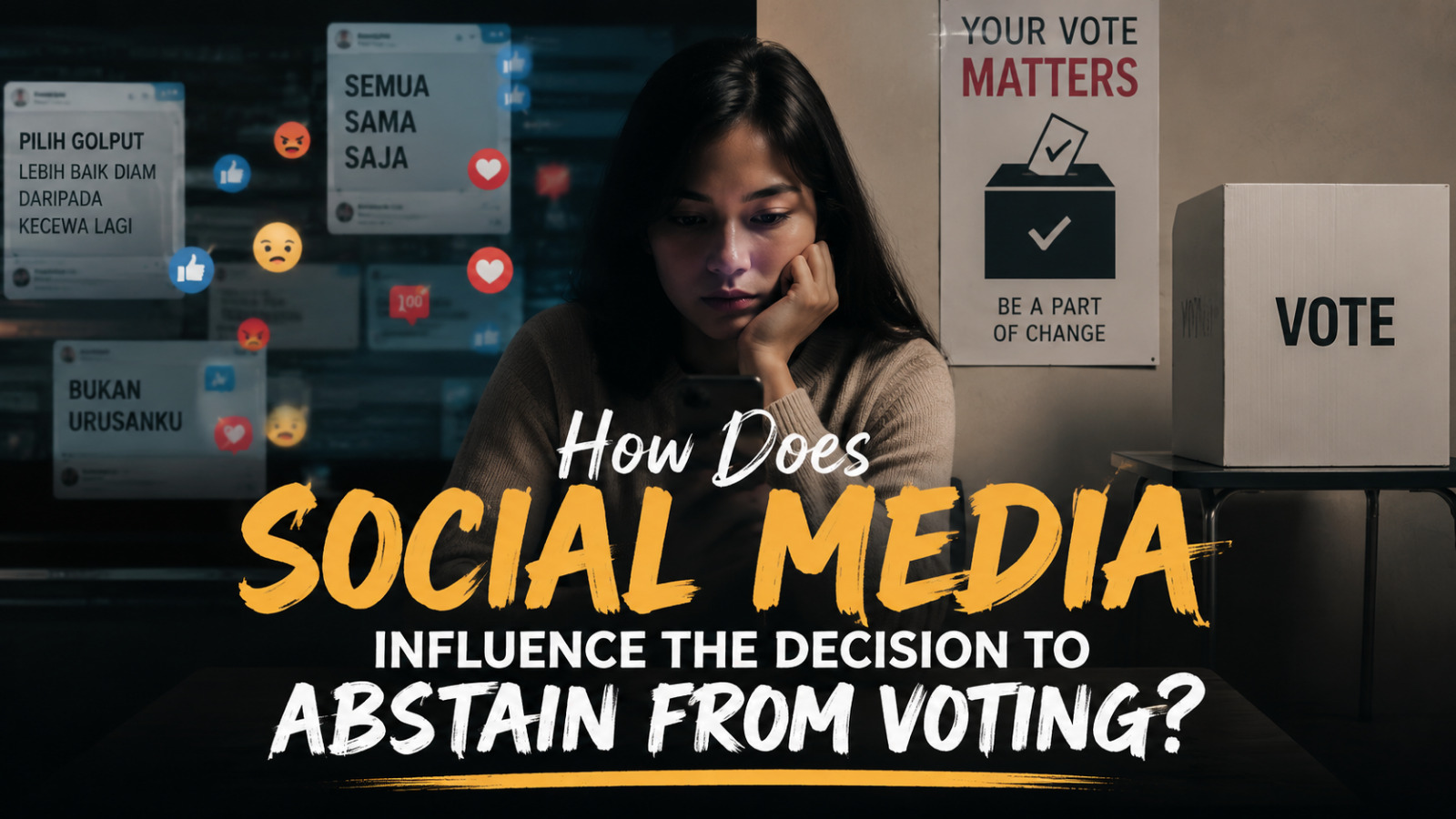
Social media has become one of the main sources of political information for millions of people. News, campaign messages, public debates, and political opinions can be accessed instantly through digital platforms. While this makes information more accessible, it also increases the spread of misinformation and biased content that may influence voting behavior. Understanding how social media affects voter abstention helps citizens make informed decisions and participate more responsibly in democratic elections.
SOCIAL MEDIA SHAPES POLITICAL OPINIONS
People spend a significant amount of time on social media every day, making it an important source of political news. Campaign messages, public discussions, and political advertisements often influence how users perceive candidates and election issues. Positive or negative content can shape opinions long before election day.
However, not all information shared online is balanced or accurate. Algorithms often recommend content that matches users' existing beliefs, limiting exposure to different viewpoints. This can create one-sided perspectives and affect political decision-making.
MISINFORMATION CAN INCREASE VOTER ABSTENTION
One of the greatest challenges of the digital age is the rapid spread of false political information. Fake news, edited videos, misleading headlines, and manipulated images can confuse voters and reduce trust in elections. When people are unsure about what is true, they may choose not to vote at all.
Misinformation can also create fear, disappointment, or frustration toward political institutions. These feelings often contribute to voter abstention, especially among first-time voters. Verifying information before believing or sharing it is essential for protecting democracy.
DIGITAL LITERACY HELPS VOTERS MAKE BETTER DECISIONS
Strong digital literacy enables citizens to identify reliable sources and recognize misleading content. Voters should compare information from official election authorities, trusted news organizations, and verified public institutions before forming opinions. Careful evaluation helps prevent manipulation.
Critical thinking is equally important. Asking questions about the source, evidence, publication date, and purpose of political content helps voters distinguish facts from opinions. Better digital literacy leads to more informed and responsible voting decisions.
SOCIAL MEDIA CAN ALSO ENCOURAGE POSITIVE PARTICIPATION
Although social media presents challenges, it also offers many opportunities to strengthen democracy. Candidates can communicate directly with voters, civic organizations can provide voter education, and election authorities can share accurate information quickly. Online discussions also allow citizens to exchange ideas and learn about important public issues.
When used responsibly, social media increases election awareness and encourages greater participation. Educational campaigns and fact-based discussions help reduce confusion and motivate more citizens to vote instead of abstaining.
HOW TO USE SOCIAL MEDIA RESPONSIBLY BEFORE ELECTIONS?
Citizens should always verify political content before sharing it with others. Avoid making decisions based on viral posts, emotional headlines, or anonymous accounts. Instead, seek information from reliable sources and compare multiple perspectives before reaching conclusions.
Respectful online discussions are also important. Listening to different opinions without spreading hate or misinformation helps create a healthier democratic environment. Responsible social media use supports informed participation and strengthens public trust.
CONCLUSION
Social media has a powerful influence on the decision to abstain from voting. While it provides easy access to political information, it can also spread misinformation that reduces public confidence and increases voter abstention. By improving digital literacy, verifying information, and using online platforms responsibly, citizens can make informed political decisions. A well-informed public is essential for increasing election awareness and building a stronger, more inclusive democracy.
About the Author
Gusti Ayu Tita P
Author — STEKOM University
An active author focused on academic issues, educational technology, and human resource development in the campus environment.