
How Does Student Focus Differ Between Online And Offline Learning?
Gusti Ayu Tita P
11 September 2026
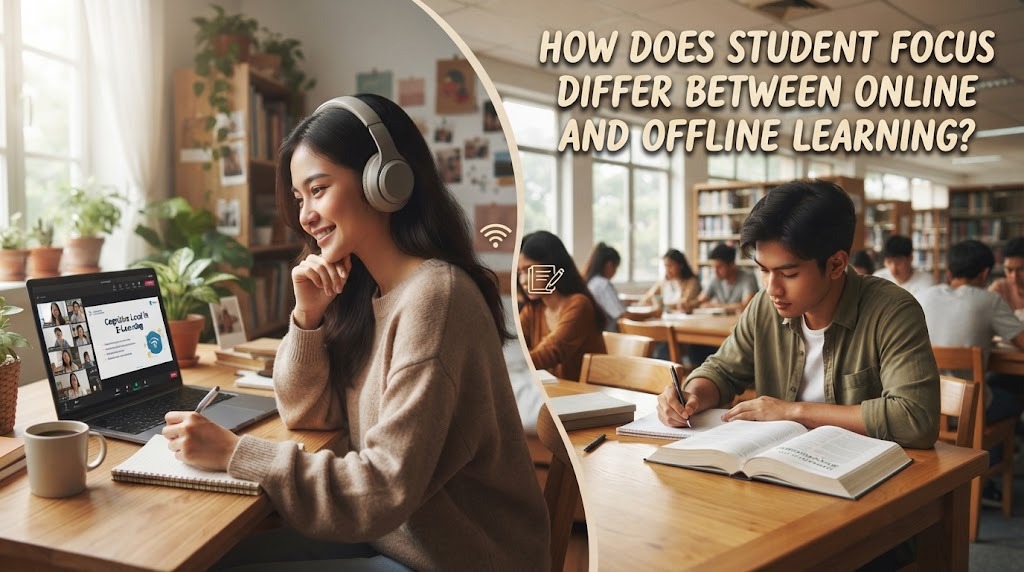
The way students learn can strongly influence their ability to concentrate. Online learning provides flexibility and allows students to study from different locations, while offline learning offers direct interaction in a physical classroom. Both methods can support academic success, but they create different environments for maintaining focus.
Student concentration is influenced by several factors, including distractions, learning habits, teacher interaction, technology, and personal discipline. Some students may concentrate better online because they feel comfortable at home, while others may perform better in a classroom where there are fewer personal distractions.
HOW ONLINE LEARNING AFFECTS STUDENT FOCUS
Online learning allows students to attend lessons from home or another convenient location. This flexibility can help students create a learning environment that matches their personal preferences. They may also save time because they do not need to travel to school or campus. However, studying outside a classroom can make it easier to lose concentration.
Digital distractions are one of the biggest challenges. Social media, smartphones, games, entertainment platforms, and unrelated websites can interrupt attention during online classes. Students therefore need strong self-discipline and effective time management to remain focused throughout a lesson.
HOW OFFLINE LEARNING AFFECTS STUDENT FOCUS
Offline learning takes place in a physical classroom where students and teachers interact directly. The classroom environment can create a stronger sense of structure and encourage students to pay attention. Being physically present with classmates may also make students feel more responsible for participating in lessons.
Direct interaction can make it easier for students to ask questions and receive immediate feedback. Teachers can also observe students' reactions and identify when they appear confused or distracted. However, classroom learning can still involve distractions such as noise, conversations, uncomfortable conditions, or classroom activities.
THE ROLE OF DIGITAL DISTRACTIONS
Technology is useful for education, but it can also reduce concentration. During online classes, students may receive notifications from messaging applications or social media. Switching between educational content and unrelated digital activities can make it harder to maintain attention.
Offline classrooms generally provide fewer digital distractions, especially when students are asked to put their phones away. However, technology can still affect focus when students use devices for unrelated purposes. Managing technology responsibly is therefore important in both learning environments.
THE IMPORTANCE OF STUDENT SELF DISCIPLINE
Self-discipline plays an important role in determining how well students concentrate. Online learners often have greater freedom over their schedules, which means they must manage their own study time. Without clear routines, students may postpone assignments or attend lessons without giving them their full attention.
Offline students also need discipline, even though the classroom provides more external structure. They must listen, participate, complete assignments, and prepare for examinations. Developing consistent study habits can improve concentration regardless of the learning method.
TEACHER INTERACTION AND STUDENT ATTENTION
Teacher interaction can strongly influence student focus. In offline classes, teachers can communicate through facial expressions, gestures, discussions, and immediate responses. This direct interaction can make lessons feel more engaging and encourage students to participate.
Online teachers can also create interactive learning experiences through video discussions, quizzes, group activities, and digital presentations. However, communication may become less personal because students and teachers are separated by screens. Effective online teaching strategies can help maintain attention and reduce passive learning.
WHICH LEARNING METHOD HELPS STUDENTS FOCUS BETTER?
There is no single learning method that works best for every student. Some students concentrate better in quiet home environments, while others need the structure of a classroom to stay focused. Personal learning preferences, study habits, home conditions, and academic responsibilities can all influence concentration.
Students who are highly independent may benefit from online learning because they can control their schedules and study environments. Students who need regular supervision and direct interaction may find offline learning more effective. The most suitable method depends on the student's learning style and ability to manage distractions.
HOW STUDENTS CAN IMPROVE FOCUS ONLINE
Students can improve online concentration by creating a dedicated study area. Keeping unnecessary devices away and turning off nonessential notifications can reduce interruptions. A clear schedule can also help students maintain consistent study routines.
Taking short breaks can prevent mental fatigue during long online sessions. Students should also actively participate by taking notes, asking questions, and completing tasks during class. Using active learning techniques can make online lessons more engaging and improve information retention.
HOW STUDENTS CAN IMPROVE FOCUS OFFLINE
Students can improve classroom concentration by preparing before lessons begin. Reading learning materials in advance can make it easier to understand explanations and participate in discussions. Sitting in a suitable location can also reduce distractions.
Active participation is another effective strategy. Asking questions, taking notes, joining discussions, and responding to teacher instructions can help students stay mentally engaged. Students should also maintain healthy sleep, nutrition, and study routines because physical condition can influence concentration.
CONCLUSION
Student focus can differ significantly between online and offline learning. Online learning offers flexibility but requires strong self-discipline, while offline learning provides greater structure and direct interaction. Neither method is automatically better because students have different learning preferences and circumstances.
The most important factor is how effectively students manage their learning environment. By reducing distractions, maintaining consistent routines, actively participating, and using appropriate learning strategies, students can improve concentration in both settings. Choosing between online and offline learning should therefore consider individual needs, learning habits, and academic goals.
About the Author
Gusti Ayu Tita P
Author — STEKOM University
An active author focused on academic issues, educational technology, and human resource development in the campus environment.















