How Does the Education Office Improve School Quality?
Gusti Ayu Tita P
15 September 2026
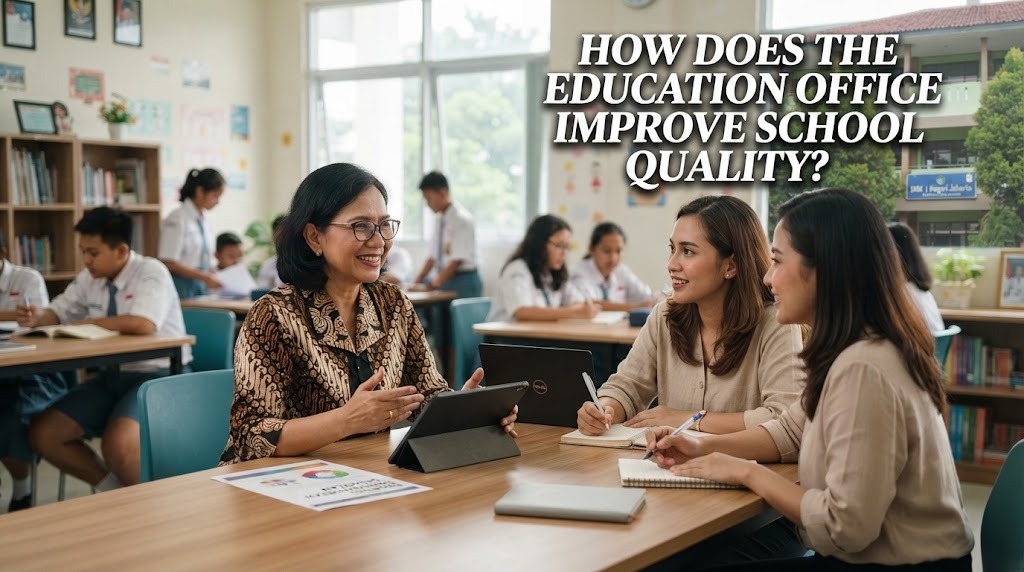
School quality is an important factor in creating effective and meaningful education. A good school needs qualified teachers, suitable learning facilities, effective management, and a supportive learning environment. The Education Office has an important role in supporting schools so they can continuously improve their educational services. Its efforts are carried out through programs, guidance, evaluation, training, and coordination with educational institutions.
Improving school quality is not only about academic achievement. It also involves teacher competency, student development, school management, facilities, and equal access to education. Through appropriate programs and cooperation, the Education Office can help schools identify their needs and develop practical improvements.
TEACHER COMPETENCY DEVELOPMENT
Teachers are one of the most important factors affecting school quality. The Education Office can support Teacher Competency through training, workshops, seminars, mentoring, and professional development programs. These activities can help teachers improve their teaching methods, classroom management, assessment skills, and use of educational technology. Better teacher competency can create more effective and engaging learning experiences for students.
Professional development should also respond to changes in education. Teachers need to understand new learning approaches and adapt their teaching strategies to different student needs. Teacher Development can therefore be conducted continuously rather than as a one-time activity. This approach helps teachers remain prepared to face challenges in modern education.
IMPROVEMENT OF SCHOOL FACILITIES
Adequate facilities can support students and teachers during the learning process. The Education Office can help identify school facility needs and support programs related to School Facilities according to available government resources and priorities. Facilities may include classrooms, libraries, laboratories, sanitation facilities, learning equipment, and technology infrastructure. Suitable facilities can create a safer and more comfortable learning environment.
However, facilities alone do not determine school quality. Schools also need to manage and maintain available resources properly. Facility Management helps ensure that educational equipment remains useful and can support learning activities effectively. Proper planning can also help schools prioritize the facilities that are most urgently needed.
SCHOOL MANAGEMENT SUPPORT
Effective management is essential for a school to operate in an organized way. The Education Office can provide guidance related to School Management, planning, administration, supervision, and educational program implementation. School leaders can use this guidance to improve internal processes and coordinate teachers and staff more effectively. Good management also helps schools use their resources according to their educational priorities.
School management should be based on clear goals and reliable information. Regular evaluation can help school leaders understand what is working and what needs improvement. School Leadership also plays an important role in building a professional and collaborative school environment. Strong leadership can encourage teachers and staff to participate actively in school development.
EDUCATIONAL PROGRAM EVALUATION
Evaluation helps determine whether an educational program is achieving its intended objectives. The Education Office can support schools in conducting Program Evaluation based on relevant educational data and indicators. Evaluation may consider student learning outcomes, teacher performance, program implementation, facilities, and school management. The results can be used to identify areas that require further improvement.
Evaluation should not only focus on finding weaknesses. It can also identify successful practices that may be continued or developed. Education Evaluation provides useful information for schools when planning future programs. With regular evaluation, school improvement can become a continuous process rather than a temporary activity.
USE OF EDUCATIONAL DATA
Accurate information is important for making appropriate decisions about school development. The Education Office can encourage schools to manage Education Data related to students, teachers, facilities, learning outcomes, and other relevant areas. Reliable data can help identify educational needs and determine suitable priorities. It can also support planning and evaluation at the school and regional levels.
Digital systems can make data management more efficient when they are used correctly. Schools need to ensure that information is accurate, updated, and managed responsibly. Data Management can help reduce administrative errors and provide a clearer picture of school conditions. This information can then support more targeted improvement programs.
SUPPORT FOR INCLUSIVE EDUCATION
School quality should be available to students with different backgrounds and learning needs. The Education Office can support Inclusive Education by encouraging schools to provide fair access and appropriate learning support. This may involve teacher preparation, accessibility improvements, student support, and coordination with relevant stakeholders. Inclusive practices help create learning environments where students can participate according to their abilities and needs.
Inclusion also requires awareness among teachers, school leaders, students, and families. Schools need to understand that students may have different learning characteristics and require different forms of support. Equal Education opportunities can help reduce barriers that prevent students from participating fully in education. This makes inclusion an important part of overall school quality.
COOPERATION WITH EDUCATIONAL STAKEHOLDERS
Improving school quality requires cooperation between many parties. The Education Office can work with schools, teachers, parents, communities, and other relevant institutions to develop educational programs. Each stakeholder can provide different forms of support, information, and experience. Effective Education Cooperation can make school improvement programs more practical and sustainable.
Communication is an important part of this cooperation. Schools can report their needs and challenges, while the Education Office can provide guidance or coordinate available resources. Parents and communities can also contribute by supporting students and school activities. Stakeholder Cooperation creates a stronger foundation for long-term educational improvement.
CONCLUSION
The Education Office improves school quality through various forms of support, including Teacher Competency, school facilities, management guidance, program evaluation, educational data, and inclusive education. These efforts become more effective when schools and other stakeholders work together. School quality should be improved continuously by identifying needs, evaluating programs, and adapting to changes in education. Strong teachers, effective management, suitable facilities, accurate data, and inclusive learning environments can support better educational outcomes. Through consistent cooperation and improvement, schools can provide higher-quality services and better learning opportunities for students.
About the Author
Gusti Ayu Tita P
Author — STEKOM University
An active author focused on academic issues, educational technology, and human resource development in the campus environment.