How Does The Ministry Of Culture Increase Public Awareness Of Indonesian Culture?
Gusti Ayu Tita P
11 Agustus 2026
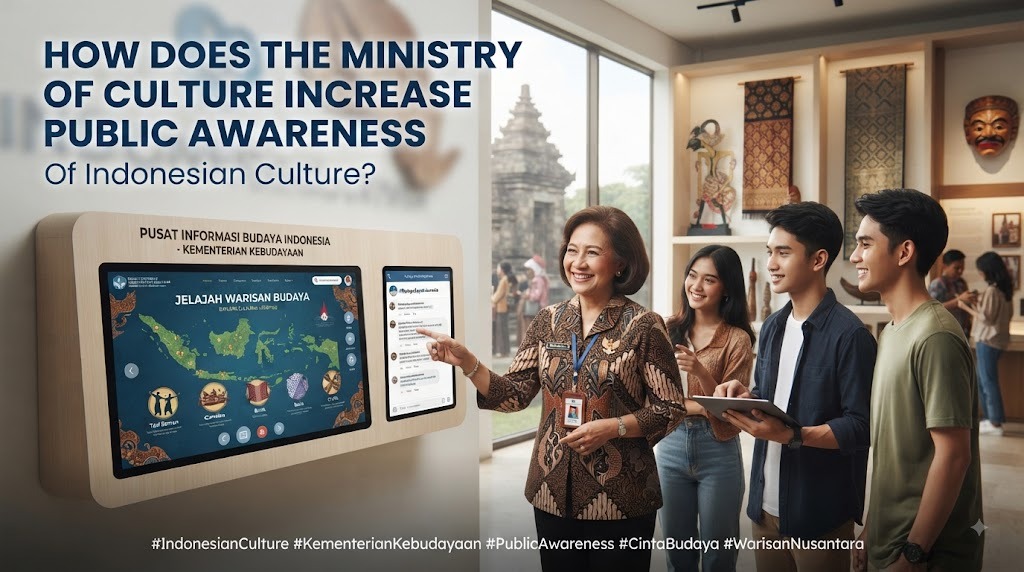
Indonesia is known for its rich cultural diversity, with hundreds of ethnic groups, local languages, traditional arts, customs, crafts, culinary traditions, and historical heritage. This diversity is an important part of the country's national identity and provides valuable knowledge for future generations. However, modernization and changes in lifestyle can make some traditional practices less familiar to younger people. The Ministry of Culture therefore has an important role in increasing public awareness and encouraging communities to understand, appreciate, and preserve Indonesian culture.
Cultural awareness is not only about knowing the names of traditional dances or regional customs. It also involves understanding their historical background, social meaning, and importance to local communities. Government programs can use education, cultural events, digital media, museums, research, and community participation to make culture more accessible. By combining cultural preservation with modern communication, Indonesian culture can remain relevant in a changing society.
THE ROLE OF THE MINISTRY OF CULTURE
The Ministry of Culture has an important role in developing policies and programs related to the protection, development, utilization, and promotion of Indonesian culture. Its responsibilities can involve coordination with local governments, cultural organizations, educational institutions, communities, and cultural practitioners. This cooperation is necessary because Indonesian culture is highly diverse and often closely connected to specific regions and communities. Cultural policies can provide a framework for maintaining this diversity.
The ministry can also encourage the public to participate in cultural activities rather than treating culture only as a government responsibility. Cultural awareness becomes stronger when people experience traditions directly and understand their significance. Programs that involve communities can make preservation efforts more relevant to local needs. This approach can help create a stronger connection between cultural heritage and everyday life.
PROMOTING CULTURE THROUGH EDUCATION
Education is one of the most effective ways to introduce cultural knowledge to younger generations. Schools can teach students about traditional arts, local history, languages, customs, crafts, and national heritage. Cultural education can help students understand that cultural diversity is an important part of Indonesian identity.
Learning becomes more meaningful when students can experience culture directly. Workshops, traditional performances, visits to museums, cultural projects, and interactions with cultural practitioners can complement classroom lessons. Students can also be encouraged to document traditions in their own communities. These activities can turn cultural learning into an active and memorable experience.
ORGANIZING CULTURAL EVENTS AND FESTIVALS
Cultural events provide opportunities for people to experience Indonesian traditions directly. Festivals, exhibitions, performances, craft demonstrations, and cultural celebrations can introduce communities to different forms of heritage. Cultural festivals can also create opportunities for cultural practitioners to present their work to wider audiences.
Events can be organized at local, regional, national, and international levels. They can bring together artists, communities, students, researchers, businesses, and visitors. Cultural events can also support local economies by creating opportunities for traditional craft producers, performers, culinary businesses, and tourism services. When managed responsibly, these activities can strengthen both cultural awareness and community participation.
USING DIGITAL MEDIA TO REACH YOUNGER GENERATIONS
Digital platforms have changed how people discover and consume information. The Ministry of Culture and cultural institutions can use websites, social media, video platforms, and other digital channels to introduce cultural heritage. Digital culture promotion can make cultural information accessible to people who may not regularly attend cultural events or museums.
Short educational videos, interviews with cultural practitioners, digital exhibitions, photographs, and storytelling can make cultural topics more engaging. Younger audiences can also participate by creating responsible digital content about local traditions. However, digital promotion should provide accurate information and appropriate cultural context. Popularity should not become more important than respecting the communities that maintain the heritage.
DEVELOPING MUSEUMS AND CULTURAL CENTERS
Museums and cultural centers provide important spaces for learning about history and heritage. They can display artifacts, artworks, manuscripts, photographs, and other materials that help explain Indonesia's cultural development. Cultural museums can make historical information more accessible through exhibitions and educational programs.
Modern museums can combine physical collections with interactive technology. Digital displays, audiovisual materials, virtual tours, and interactive activities can make museum visits more attractive to younger audiences. Museums can also organize workshops, discussions, and educational programs for schools and communities. These activities can encourage visitors to develop a deeper understanding of cultural heritage.
DOCUMENTING INDONESIAN CULTURAL HERITAGE
Documentation is important because cultural knowledge can be lost when it is no longer transmitted between generations. Documentation can include written records, photographs, audio recordings, videos, interviews, and digital archives. Cultural documentation helps preserve information about traditions, languages, arts, knowledge systems, and historical practices.
Documentation should involve the communities that own or maintain the cultural heritage. Local knowledge can provide important context that may not be available in formal records. Cultural institutions can work with researchers and practitioners to verify information and maintain accurate records. Proper documentation can support education, research, and future preservation efforts.
SUPPORTING CULTURAL COMMUNITIES AND PRACTITIONERS
Cultural practitioners are essential to keeping traditions alive. Artists, craftspeople, musicians, dancers, storytellers, traditional leaders, and other practitioners transmit knowledge through practice and teaching. Cultural communities should therefore be actively involved in government preservation programs.
Support can include training, access to cultural facilities, promotional opportunities, research partnerships, and programs that connect practitioners with younger generations. Supporting cultural practitioners also recognizes that cultural heritage is not simply an object but a living practice. When practitioners have opportunities to continue their work, communities can maintain cultural traditions more effectively.
ENCOURAGING YOUTH PARTICIPATION
Young people have an important role in determining the future of Indonesian culture. Government programs can encourage youth participation through cultural competitions, creative projects, workshops, internships, and digital campaigns. Youth cultural participation can make traditional culture more relevant to contemporary audiences.
Young people can combine cultural knowledge with modern creative skills. For example, traditional music, fashion, crafts, storytelling, or visual arts can be introduced through modern digital formats while maintaining their cultural identity. Young creators can also help promote local traditions to wider audiences. Meaningful participation can strengthen their sense of connection with Indonesian heritage.
PROMOTING TRADITIONAL ARTS AND CREATIVE INDUSTRIES
Traditional arts can become a powerful way to increase cultural awareness. Music, dance, theater, crafts, fashion, and culinary traditions provide opportunities for people to experience culture in practical ways. Traditional arts can also contribute to the development of creative industries.
Government support can help cultural practitioners improve skills, access markets, develop products, and promote their work. Responsible commercialization can provide income while encouraging the continuation of cultural practices. However, commercial development should respect cultural meaning and community rights. Cultural creativity should strengthen heritage rather than remove its original identity.
USING CULTURAL TOURISM RESPONSIBLY
Cultural tourism can introduce visitors to local traditions, historical sites, traditional food, crafts, and community practices. When managed properly, cultural tourism can create economic opportunities while increasing public interest in heritage. Local communities can benefit through guiding services, accommodation, food businesses, crafts, performances, and other activities.
Tourism development needs to respect cultural values and environmental conditions. Communities should have a meaningful role in deciding how their traditions and heritage sites are presented. Excessive commercialization or inappropriate tourism activities can create negative impacts. Responsible cultural tourism should therefore balance economic benefits with preservation.
STRENGTHENING CULTURAL LITERACY
Cultural literacy means having knowledge and understanding of cultural values, traditions, history, and diversity. Improving cultural literacy can help people appreciate differences and develop a stronger sense of national identity. It can also reduce misunderstandings about traditions from different regions.
Cultural literacy programs can be introduced through schools, libraries, museums, community centers, media, and digital platforms. Content should be easy to understand while remaining accurate and respectful. People can also develop cultural literacy by participating in local events and learning directly from cultural practitioners. Greater knowledge can encourage people to become active participants in cultural preservation.
BUILDING COLLABORATION WITH LOCAL GOVERNMENTS
Indonesia's cultural diversity means that local governments have an important role in preservation. Local authorities often understand regional traditions, cultural communities, and heritage sites in greater detail. Local cultural programs can therefore complement national initiatives.
Coordination between national and local institutions can improve the effectiveness of cultural programs. Local governments can support festivals, museums, cultural centers, documentation projects, and educational activities. Community organizations and cultural practitioners can also contribute their knowledge and experience. Strong cooperation can ensure that cultural preservation reflects local realities.
USING INTERNATIONAL CULTURAL PROMOTION
Indonesian culture can also be introduced to international audiences through cultural diplomacy and international events. Performances, exhibitions, culinary programs, educational exchanges, and creative collaborations can increase global awareness of Indonesian heritage. International cultural promotion can strengthen Indonesia's cultural presence while creating opportunities for cultural exchange.
International promotion should accurately represent the communities and traditions involved. Cultural heritage should not be presented simply as a commercial product without context. Respectful collaboration can encourage international audiences to understand the history and meaning behind Indonesian traditions. This approach can promote culture while maintaining cultural integrity.
ADDRESSING CHALLENGES IN CULTURAL AWARENESS
Increasing cultural awareness is not always easy. Globalization, changing lifestyles, limited cultural education, declining interest among some young people, and unequal access to cultural resources can create challenges. Cultural preservation challenges require long-term strategies rather than short-term campaigns.
Digital technology also creates risks, including misinformation, cultural misrepresentation, and unauthorized use of cultural materials. Cultural institutions need to provide reliable information and work closely with communities. Preservation programs should also adapt to changes in how people communicate and learn. Combining traditional methods with modern approaches can make cultural awareness efforts more effective.
CONCLUSION
The Ministry of Culture can increase public awareness of Indonesian culture through education, cultural events, digital media, museums, documentation, community programs, youth participation, and responsible cultural tourism. These approaches can make cultural heritage easier to understand and more relevant to different generations. Strong cooperation between government institutions, cultural communities, educational organizations, and the public is essential.
Cultural preservation should not focus only on protecting the past. It should also encourage people to learn, practice, appreciate, and creatively develop cultural heritage while respecting its original values. By combining modern technology with community knowledge and cultural education, Indonesia can strengthen public awareness and ensure that its diverse heritage continues to live and grow in the future.
About the Author
Gusti Ayu Tita P
Author — STEKOM University
An active author focused on academic issues, educational technology, and human resource development in the campus environment.