How Does The Ministry Of Home Affairs Promote Transparent And Accountable Local Governance?
Gusti Ayu Tita P
11 Agustus 2026
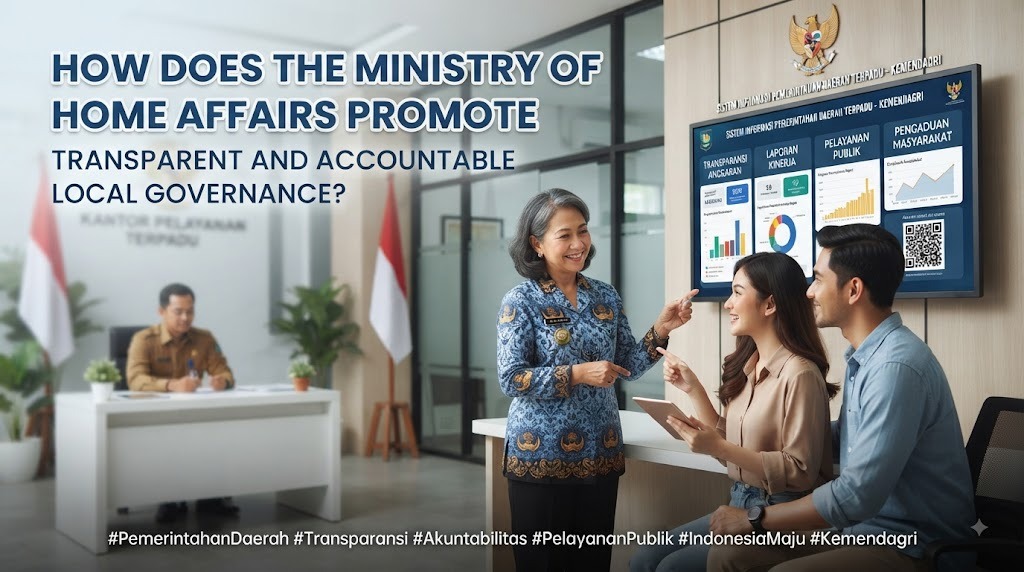
Transparent and accountable local governance is essential for creating public services that people can trust. In Indonesia, local governments manage many responsibilities that directly affect communities, including public services, regional development, administration, and local budgets. The Ministry of Home Affairs has an important role in guiding and supervising local governments so that these responsibilities are carried out effectively. Strong governance can improve public trust and encourage better cooperation between government institutions and citizens.
Transparency means that government information and decision-making processes can be accessed and understood by the public. Accountability means that government officials and institutions are responsible for their decisions, actions, and use of public resources. Both principles are important for reducing opportunities for misuse of authority and improving government performance. Through regulations, supervision, digital systems, and institutional coordination, the ministry supports efforts to strengthen transparent and accountable local governance.
THE ROLE OF THE MINISTRY OF HOME AFFAIRS
The Ministry of Home Affairs plays an important role in coordinating domestic government affairs and supporting the implementation of regional governance. It provides policy guidance and regulatory frameworks that help local governments perform their responsibilities. The ministry also supports coordination between central and regional governments. Effective coordination is important because local governments operate under different social, economic, and geographical conditions.
The ministry's role also includes strengthening local government capacity. Regional officials need clear standards, appropriate procedures, and adequate administrative skills to manage public responsibilities. Guidance and supervision can help local governments identify weaknesses and improve their performance. This approach supports more consistent and responsible governance across different regions.
STRENGTHENING TRANSPARENT GOVERNMENT INFORMATION
Access to government information is an important part of transparency. Local governments are expected to provide relevant public information in accordance with applicable laws and regulations. Public information transparency allows citizens to understand government programs, policies, budgets, and development activities. This can make it easier for communities to monitor how public resources are being managed.
Digital platforms can make information easier to access and distribute. Local governments can use official websites and information systems to publish announcements, regulations, development information, and public services. Clear and updated information can reduce confusion and improve communication between government institutions and citizens. Transparency is more effective when information is presented in a simple and understandable format.
IMPROVING REGIONAL FINANCIAL ACCOUNTABILITY
Regional financial management is a major part of accountable governance. Local governments manage public funds for infrastructure, education, health, social programs, and other development priorities. Financial accountability requires these resources to be planned, used, recorded, and reported according to applicable rules.
The Ministry of Home Affairs supports local governments through policies and guidance related to regional financial management. Digital financial systems can also help standardize administrative processes and improve monitoring. Better financial management can make it easier to identify irregularities and evaluate whether spending supports regional priorities. Responsible budget management can ultimately strengthen public confidence in local government.
USING DIGITAL GOVERNMENT SYSTEMS
Digital transformation can support transparency and accountability by improving the way government information is collected, managed, and monitored. Integrated systems can reduce repetitive administrative processes and improve access to reliable data. Digital governance can also help local governments monitor programs and manage public services more efficiently.
Technology does not automatically guarantee good governance, however. Digital systems need accurate data, trained personnel, strong security, and clear procedures. Local governments must also ensure that technology remains accessible to communities with different levels of digital literacy. When implemented properly, digitalization can strengthen both administrative efficiency and public oversight.
STRENGTHENING SUPERVISION OF LOCAL GOVERNMENTS
Supervision is necessary to ensure that local governments follow regulations and perform their responsibilities properly. The Ministry of Home Affairs can provide guidance, monitoring, and evaluation within its authority. Government supervision helps identify administrative weaknesses and encourages local governments to improve their performance.
Supervision should not only focus on finding mistakes. It can also help local governments understand risks and develop solutions before problems become more serious. Coordination with other oversight institutions is important because different institutions have different responsibilities. Effective supervision can encourage local governments to maintain higher standards of accountability.
IMPROVING PUBLIC SERVICE QUALITY
One of the main purposes of good local governance is to provide better services to citizens. Local governments are responsible for many services that people use in their daily lives. Public service quality can improve when administrative procedures are clear, information is accessible, and government officials respond to community needs.
Digital services can make some public services faster and more convenient. Online applications, digital records, and integrated service platforms can reduce unnecessary procedures. However, traditional service channels may still be needed for people who have limited access to technology. Good governance should therefore combine digital innovation with inclusive public services.
ENCOURAGING COMMUNITY PARTICIPATION
Citizens are not only recipients of public services but can also contribute to local governance. Community participation allows residents to express their needs, provide feedback, and monitor government programs. Public participation can make policies more responsive to local conditions.
Local governments can encourage participation through public consultations, community meetings, complaint systems, surveys, and digital communication channels. Feedback should be followed by appropriate responses so citizens can see that their input matters. Meaningful participation can strengthen relationships between government institutions and communities. It can also improve the quality of decision-making.
PROMOTING OPEN BUDGET MANAGEMENT
Public budgets directly affect the quality of regional development and services. Citizens have an interest in understanding how local government resources are planned and spent. Open budget management can provide greater visibility into government priorities and spending decisions.
Budget information should be presented in a clear and accessible way. Complex financial information can be supported with summaries or explanations that make it easier for the public to understand. Transparent budget processes can also encourage stronger community oversight. When spending decisions are open to public scrutiny, local governments have greater incentives to manage resources responsibly.
DEVELOPING CAPABLE LOCAL GOVERNMENT OFFICIALS
Good governance depends heavily on the competence and integrity of government officials. Local officials need knowledge of regulations, administration, budgeting, public services, digital systems, and ethical standards. Human resource development can therefore play an important role in improving local governance.
Training and capacity-building programs can help officials adapt to changing public needs and technological developments. Officials should also understand the importance of transparency, accountability, professionalism, and public service. Strong institutional capacity makes it easier for local governments to implement policies effectively. Competent officials can contribute to more reliable and responsive government services.
STRENGTHENING ANTI CORRUPTION MEASURES
Transparency and accountability are closely connected to efforts to prevent corruption. Clear procedures, reliable records, public oversight, and effective internal controls can reduce opportunities for misuse of public resources. Anti-corruption measures should be integrated into everyday government administration rather than treated as a separate activity.
Digital systems can help create traceable administrative records, while supervision can identify potential risks. Cooperation with relevant oversight and law enforcement institutions is also important when violations are suspected. Prevention should be supported by ethical leadership and a strong culture of integrity. These efforts can help build greater public trust in local government.
EVALUATING LOCAL GOVERNMENT PERFORMANCE
Performance evaluation helps determine whether government programs are achieving their intended objectives. Local governments can use measurable indicators to assess public services, development programs, financial management, and administrative performance. Performance evaluation provides information that can be used to identify strengths and areas requiring improvement.
Evaluation should be based on reliable data and followed by corrective actions when problems are identified. Public feedback can complement administrative data by showing how services are experienced by citizens. Continuous evaluation encourages local governments to focus not only on completing programs but also on achieving meaningful results. This supports more effective and accountable governance.
ADDRESSING CHALLENGES IN LOCAL GOVERNANCE
Local governance faces challenges that vary between regions. Differences in infrastructure, human resources, economic conditions, geographical characteristics, and digital access can affect administrative performance. Governance challenges require solutions that consider local circumstances rather than relying on exactly the same approach everywhere.
Coordination between central and regional governments can help address these differences. Capacity-building, digital infrastructure, clear regulations, and appropriate supervision can strengthen weaker areas. Local innovation should also be encouraged when it remains consistent with applicable policies and laws. A flexible but accountable approach can help improve governance across diverse regions.
BUILDING PUBLIC TRUST THROUGH GOOD GOVERNANCE
Public trust is one of the most important outcomes of transparent and accountable government. Citizens are more likely to trust institutions when government decisions are understandable, services are reliable, and public resources are managed responsibly. Public trust develops gradually through consistent government performance.
The Ministry of Home Affairs can contribute to this process by supporting better regulations, coordination, supervision, digital transformation, and local government capacity. However, trust ultimately depends on how these policies are implemented by government institutions. Continuous improvement and openness to public feedback are therefore essential. Strong governance can create a more constructive relationship between government and society.
CONCLUSION
The Ministry of Home Affairs supports transparent and accountable local governance through policy guidance, supervision, financial management systems, digital transformation, capacity building, and coordination between central and regional governments. These efforts can improve the way local governments manage public resources and deliver services. Transparency provides citizens with greater access to information, while accountability encourages officials to take responsibility for their decisions and performance.
Effective governance requires more than regulations and technology. Public participation, capable officials, strong supervision, open information, responsible financial management, and continuous evaluation are equally important. By strengthening these elements, local governments can become more responsive, efficient, and trustworthy while providing better services to the communities they serve.
About the Author
Gusti Ayu Tita P
Author — STEKOM University
An active author focused on academic issues, educational technology, and human resource development in the campus environment.