How Does The Ministry Of Public Works Support The Development Of National Infrastructure?
Gusti Ayu Tita P
11 Agustus 2026
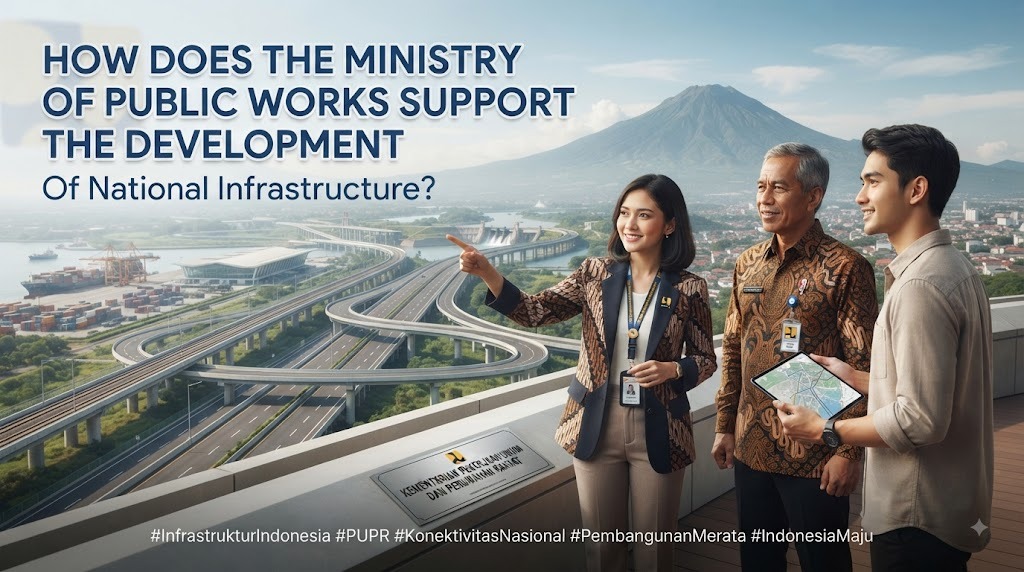
National infrastructure plays an important role in supporting economic growth, public services, mobility, and social development. Roads, bridges, dams, water systems, housing facilities, and other infrastructure connect communities and support daily activities. In Indonesia, the Ministry of Public Works has an important role in planning, developing, managing, and maintaining various public infrastructure assets. Effective infrastructure development can improve connectivity while supporting more balanced regional development.
Infrastructure development is not only about constructing new facilities. It also involves planning, maintenance, quality control, environmental considerations, and long-term management. The government needs to ensure that infrastructure projects respond to public needs and provide sustainable benefits. Through policies, technical standards, construction programs, and cooperation with other institutions, the ministry contributes to national infrastructure development.
THE ROLE OF THE MINISTRY OF PUBLIC WORKS
The Ministry of Public Works is responsible for important areas of national infrastructure development within its authority. Its work includes sectors such as roads, water resources, housing-related infrastructure, and other public works. The ministry develops policies and technical standards that guide infrastructure planning and construction. National infrastructure planning helps ensure that development programs support broader national priorities.
The ministry also works with provincial and local governments because infrastructure needs differ between regions. Coordination can help prevent overlapping projects and improve the use of public resources. Infrastructure programs need to consider population growth, economic activity, environmental conditions, and regional characteristics. Strong coordination can make development more effective and responsive to community needs.
DEVELOPING AND MAINTAINING NATIONAL ROADS
Road infrastructure is one of the most important components of national connectivity. Roads connect cities, villages, industrial areas, ports, airports, agricultural regions, and tourism destinations. National road development can reduce travel times and improve the movement of people and goods.
Maintenance is equally important because roads can deteriorate due to traffic, weather, and natural conditions. Regular inspections, repairs, rehabilitation, and improvements can extend road service life. Well-maintained roads can also improve transportation safety. A balanced approach between new construction and maintenance helps ensure that infrastructure remains useful over the long term.
BUILDING BRIDGES FOR BETTER CONNECTIVITY
Bridges provide essential connections across rivers, valleys, and other geographical obstacles. In areas with difficult terrain, bridges can significantly reduce travel distances and improve access to essential services. Bridge infrastructure can support economic activities by making transportation more efficient.
Bridge construction requires careful engineering, material selection, safety assessment, and environmental consideration. Existing bridges also need regular inspections and maintenance to ensure their structural condition remains safe. Modern engineering methods can improve durability and resilience against natural hazards. Proper bridge management supports reliable national connectivity.
SUPPORTING WATER RESOURCE MANAGEMENT
Water infrastructure is essential for communities, agriculture, industry, and environmental management. The Ministry of Public Works develops and manages infrastructure related to water resources within its responsibilities. Water resource infrastructure includes facilities such as dams, reservoirs, irrigation systems, flood control structures, and other water management facilities.
Effective water management can help improve water availability while reducing risks from floods and droughts. Dams and reservoirs can support irrigation and water supply while also contributing to broader water management objectives. Infrastructure must be operated and maintained properly to provide long-term benefits. Integrated water management is especially important as climate conditions become more challenging.
DEVELOPING IRRIGATION INFRASTRUCTURE
Agriculture depends heavily on reliable water availability. Irrigation systems help distribute water to agricultural areas and can support more stable crop production. Irrigation infrastructure is therefore important for food security and rural economic development.
The development and rehabilitation of irrigation networks can improve water distribution efficiency. Proper maintenance is needed to prevent damage, sedimentation, leaks, and other problems that can reduce system performance. Infrastructure planning should also consider local agricultural conditions and water availability. Effective irrigation management can support farmers while promoting more efficient use of water resources.
REDUCING FLOOD AND DISASTER RISKS
Indonesia faces various natural hazards, including floods, landslides, earthquakes, and other environmental risks. Infrastructure planning needs to consider these hazards from the beginning of project development. Disaster-resilient infrastructure can reduce potential damage and protect communities.
Flood control infrastructure can include drainage systems, river improvements, retention areas, embankments, and other measures depending on local conditions. However, structural solutions should be combined with environmental management and appropriate land-use planning. Regular monitoring is necessary because environmental and settlement conditions can change. A comprehensive approach can improve community resilience.
SUPPORTING HOUSING AND SETTLEMENT INFRASTRUCTURE
Adequate housing and settlement infrastructure are important for improving people's quality of life. Public infrastructure related to settlements can include basic facilities, sanitation, drainage, water access, and supporting infrastructure. Sustainable settlements require planning that considers population needs, environmental conditions, accessibility, and long-term maintenance.
Infrastructure development in settlements should also support safe and healthy living environments. Poor drainage, inadequate sanitation, and limited access to basic infrastructure can create health and environmental problems. Government programs can help improve infrastructure in areas that require greater attention. Better settlement infrastructure can contribute to more inclusive urban and regional development.
USING DIGITAL TECHNOLOGY IN INFRASTRUCTURE DEVELOPMENT
Digital technology can improve how infrastructure projects are planned, monitored, and managed. Geographic information systems, digital mapping, building information modeling, remote sensing, and other technologies can provide useful information for decision-making. Digital infrastructure management can improve efficiency and support more accurate project planning.
Digital monitoring can also help identify construction progress and infrastructure conditions. Reliable data can make it easier to evaluate project performance and plan maintenance. However, technology needs to be supported by skilled personnel and reliable data systems. Digital transformation should therefore be integrated with institutional capacity development.
IMPROVING CONSTRUCTION QUALITY
Infrastructure needs to be safe, durable, and suitable for its intended function. Construction quality depends on proper design, materials, technical procedures, supervision, and compliance with standards. Infrastructure quality control is therefore an important part of government infrastructure programs.
Quality monitoring should take place throughout the project lifecycle. Inspections and testing can help identify problems before infrastructure is completed or placed into operation. Contractors and project managers must follow applicable technical requirements. Strong quality control can reduce maintenance costs and increase infrastructure service life.
PROMOTING ENVIRONMENTALLY RESPONSIBLE INFRASTRUCTURE
Infrastructure development can affect land, water, ecosystems, and surrounding communities. Environmental considerations should therefore be included in infrastructure planning and implementation. Sustainable infrastructure aims to provide economic and social benefits while minimizing unnecessary environmental impacts.
Projects can incorporate measures such as efficient water management, erosion control, appropriate material use, and environmental restoration. Infrastructure planning can also consider climate risks and long-term environmental changes. Sustainable approaches can make infrastructure more resilient and reduce negative impacts. Development and environmental protection should work together rather than be treated as separate objectives.
SUPPORTING REGIONAL ECONOMIC GROWTH
Infrastructure can influence economic activity by improving access to markets, transportation networks, and public services. Better roads and water systems can support agriculture, manufacturing, tourism, trade, and other sectors. Regional infrastructure development can also reduce barriers faced by communities in less-connected areas.
Infrastructure investment can create direct employment during construction and support economic activities after projects are completed. Improved connectivity can make it easier for businesses to transport products and access customers. However, infrastructure planning should be balanced so that development benefits are distributed across regions. Inclusive infrastructure can support more equitable economic growth.
STRENGTHENING INFRASTRUCTURE MAINTENANCE
Infrastructure maintenance is often less visible than construction but is essential for long-term performance. Roads, bridges, dams, irrigation systems, and other facilities require regular inspections and repairs. Infrastructure maintenance can prevent minor problems from becoming more expensive and dangerous failures.
Maintenance planning should be based on infrastructure conditions, risks, usage levels, and available resources. Digital monitoring and asset management systems can help authorities prioritize maintenance activities. Regular maintenance can also extend the useful life of public assets. Long-term maintenance planning makes infrastructure investment more sustainable.
COORDINATING NATIONAL INFRASTRUCTURE PROGRAMS
Large infrastructure projects often involve multiple government institutions and stakeholders. Coordination can help align national priorities with regional needs and reduce administrative problems. Infrastructure coordination is particularly important for projects that cross administrative boundaries.
The ministry can work with local governments, other ministries, technical institutions, communities, and private sector partners. Clear responsibilities and communication can improve project implementation. Public infrastructure also needs to consider land use, environmental conditions, and community interests. Effective coordination can reduce delays and improve project outcomes.
ADDRESSING INFRASTRUCTURE DEVELOPMENT CHALLENGES
Infrastructure development in Indonesia faces challenges related to geography, financing, land acquisition, environmental conditions, construction capacity, and maintenance. The country's large territory and diverse geographical conditions can make infrastructure projects complex. Infrastructure development challenges require careful planning and long-term strategies.
Climate change can also increase risks to infrastructure through extreme rainfall, flooding, rising temperatures, and other environmental changes. Infrastructure standards and designs may need to consider these risks. Better data, technology, professional capacity, and coordination can help address these challenges. Continuous evaluation is important to ensure that infrastructure policies remain effective.
CONCLUSION
The Ministry of Public Works supports national infrastructure development through road and bridge construction, water resource management, irrigation development, disaster risk reduction, settlement infrastructure, digital transformation, and infrastructure maintenance. These activities help improve connectivity, public services, economic productivity, and regional development. Infrastructure programs also need to consider quality, safety, environmental sustainability, and long-term operation.
National infrastructure is a long-term investment that requires cooperation between government institutions, communities, businesses, and technical professionals. Strong planning, quality construction, regular maintenance, digital technology, environmental responsibility, and effective coordination can help ensure that infrastructure provides lasting benefits. By continuing to improve these areas, Indonesia can build infrastructure that supports a more connected, resilient, and productive society.
About the Author
Gusti Ayu Tita P
Author — STEKOM University
An active author focused on academic issues, educational technology, and human resource development in the campus environment.