How Gap Year Experiences Help Students Understand The Reality Of Working Life?
Gusti Ayu Tita P
14 Agustus 2026
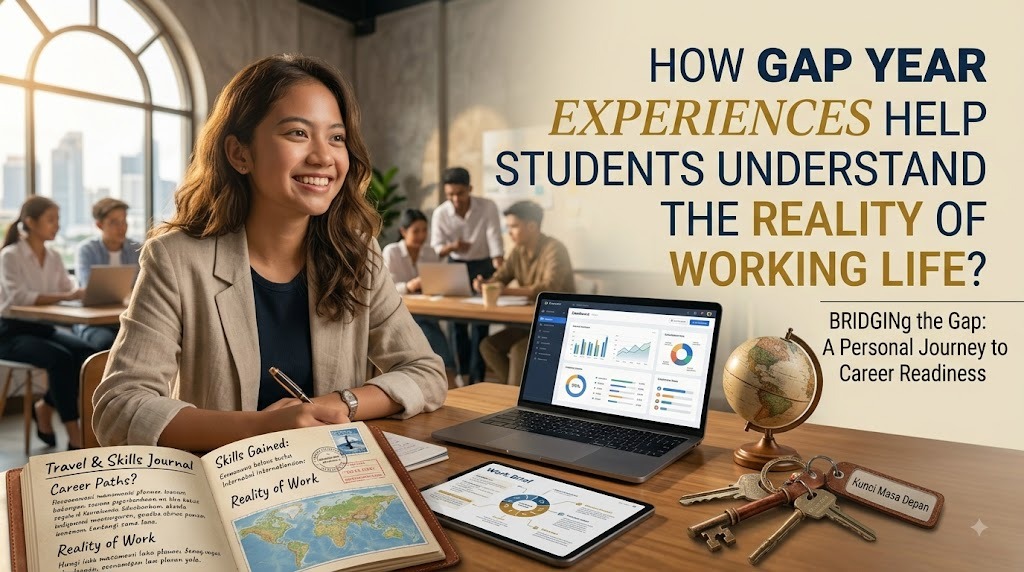
A gap year can give students an opportunity to experience the world beyond classrooms and textbooks. By taking part in internships, part time jobs, volunteering, or practical projects, students can learn how professional environments actually work. These experiences can introduce them to responsibilities that are different from school assignments. Students can also discover how communication, teamwork, discipline, and adaptability influence daily work. When planned carefully, a gap year can become a valuable bridge between education and working life.
UNDERSTANDING REAL WORKPLACE RESPONSIBILITIES
Working life requires people to take responsibility for tasks that can affect coworkers, customers, or an organization. During a gap year, students may experience deadlines, workplace procedures, attendance expectations, and performance standards. These responsibilities can teach students that completing a task is not only about receiving a grade. Accountability and reliability can have a direct effect on how well a team operates. This experience can help students develop a more realistic understanding of professional responsibility.
Students can also learn that different workplaces have different expectations. Some jobs require employees to work closely with a team, while others involve more independent responsibilities. Students may need to follow instructions while also showing initiative when appropriate. Direct workplace experience allows them to learn these differences through practical situations. This knowledge can make the transition from school to employment easier.
DEVELOPING PRACTICAL WORK SKILLS
A gap year can provide opportunities to develop practical work skills that are not always fully developed in classrooms. Depending on the activity, students may learn customer service, administration, sales, digital tools, communication, or project coordination. They can practice these skills while completing real tasks rather than only studying theoretical concepts. Practical experience can help students understand how knowledge is applied in professional situations. It can also make them more aware of the skills employers commonly value.
Students should reflect on what they learn from every experience. For example, working in a retail environment can improve communication and customer service, while an office internship may strengthen organizational skills. Students can record their responsibilities and achievements for future resumes or portfolios. Skill development becomes more meaningful when students understand how it connects to their future goals. This reflection can help them identify which abilities they need to improve.
LEARNING PROFESSIONAL COMMUNICATION
Communication in the workplace can be different from communication with classmates or friends. Students may need to speak with supervisors, coworkers, customers, and other professionals using clear and respectful language. They may also need to write professional messages, participate in meetings, or explain problems. Effective communication can help prevent misunderstandings and improve teamwork. Learning these habits early can make students more comfortable in professional environments.
Students may initially feel nervous when communicating with experienced workers. However, regular interaction can gradually build confidence. They can learn how to ask questions, listen carefully, receive instructions, and respond to feedback. Professional communication skills can become useful in almost every career. These abilities can also support students when they later participate in interviews, university projects, and professional networking.
BUILDING TIME MANAGEMENT AND DISCIPLINE
A workplace can teach students the importance of time management and discipline. Employees are generally expected to arrive on time, meet deadlines, and organize their responsibilities. Students who experience these expectations can understand why poor time management may affect an entire team. They can learn to prioritize tasks and plan their schedules more carefully. These habits can later support both academic and professional responsibilities.
Students may also learn from situations where they make mistakes. Arriving late, forgetting a task, or missing a deadline can demonstrate the importance of preparation and accountability. Instead of simply feeling discouraged, students can use these experiences to improve their routines. Workplace discipline develops through repeated practice and responsibility. A gap year provides an opportunity to build these habits before entering full time employment.
DISCOVERING DIFFERENT CAREER OPTIONS
Many students have limited knowledge about what particular careers are actually like on a daily basis. A gap year can provide opportunities for career exploration through internships, temporary jobs, volunteering, or industry projects. Students can discover whether their interests match the actual responsibilities of a profession. They may also realize that a career they previously wanted does not fit their personality or preferred working environment. Discovering this early can help students make better educational decisions.
Students can compare different experiences and identify patterns in what they enjoy. They can consider which tasks make them feel motivated and which responsibilities they find challenging. Talking with experienced professionals can also provide useful information about career paths and required skills. Real workplace exposure can help students make decisions based on experience rather than assumptions. This can be especially useful when choosing a university major or vocational program.
DEVELOPING CONFIDENCE AND INDEPENDENCE
Entering a workplace for the first time can be challenging for students. They may need to interact with unfamiliar people, learn new procedures, and handle responsibilities independently. Successfully completing these tasks can gradually build confidence and independence. Students may become more comfortable making decisions and solving problems. These experiences can prepare them for the greater independence expected in higher education and employment.
Independence does not mean solving every problem without assistance. Students also need to learn when and how to ask for guidance. Knowing how to seek help can demonstrate responsibility rather than weakness. Confidence grows through experience, especially when students learn from challenges and mistakes. A gap year can provide repeated opportunities to develop this mindset.
MAKING A GAP YEAR PURPOSEFUL
A gap year becomes more valuable when students have clear goals. Before starting, students can identify the skills they want to develop and the industries they want to explore. They can create a simple plan that combines work experience, learning activities, personal development, and sufficient rest. Progress should be reviewed regularly to determine whether the activities are actually supporting their goals. This prevents the gap year from becoming an unstructured period without meaningful direction.
Students should also document important experiences. They can keep records of projects, responsibilities, skills, achievements, and lessons learned. These records can later support resumes, portfolios, university applications, or interviews when relevant. Quality of experience is more important than the number of activities completed. A meaningful gap year should leave students with greater skills, confidence, and career awareness.
PREPARING FOR FUTURE CAREERS
The lessons gained during a gap year can help students become more prepared for their future careers. They may understand better which skills they need, which work environments they prefer, and which career areas interest them. This knowledge can influence their choice of university major, vocational training, or first job. Career readiness can grow when students combine academic knowledge with practical experience. They can approach their next step with more realistic expectations.
Students should evaluate their experiences before moving into the next stage of their lives. They can identify their strongest skills, most valuable lessons, and areas that still need improvement. They can then create a plan for further education or professional development. Reflection turns experience into useful knowledge. This can make the transition from a gap year to university or employment more purposeful.
CONCLUSION
Gap year experiences can help students understand the reality of working life by exposing them to responsibilities, deadlines, teamwork, communication, and professional expectations. Internships, part time jobs, volunteering, and practical projects can provide valuable experiences that complement classroom education. Students can also develop practical skills, confidence, independence, and problem solving abilities. At the same time, they can explore different career paths and discover what type of work suits their interests. These lessons can make future education and career decisions more informed.
However, a gap year is most beneficial when it is planned with purpose. Students should choose meaningful activities, set realistic goals, reflect on their experiences, and maintain a healthy balance between work and personal development. The objective should not simply be to stay busy but to gain knowledge and skills that can support future goals. With thoughtful planning, a gap year can become a valuable stage of personal and professional growth. Ultimately, real workplace experience can help students enter their next stage with greater confidence, practical skills, and clearer career direction.
About the Author
Gusti Ayu Tita P
Author — STEKOM University
An active author focused on academic issues, educational technology, and human resource development in the campus environment.