
How Hydropower Plants Turn Water Flow into Electricity?
Gusti Ayu Tita P
31 Agustus 2026
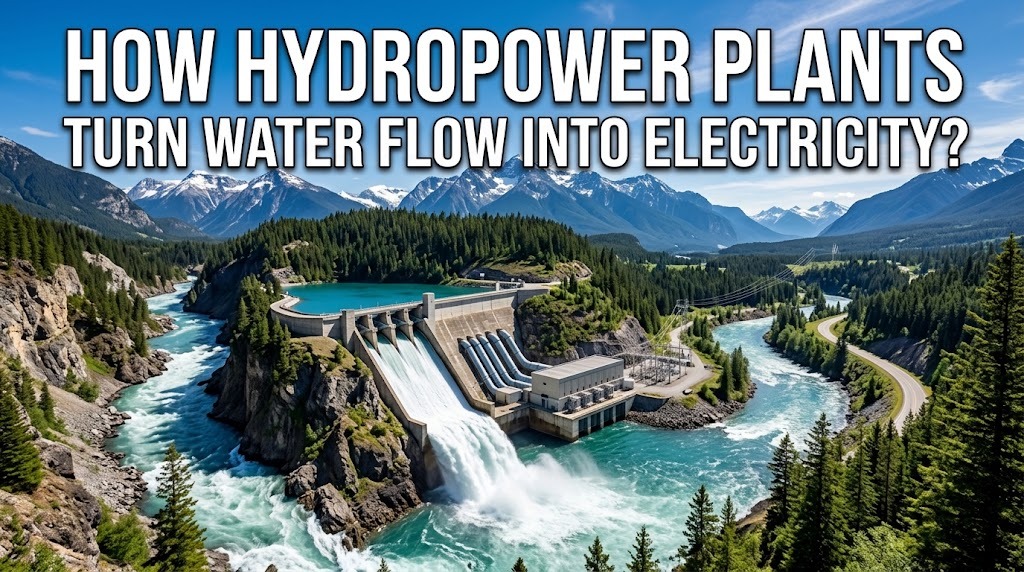
Hydropower plants generate electricity by converting the energy of moving or falling water into mechanical energy and then into electrical energy. The basic process begins when water is directed toward a turbine. The force of the water makes the turbine rotate, and the rotating turbine drives a generator. The electricity produced is then adjusted to the appropriate voltage before being delivered to the power grid.
Although the basic principle is simple, a hydropower facility contains several interconnected systems. Water flow, hydraulic head, turbines, generators, transformers, and control equipment all influence how efficiently electricity is produced. The design can vary depending on the river, terrain, water availability, and required power capacity.
WATER PROVIDES THE ENERGY
Water is the primary energy source in a hydropower plant. When water is stored at a higher elevation, it has potential energy because of its position. When the water moves downward, this potential energy is converted into kinetic energy. The moving water can then be directed toward a turbine.
The amount of available energy depends largely on the water flow and hydraulic head. A higher head or greater flow can provide more energy when the system is properly designed. Engineers study these characteristics before selecting the appropriate equipment. This ensures that the plant can use the available water as efficiently as possible.
DAMS AND RESERVOIRS CONTROL WATER
Many hydropower plants use a dam and reservoir to store and regulate water. The reservoir allows water to be held at a higher elevation before it is released for electricity generation. Operators can control the release of water according to plant conditions and, within applicable limits, electricity demand. This provides greater flexibility than systems that rely entirely on immediate river flow.
Not every hydropower plant requires a large dam. Run-of-river plants use the natural flow of a river with limited water storage. These plants can have a smaller physical footprint than large reservoir projects, although their electricity production may be more directly affected by changes in river flow. The choice depends on local geography, hydrology, environmental conditions, and energy requirements.
WATER FLOWS THROUGH THE PENSTOCK
After water is released from the reservoir or diverted from the river, it travels toward the turbine through a water passage. In many plants, this passage is called a penstock. The penstock is designed to carry water under pressure and deliver it to the turbine at suitable conditions.
As water moves through the system, its available energy is concentrated at the turbine. The pressure and velocity of the water create forces that act on the turbine blades. Proper penstock design is important because energy losses in the waterway can reduce overall plant efficiency. Engineers therefore consider factors such as pipe size, length, pressure, and flow conditions.
THE TURBINE CONVERTS WATER ENERGY
The turbine is one of the most important components in the electricity-generation process. When water reaches the turbine, it pushes against specially designed blades or buckets. This force causes the turbine to rotate. The turbine converts the energy of the water into mechanical rotational energy.
Different turbines are suitable for different water conditions. Francis, Kaplan, and Pelton turbines are widely used, with each type designed for particular combinations of water flow and hydraulic head. Selecting the right turbine is essential for efficient operation. Modern turbine designs can also improve performance under changing operating conditions.
THE GENERATOR PRODUCES ELECTRICITY
The rotating turbine is connected to a generator through a shaft. As the turbine turns the generator, mechanical energy is converted into electrical energy through electromagnetic induction. The generator contains components that create a changing magnetic field relative to electrical windings. This interaction produces an electric current.
The generator must operate within specific technical limits to maintain reliable electricity production. Monitoring systems measure parameters such as temperature, voltage, current, vibration, and rotational speed. Regular maintenance and monitoring help prevent equipment failures. Good generator performance is essential for maintaining the plant's overall efficiency.
TRANSFORMERS RAISE THE VOLTAGE
Electricity generated at the plant is not normally transmitted over long distances at the same voltage produced by the generator. A step-up transformer is therefore used to increase the voltage. Higher transmission voltage allows the same amount of power to be delivered with lower current, which helps reduce electrical losses in transmission lines.
After the voltage is increased, electricity enters the plant's switchyard and is connected to the transmission network. Protective equipment helps isolate faults and protect the electrical system. From there, electricity can travel over long distances to substations closer to consumers. This is how electricity generated from water becomes part of a larger power system.
CONTROL SYSTEMS KEEP THE PLANT STABLE
Hydropower plants use control systems to regulate water flow and maintain stable operation. A governor can adjust the flow of water to the turbine to help control rotational speed and power output. Electrical control systems also monitor generator conditions and grid requirements.
Modern facilities may use digital monitoring systems that collect information from many sensors. Operators can observe water levels, pressure, turbine speed, generator output, temperature, and other parameters in real time. Automation improves response and operational efficiency, but skilled personnel and safety procedures remain essential.
WATER RETURNS TO THE RIVER
After passing through the turbine, water exits through a downstream channel known as a tailrace. In many hydropower systems, the water is returned to the river and continues downstream. The water itself is not consumed as fuel during electricity generation. This is one reason hydropower can repeatedly use the same natural water cycle.
However, returning water to the river does not mean a hydropower project has no environmental effects. Changes in the timing and amount of downstream flow can affect aquatic ecosystems. Environmental flow management may therefore be necessary to maintain important river functions. The specific requirements depend on the project's design and local environmental regulations.
WHAT DETERMINES ELECTRICITY OUTPUT
The amount of electricity a hydropower plant produces depends on several factors. Water flow and hydraulic head are among the most important because they determine how much energy is available. Turbine and generator efficiency also influence how much of that energy is converted into useful electricity.
Seasonal changes can affect production as well. Heavy rainfall may increase river flow, while prolonged dry periods can reduce available water. Reservoirs can help manage these variations when sufficient storage is available. Careful water management is therefore essential for maintaining reliable generation.
TECHNOLOGY IMPROVES EFFICIENCY
Modern hydropower plants increasingly use digital sensors, automated controls, predictive maintenance, and data analysis. These technologies can provide detailed information about equipment performance and water conditions. Operators can use the data to identify unusual behavior and schedule maintenance before problems become more serious.
Existing plants can also be modernized with improved turbines, generators, control systems, and electrical equipment. Upgrading an older facility may improve efficiency and reliability without constructing an entirely new hydropower project. Modernization can extend the useful life of existing hydropower assets while improving their contribution to the electricity system.
HYDROPOWER SUPPORTS CLEANER ELECTRICITY
Hydropower is considered a renewable energy source because it relies on the natural water cycle. During normal electricity generation, it does not require the combustion of coal, oil, or natural gas. This can help reduce dependence on fossil fuels and support lower-carbon electricity systems.
Hydropower can also complement solar and wind power. Some hydropower plants can adjust their output when electricity demand changes or when variable renewable generation fluctuates. This flexibility can help power grids integrate more renewable energy. However, hydropower output remains dependent on water availability, so a diverse energy mix is still important.
CONCLUSION
Hydropower plants turn water flow into electricity through a series of energy conversions. Water first provides potential or kinetic energy, which is transferred to a turbine as mechanical energy. The turbine drives a generator, which converts mechanical energy into electrical energy. A transformer then increases the voltage before the electricity enters the transmission network.
The process depends on many components working together, including reservoirs, waterways, turbines, generators, transformers, and control systems. Water availability, hydraulic head, equipment efficiency, and environmental conditions all affect the final electricity output. With continued modernization and responsible water management, hydropower can remain an important part of a reliable and cleaner energy system.
About the Author
Gusti Ayu Tita P
Author — STEKOM University
An active author focused on academic issues, educational technology, and human resource development in the campus environment.















