How Important Is Technological Adaptability in the Modern Workplace?
Gusti Ayu Tita P
24 Februari 2026
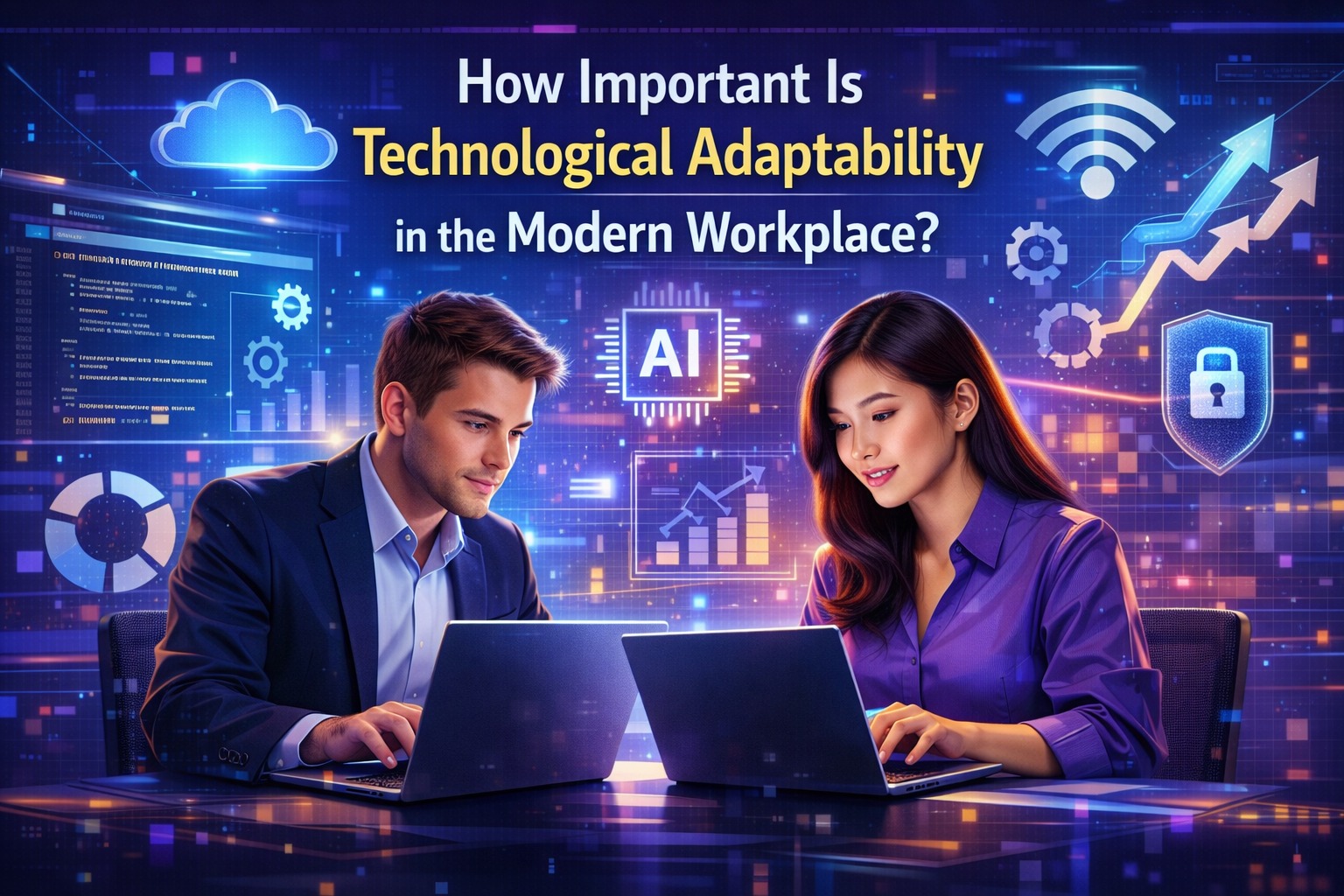
In today’s rapidly evolving work environment, the ability to adapt to technology has become one of the most sought-after skills. Rapid technological changes, such as automation, artificial intelligence (AI), big data, and cloud computing, influence nearly every industry sector. Therefore, for every professional, it is important to adapt quickly and utilize technology to remain relevant in the job market. This article discusses how important technology adaptability is in the modern workplace.
WHY IS TECHNOLOGY ADAPTABILITY SO IMPORTANT?
Technology has changed the way we work, interact, and communicate. In recent years, it has transformed entire industries, from manufacturing to healthcare and education. In an increasingly technology-driven workplace, the ability to keep up with these changes not only improves productivity but also ensures that individuals and organizations remain competitive.
1. Improving Productivity and Efficiency
The ability to utilize the latest technological tools allows employees to work more efficiently and productively. For example, collaboration software such as Google Workspace or Microsoft Teams makes remote team communication easier, while project management tools like Asana or Trello help track task progress in real time. Without technology adaptability, employees may lose many efficiency benefits offered by these tools.
2. Opening New Career Opportunities
Many jobs that previously did not require technological skills now demand knowledge of modern technology. For example, roles in digital marketing, data analysis, and social media management rely heavily on technology. If someone cannot adapt to evolving technologies, they risk falling behind and missing better career opportunities.
3. Increasing Competitiveness in the Job Market
In an increasingly competitive world, mastering technology relevant to one’s job becomes a significant advantage. Many companies seek individuals who can adapt to new tools and understand how technology can be applied in daily work. Therefore, technology adaptability has become one of the main criteria employers use when selecting candidates.
TECHNOLOGIES THAT ARE CHANGING WORKPLACE DYNAMICS
1. Artificial Intelligence (AI) and Automation
AI and automation are transforming nearly every industry, from manufacturing to customer service. With AI handling repetitive tasks, workers now face new challenges in learning how to collaborate with technology. For example, in customer service, many companies use AI-based chatbots to respond to customer inquiries automatically. Professionals who can work with or manage AI systems will be more valuable.
2. Big Data and Data Analytics
Data has become one of the most important assets in business. Big data enables companies to analyze consumer behavior patterns, develop more effective marketing strategies, and predict market trends. The ability to analyze large datasets is important not only in IT roles but also in marketing, finance, and many other sectors. Therefore, understanding and working with big data is a crucial skill for professionals.
3. Cloud Computing
Cloud computing has changed how companies store and access data. With cloud-based storage, organizations can reduce IT infrastructure costs and allow employees to work flexibly from anywhere. However, to fully utilize cloud computing, workers must have sufficient skills to operate platforms such as AWS, Google Cloud, or Microsoft Azure.
HOW TO DEVELOP TECHNOLOGY ADAPTABILITY
1. Lifelong Learning
To adapt to continuous technological changes, ongoing learning is essential. Many online platforms such as Coursera, Udemy, or LinkedIn Learning offer courses in the latest technologies that help professionals stay ahead in their fields. Taking relevant courses or certifications can improve adaptability and open new career opportunities.
2. Developing Basic Technology Skills
Understanding basic technology, such as computer operation, office applications, and cybersecurity, is the first step in developing technology adaptability. After mastering these fundamentals, professionals can deepen skills in more specific areas such as data science, cloud computing, or AI.
3. Collaboration and Communication Skills
With technology enabling remote collaboration, professionals must develop digital communication and teamwork skills. Knowing how to communicate effectively via email, messaging apps, or video conferencing platforms is essential in the modern workplace. The ability to work in teams using technology significantly improves productivity.
CHALLENGES IN TECHNOLOGY ADAPTATION
1. Barriers to Learning New Technology
Although technology offers many benefits, not everyone feels comfortable learning new tools. Some individuals may struggle to adapt, especially those accustomed to traditional work methods. Therefore, companies need to provide adequate training and support.
2. Overdependence on Technology
While technology increases efficiency, excessive dependence can create problems. For example, system failures or power outages can disrupt work. Professionals should still maintain non-technology-dependent skills such as analytical thinking and creativity.
CONCLUSION
The ability to adapt to technology is an essential skill in the modern workplace. As technology continues to advance rapidly, individuals who can follow and utilize new tools will gain a competitive advantage in the job market. Therefore, continuous learning and adaptability are crucial to remain relevant and succeed in a workforce increasingly driven by digital innovation.
About the Author
Gusti Ayu Tita P
Author — STEKOM University
An active author focused on academic issues, educational technology, and human resource development in the campus environment.