
How Is a Government Cabinet Formed?
Gusti Ayu Tita P
12 Agustus 2026
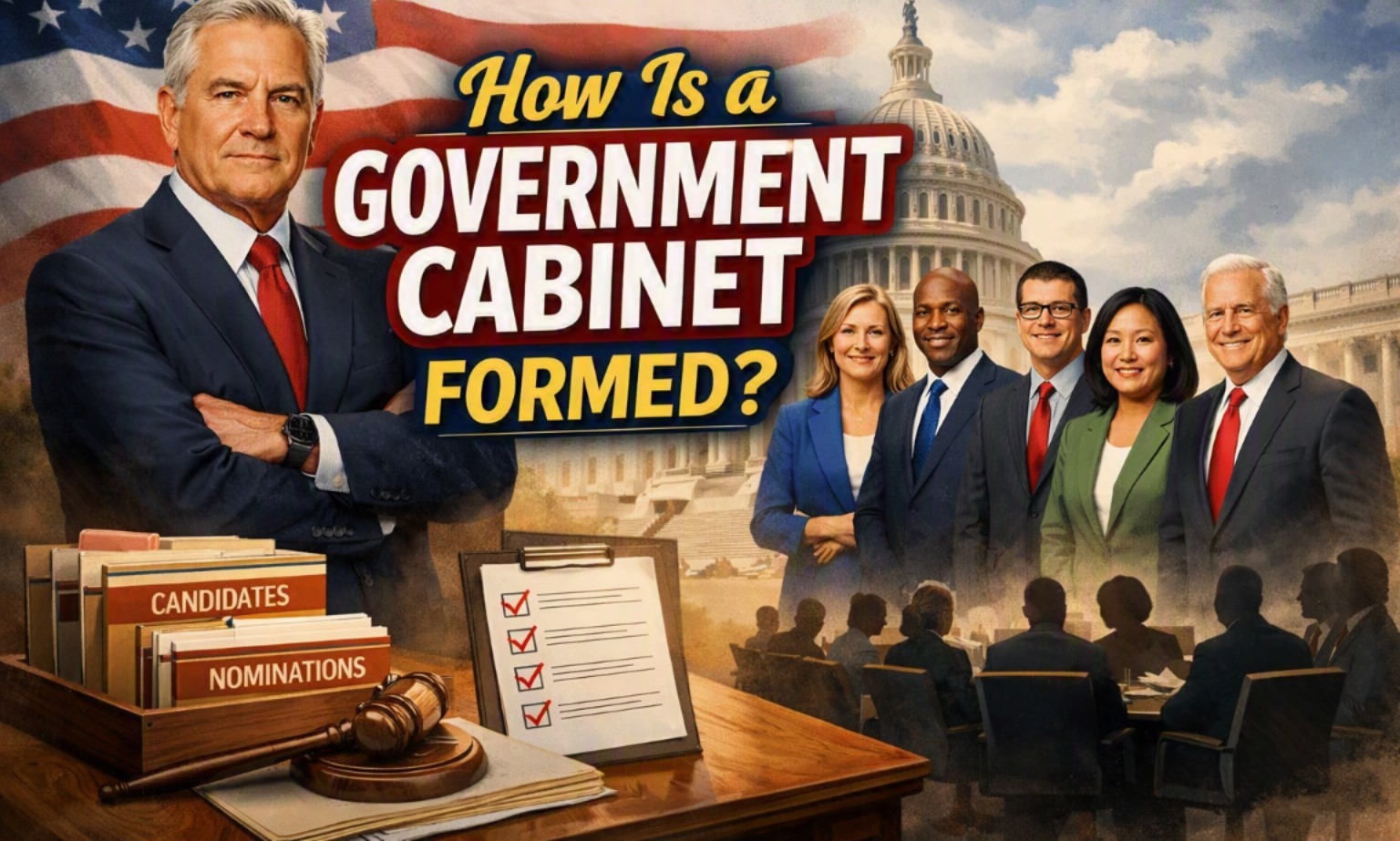
A government cabinet is a group of senior officials who help a national leader manage government affairs and carry out public policies. In many countries, the cabinet includes ministers who lead major government departments such as finance, education, health, defense, and foreign affairs. The process of forming a cabinet differs depending on the country's constitution, political system, and legal traditions. Some countries give the president greater authority to select ministers, while others require parliamentary approval or political agreements. Understanding how a cabinet is formed helps explain how national governments organize leadership and make important decisions.
WHAT IS A GOVERNMENT CABINET?
A government cabinet is generally the highest group of government ministers responsible for coordinating major areas of public administration. Each minister usually oversees a specific ministry or department and is expected to implement government programs within that area. The cabinet allows senior officials to discuss national priorities and coordinate policies across different sectors. It also helps the head of government make informed decisions on complex national issues. Although cabinet structures vary, their central purpose is usually to support effective and coordinated government.
The role of a cabinet depends strongly on the country's political system. In a presidential system, the president often selects ministers or cabinet secretaries, although some countries require legislative approval for certain appointments. In a parliamentary system, cabinet ministers are commonly drawn from the political party or coalition that controls the legislature. This means cabinet formation can be closely connected to election results, coalition negotiations, and parliamentary support.
WHO SELECTS CABINET MINISTERS?
The person responsible for selecting cabinet ministers depends on the country's system of government. In many presidential systems, the president has significant authority to nominate or appoint ministers. The president may consider professional experience, political expertise, public reputation, and the candidate's ability to manage a government department. In some countries, the legislature must approve certain appointments before they become official. These rules are designed to provide checks and balances and prevent excessive concentration of political power.
In parliamentary systems, the prime minister normally plays a central role in choosing cabinet members. However, the prime minister often needs to consider the interests of the governing party and coalition partners. Cabinet positions may therefore reflect political agreements as well as individual qualifications. The final appointments are usually completed according to the country's constitutional and legal procedures.
HOW DOES THE CABINET FORMATION PROCESS WORK?
The first stage is usually the identification of the person who will lead the government. After an election, this may be a president who has won the required authority or a parliamentary leader who can command majority support. The leader then identifies suitable candidates for important ministerial positions. Candidates may be selected based on experience, expertise, political support, and their ability to fulfill the responsibilities of a ministry.
The next stage involves formal appointments and any required approval procedures. In some countries, ministers must receive approval from parliament or another institution before taking office. Once the appointments are confirmed, ministers receive responsibility for their respective departments. The cabinet then begins coordinating policies and implementing the government's political agenda. This process can be relatively quick in some countries but may take longer when coalition negotiations or legislative approval are required.
WHAT FACTORS INFLUENCE CABINET FORMATION?
Several factors can influence the composition of a cabinet. Political considerations are important because leaders often need support from political parties, coalition partners, or legislators. Professional qualifications also matter because ministries require leaders who understand complex areas such as economics, healthcare, education, infrastructure, and national security. A leader may also consider regional representation, gender balance, minority representation, and public expectations when selecting ministers.
Another important factor is the government's policy direction. Leaders generally choose ministers who can help implement their government priorities and work effectively as a team. In coalition governments, cabinet positions may be distributed among different parties to maintain political stability. The final cabinet is therefore often a combination of competence, political strategy, legal requirements, and the need for effective cooperation.
WHY IS CABINET FORMATION IMPORTANT?
Cabinet formation is important because it determines who will be responsible for managing major areas of government. Well-qualified ministers can help develop practical policies, oversee public services, and respond to national challenges. A balanced cabinet can also improve coordination between ministries and reduce conflicts over government priorities. Strong cooperation among ministers allows decisions to be implemented more consistently across different sectors.
A cabinet also reflects the leadership style and priorities of the government. When ministers have clear responsibilities and work toward shared objectives, government administration can become more effective. At the same time, ministers are generally expected to follow constitutional rules and remain accountable through the appropriate political and legal institutions. This makes cabinet leadership an important part of responsible government.
WHAT HAPPENS AFTER MINISTERS ARE APPOINTED?
After appointment, cabinet ministers begin carrying out their official responsibilities. They oversee their ministries, develop and implement policies, manage public programs, and advise the head of government. Ministers may also represent the government when communicating with parliament, international organizations, businesses, and the public. Their performance can be evaluated through parliamentary oversight, legal requirements, public accountability, and political processes.
Cabinet members must also work together because government policies often affect several ministries at the same time. For example, an economic policy may involve finance, trade, employment, education, and social affairs. Regular cabinet meetings allow ministers to exchange information and coordinate decisions. If a minister resigns, is dismissed, or a government changes, the cabinet may be reshuffled or replaced according to the country's constitutional system.
DIFFERENCES BETWEEN CABINET SYSTEMS AROUND THE WORLD
There is no single model for forming a government cabinet. In a presidential system, the president is generally the central figure in appointing cabinet officials, while the legislature may have an approval or oversight role. In a parliamentary system, the prime minister usually selects ministers while maintaining the confidence of parliament. Coalition governments can make the process more complicated because several political parties may need to agree on cabinet positions.
Constitutional traditions also create important differences between countries. Some governments have a large number of ministries, while others combine several responsibilities into fewer departments. Some ministers are elected politicians, while others may be experienced professionals or political appointees. These differences show that cabinet formation is shaped by each country's constitution, political institutions, and governing traditions.
CONCLUSION
A government cabinet is formed through a process determined by a country's political and constitutional system. The head of government usually selects ministers based on factors such as qualifications, political support, experience, and policy priorities. Depending on the country, appointments may also require parliamentary approval or cooperation between coalition parties. After taking office, ministers manage government departments and work together to implement national policies.
Understanding cabinet formation makes it easier to see how governments organize executive power and public administration. Although the process differs from one country to another, the main goal is to create a leadership team capable of managing national responsibilities effectively. A well-organized cabinet can support stable government, better policy coordination, and stronger public administration.
About the Author
Gusti Ayu Tita P
Author — STEKOM University
An active author focused on academic issues, educational technology, and human resource development in the campus environment.















