
How Lecturers Encourage Critical Thinking and Creative Learning?
Gusti Ayu Tita P
1 Agustus 2026
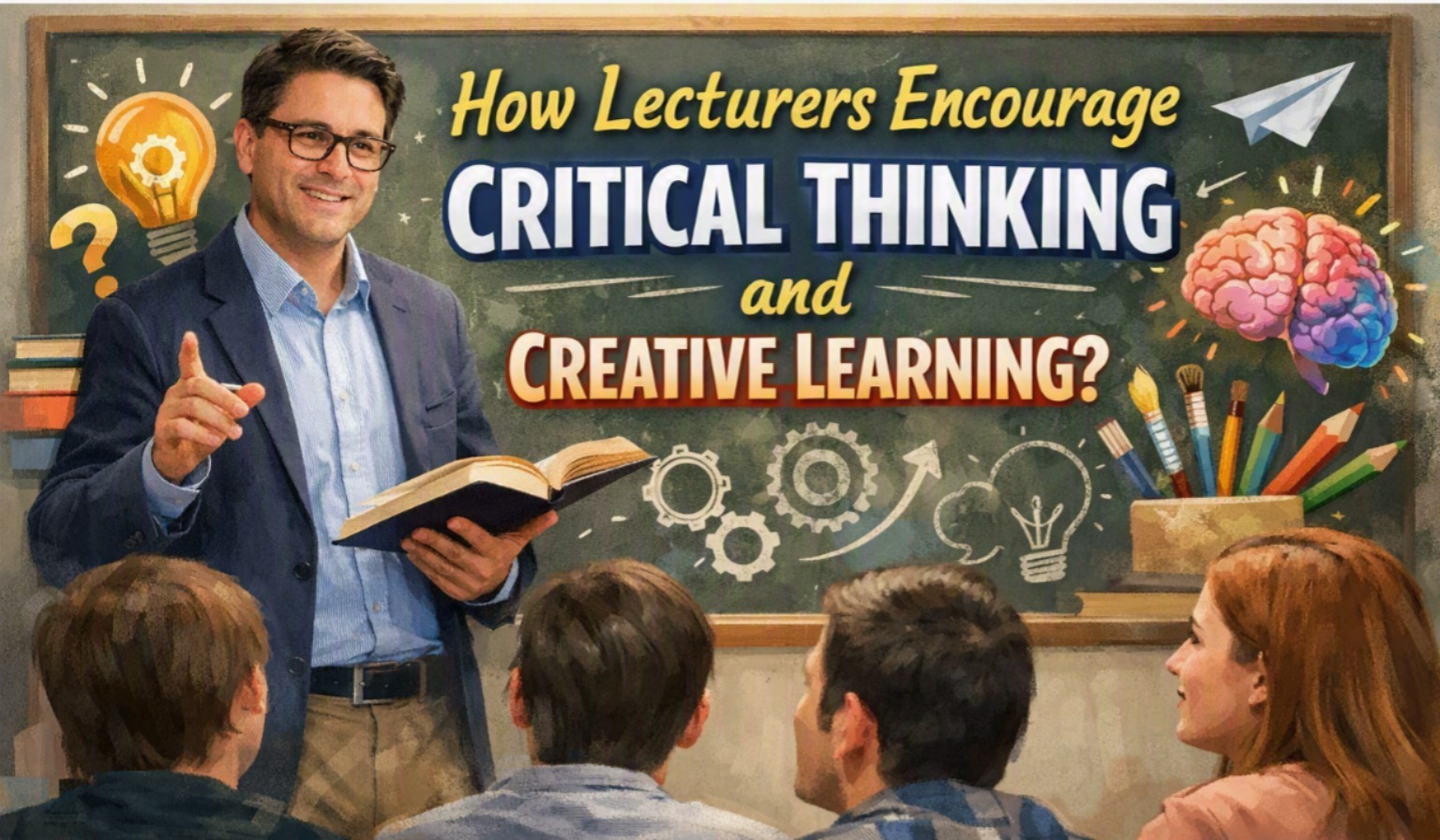
Critical thinking and creative learning are two essential skills that students need to succeed in higher education and future careers. A lecturer plays an important role in developing these abilities by creating engaging learning experiences, encouraging active participation, and promoting independent thinking. Instead of focusing only on memorizing information, effective lecturers help students analyze ideas, solve problems, and express original opinions. This approach prepares learners to adapt to changing challenges in academic, professional, and personal environments. Understanding how lecturers encourage these skills helps students appreciate the value of meaningful education.
BUILDING AN ACTIVE LEARNING ENVIRONMENT
A supportive classroom environment encourages students to think beyond simple answers. Lecturers create opportunities for students to ask questions, share ideas, and discuss different perspectives without fear of making mistakes. This atmosphere helps learners become more confident in expressing their thoughts. Students also develop better communication skills while learning to respect different opinions. Active participation keeps students engaged throughout the learning process.
Instead of relying only on traditional lectures, many educators use interactive learning methods such as group discussions, debates, brainstorming sessions, and collaborative projects. These activities encourage students to analyze information rather than memorize facts. Working with classmates also improves teamwork and problem-solving abilities. Students become more motivated because they actively contribute to classroom activities. As a result, learning becomes more meaningful and enjoyable.
ENCOURAGING CRITICAL THINKING THROUGH QUESTIONS
One of the most effective teaching strategies is asking open-ended questions. Rather than expecting one correct answer, lecturers encourage students to explain their reasoning and support their opinions with evidence. This process strengthens analytical thinking and improves decision-making skills. Students learn to evaluate information carefully before reaching conclusions. They also become more confident in defending their ideas logically.
Lecturers often introduce real-world problems that require careful analysis and creative solutions. Case studies, current events, and practical scenarios help students connect theoretical knowledge with real-life situations. This approach develops independent thinking and prepares students for workplace challenges. Students learn that many problems have multiple possible solutions. Such experiences strengthen both critical thinking and adaptability.
DEVELOPING CREATIVITY IN THE LEARNING PROCESS
Creative learning grows when lecturers encourage students to explore new ideas and experiment with different approaches. Instead of limiting assignments to one format, they may allow presentations, videos, posters, research projects, or digital content. This flexibility motivates students to use their imagination while meeting academic objectives. Creative assignments also increase student engagement because they offer personal expression. As a result, learners become more innovative and confident.
Lecturers also provide constructive feedback that focuses on improvement rather than only grades. Helpful feedback encourages students to reflect on their work and identify areas for growth. Students understand that mistakes are valuable opportunities for learning. This mindset supports continuous development and builds resilience. Over time, learners become more willing to try new ideas without fear of failure.
USING TECHNOLOGY TO SUPPORT CREATIVE LEARNING
Modern technology offers many opportunities to improve teaching and learning. Lecturers integrate digital tools, online learning platforms, multimedia presentations, and interactive applications to create engaging classroom experiences. These resources allow students to access information quickly and participate in collaborative activities. Technology also supports independent learning beyond the classroom. Students become more comfortable using digital resources for research and innovation.
Technology also encourages creative problem solving through simulations, virtual discussions, online collaboration, and project-based learning. Students can work together even when they are not physically in the same place. Digital resources expose learners to global perspectives and diverse ideas. This broadens their understanding and encourages more creative thinking. Proper use of technology makes learning both effective and enjoyable.
THE LONG TERM IMPACT OF EFFECTIVE LECTURERS
Lecturers who promote critical thinking and creative learning help students develop skills that remain valuable throughout life. Graduates become better at analyzing information, solving complex problems, and adapting to new situations. These abilities are highly valued by employers across different industries. Students also become more independent learners who continue developing their knowledge after graduation. Lifelong learning begins with strong educational foundations.
Beyond academic success, these teaching methods also improve confidence, communication, collaboration, and leadership. Students learn how to evaluate ideas objectively while respecting different viewpoints. They become more responsible in making decisions and solving challenges. Creative and critical thinkers contribute positively to society and innovation. Effective lecturers therefore play a significant role in shaping future professionals and responsible citizens.
CONCLUSION
Effective lecturers encourage critical thinking and creative learning by creating active classrooms, asking meaningful questions, providing constructive feedback, and integrating modern technology into education. These teaching strategies help students become analytical, innovative, confident, and adaptable individuals. Rather than simply transferring knowledge, lecturers inspire students to think independently and solve problems creatively. As education continues to evolve, these skills become increasingly important for academic achievement and career success. Investing in teaching methods that promote critical thinking and creativity benefits both students and society.
About the Author
Gusti Ayu Tita P
Author — STEKOM University
An active author focused on academic issues, educational technology, and human resource development in the campus environment.















